Which chair is actually worth your money when you spend six, eight, or even ten hours a day writing? That is the question every serious writer needs answered before their back answers it for them. After testing and researching the top options available in 2026, one chair rose above the rest: the Herman Miller Aeron. It has the ergonomic engineering, the build quality, and the long-term comfort that writers who treat their craft as a profession genuinely need.
Writing is physical work. Your body holds the same posture for hours at a stretch, and a bad chair will punish you for it — tight hips, a stiff lower back, numb legs, and a neck that screams by chapter three. The right chair changes all of that. It keeps your spine aligned, your arms relaxed, and your mind focused on the words rather than the ache. Whether you are a novelist grinding through a first draft, a content writer hitting daily word counts, or a copywriter on back-to-back projects, your chair is your most important piece of equipment — more than your keyboard, more than your monitor.

In this guide, we have reviewed seven of the most highly regarded chairs for writers in 2026, ranging from budget-friendly picks like the IKEA MARKUS to premium workhorses like the Steelcase Leap and Humanscale Freedom. We cover what makes each one worth considering, where each one falls short, and exactly who should buy it. If you want to pair your chair with a workspace that supports deep, focused writing sessions, check out our guide to the best desks for focused work in 2026. You can also browse our full buying guide hub for more expert breakdowns across categories. Now let us get into it.
Contents
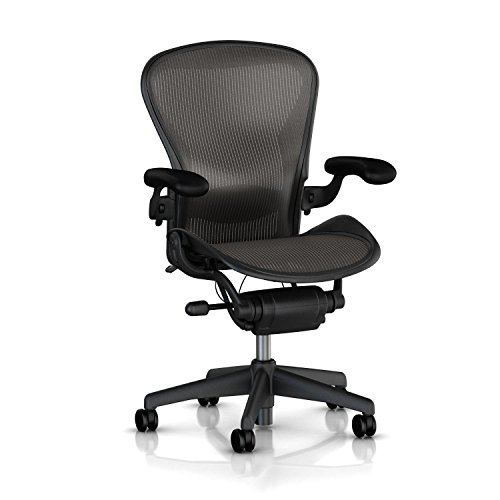




The Herman Miller Aeron is not just a chair — it is the gold standard that every other ergonomic chair is compared against. For writers, this matters enormously. You are not using this chair for a one-hour meeting. You are sitting in it for a full workday, and on a deadline, possibly longer. The Aeron's 8Z Pellicle mesh (a suspended, flexible support material) distributes your weight evenly across the seat and back, which eliminates the pressure-point buildup that causes that heavy, numb feeling in your thighs and tailbone after long sessions.
The lumbar support system on this chair is genuinely impressive. Unlike a foam pad bolted to the back, the Aeron uses a PostureFit SL system that supports both the sacrum (the base of your spine) and the lumbar (the lower curve), which means your entire lower back stays in its natural S-curve position instead of collapsing into a C. The fully adjustable arms give you precise control over elbow height and angle, which matters if you are switching between typing and annotating printed pages. This is a Size B chair, meaning it fits most medium-to-large body types, and it comes with a 12-year warranty — one of the longest in the industry. If you buy this chair, you are buying it for the next decade.
Yes, the price is premium. That is the honest trade-off. But when you divide the cost over twelve years of pain-free writing, the math makes sense. Herman Miller also offers a 30-day money-back guarantee on this listing, which means you can test it with zero risk during your real writing workflow. Writers who have chronic lower back issues or who work eight or more hours daily will feel the difference within the first week.
Pros:
Cons:
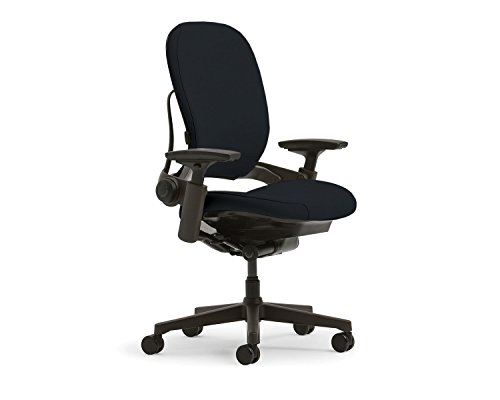
The Steelcase Leap is what happens when a company spends decades studying how human bodies actually move during extended sitting — and then engineers a chair around those movements. For writers, this philosophy is a perfect match. When you recline to think, when you lean forward during a burst of focused typing, or when you shift your weight to relieve tension in your hips, the Leap moves with you rather than fighting you. That is the core idea behind Steelcase's Natural Glide System, which allows the seat to glide forward slightly as you recline, keeping you close to your work surface and preventing the tendency to crane your neck forward.
The 3D LiveBack technology (a flexible back panel that mimics the natural movement of your spine) is one of the most sophisticated lumbar systems available at this price point in 2026. It does not lock you into one posture — it contours continuously as you shift, which means your back stays supported whether you are sitting upright, leaning back to think, or twisting to reach for a notebook. The 4D adjustable arms (up, down, forward, back, and angle) accommodate a wide range of desk heights and body proportions. Writers who sit for five or more hours straight consistently report less fatigue in the Leap than in comparably priced competitors.
The Leap comes in at a high price, though slightly less than the Herman Miller Aeron in most markets. The Onyx black colorway and black frame give it a professional, understated look that works in both a home office and a formal workspace. If you write across multiple monitors and need a chair that supports full-body movement throughout the day, the Steelcase Leap is a compelling alternative to the Aeron — and for some body types, it may actually be the better fit.
Pros:
Cons:
The Humanscale Freedom takes a different philosophy than the Herman Miller or Steelcase: instead of giving you dozens of knobs and levers to fiddle with, it uses your body weight and natural movement to configure itself automatically. The recline mechanism uses a counterbalance system calibrated to your own body — the heavier you are, the more resistance it provides, so the chair always feels correctly tensioned without you ever touching a dial. For writers who prefer to get into flow state without stopping to adjust their seating setup, this hands-off approach is genuinely liberating.
The pivoting backrest is the standout feature for writers. As you recline, the backrest pivots to follow your spine's natural arc, providing continuous lumbar support throughout the recline range rather than only in the upright position. This is critical when you lean back to think — a motion that writers make dozens of times per session. The headrest is a notable bonus: it adjusts for both height and angle, offering genuine neck support during those lean-back moments. Few chairs at this price level offer a headrest that actually works for active sitting rather than just passive resting.
The standard Duron arms (height-adjustable) are functional but less adjustable than the 4D arms on the Steelcase. If arm angle adjustment matters to you, that is worth noting. The graphite frame with black Fourtis fabric gives it a refined, executive appearance, and the hard casters are designed specifically for carpet floors — important if your home office or writing room has carpet. This chair rewards writers who want sophistication and simplicity over a feature-heavy, manually adjustable setup.
Pros:
Cons:
Branch entered the office furniture market with a direct-to-consumer model designed to deliver genuine ergonomic quality at a price that does not require you to save up for months. The Branch Ergonomic Chair succeeds at that goal more convincingly than most competitors in its price range. The breathable mesh backrest keeps you cool during long writing sessions — a practical advantage that writers who work in warm environments or who simply run warm will appreciate immediately. Overheating during a four-hour writing session is a real productivity killer, and the mesh design solves it.
The seat depth adjustment deserves specific attention. This feature — which lets you slide the seat pan forward or back relative to the backrest — is more important than most buyers realize. Correct seat depth ensures your thighs are supported along most of their length without the front edge of the seat cutting into the back of your knees. This prevents the tingling, numbness, and reduced circulation that makes you stand up and pace even when you are on a roll. Pair the Branch with a proper writing desk setup, and if you work across multiple monitors, a triple monitor stand can complete the ergonomic equation by keeping your screens at eye level.
The adjustable lumbar support and armrests cover the fundamentals well. This is not a chair with the adaptive intelligence of the Steelcase Leap or Humanscale Freedom, but at its price point it delivers a robust, fully adjustable ergonomic setup that outperforms most chairs two or three times its cost. The graphite colorway looks modern, the assembly is straightforward, and the build quality holds up under daily use. For writers who want serious ergonomics without a serious price tag, the Branch is the clear choice.
Pros:
Cons:
The IKEA MARKUS is not a premium ergonomic chair. It does not pretend to be. What it is, however, is one of the most reliable, comfortable, and durable budget chairs money can buy in 2026, and for writers who are just starting out, writing part-time, or simply cannot justify a four-figure chair investment right now, it is a genuinely solid option. The mesh backrest runs the full height of the back and provides decent lumbar support for a chair at this price, and the adjustable and lockable tilt function (which lets you lean back and lock in a reclined position) is a useful feature that most chairs at this price level skip entirely.
The breathability of the mesh is one of the MARKUS's real strengths. You will not feel trapped against a sweaty foam back after an hour. The high-back design also provides more shoulder and upper-back coverage than most budget chairs, which helps during those long evening sessions when your shoulders start to round forward. IKEA built this chair to last, and the seat foam maintains its shape better than many competitors at twice the price. Thousands of writers use the MARKUS as their daily driver, and it holds up.
The trade-offs are honest and predictable. The arms are fixed — they do not adjust height, width, or angle. The seat depth is not adjustable. The lumbar support, while present, is built-in rather than customizable. If you are shorter than average, the seat height may not drop low enough for your feet to sit flat on the floor. These are real limitations for all-day professional use. But for writers who sit three to five hours a day and need a clean, functional chair that will not fall apart in a year, the MARKUS delivers genuinely good value.
Pros:
Cons:
If you want the maximum number of adjustments packed into a single chair, the FLEXISPOT ErgoX-PRO is the answer. This chair has 7D linkage armrests (which means the arms adjust in seven directions — up, down, forward, back, inward, outward, and pivot angle), a 5D lumbar (adjusts for height, depth, and width as well as lateral angle), a 4D headrest, and your choice of either an AeroWeave 5.0 mesh seat for cooling or a Cloudtech cushion for plush comfort. For writers who have very specific ergonomic needs — perhaps due to a prior injury, an unusual body proportion, or a very long work schedule — the ability to fine-tune every dimension of the chair's fit is genuinely valuable.
The 551-pound weight capacity is notable and makes this one of the few premium ergonomic chairs in 2026 that explicitly accommodates a wide range of body sizes without requiring a separate "plus size" model. The 5D lumbar is its most practically useful feature for writers — you can adjust it both vertically and in depth to find the exact position that supports your lumbar curve without pushing you off the seat. The included footrest is a thoughtful addition for writers who prefer a slightly reclined working posture with their feet elevated. No other chair in this guide offers this level of physical customization at a comparable price.
The trade-off with the ErgoX-PRO is complexity. With this many adjustments available, setup takes time, and if you do not spend that time dialing it in correctly, you will not get its full benefit. The aesthetic is more gaming-chair-influenced than some writers may prefer in a professional home office. But for the writer who wants total control over their ergonomic environment and does not mind investing an hour to configure it, the FLEXISPOT delivers an impressive amount of chair for the money.
Pros:
Cons:
Not every writer wants a mesh-and-plastic ergonomic chair. Some writers work in a home office that also serves as a client meeting space, a creative studio, or simply a room they want to feel proud of. The Vari Summit Executive Desk Chair is built for those writers. Its high-back faux leather design with polished aluminum armrests and base projects an executive presence that the other chairs in this guide do not. It looks expensive, and it performs well for writers who sit in shorter but intense sessions rather than all-day marathons.
The lumbar support is built into the high-back design and provides firm, consistent lower-back support in the upright seated position. The 360-degree swivel and seat height adjustment (18 to 22 inches) cover the fundamental comfort needs, and the tilt function lets you lean back during thinking pauses. The no-tool assembly is a genuine quality-of-life feature — the Vari Summit is ready to use within minutes of unboxing, which matters when you are eager to get back to writing. Writers who hold virtual meetings or client calls from their home office will appreciate the professional impression this chair creates on camera.
Where you make trade-offs with the Summit is in extended ergonomic support. The faux leather, while soft and attractive, does not breathe the way mesh does, so it can become warm during long sessions. The armrests, while beautiful in polished aluminum, do not offer the multi-directional adjustability of the chairs higher on this list. If you write for two to four hours at a time and care about how your workspace looks and feels, the Vari Summit earns its place on this list. If you are writing eight hours a day every day, step up to the Herman Miller or Steelcase.
Pros:
Cons:
Shopping for a writing chair in 2026 means navigating a market filled with impressive specs and marketing language. Here is what actually matters when you are spending real money on a chair you will use every single day.
Lumbar support — the cushioning or structural support for the lower curve of your spine — is the single most important feature for writers. According to the Spine Health research community, prolonged unsupported sitting is a leading cause of chronic lower back pain in knowledge workers. A good writing chair keeps the natural inward curve of your lumbar spine intact rather than letting it flatten or round outward. Look for lumbar support that is adjustable in height and depth — not just a fixed foam pad — so you can position it precisely at the right spot for your body. The Herman Miller and Steelcase both offer advanced adaptive lumbar systems that adjust dynamically as you move, which is the gold standard for all-day writers.
Most people overlook seat depth, but it directly controls whether your thighs are supported without cutting off circulation at the back of your knees. A seat that is too shallow leaves your thighs unsupported, which strains your hips. A seat that is too deep pushes the front edge into the back of your knee, reducing circulation and causing that familiar leg-numbing that forces you out of your chair mid-scene. Look for a chair with a seat depth slider that lets you fine-tune where the front edge of the seat sits relative to your legs. The Branch Ergonomic Chair handles this well at its price point, and the premium options all offer it as standard.
Writers use their arms constantly, and poorly positioned armrests cause shoulder and neck tension that accumulates over weeks and months. Your arms should rest comfortably on the armrests with your elbows at approximately 90 degrees and your shoulders relaxed — not hunched up. Multi-dimensional armrests (3D or 4D) let you position your arms correctly whether you are typing fast, reading slowly, or sitting back to think. The FLEXISPOT's 7D linkage arms are the most adjustable in this guide, while the Humanscale's standard Duron arms offer only height adjustment — a meaningful difference if you have atypical shoulder width or arm length.
Writing sessions are long. Mesh-backed chairs breathe significantly better than foam or upholstered alternatives, which is why most of the chairs in this guide use mesh on the backrest or seat. If you write in a warm climate, in a room without air conditioning, or simply run warm, breathability moves from a nice-to-have to a must-have. A hot, uncomfortable chair breaks your concentration just as effectively as a noisy one. The IKEA MARKUS, Branch, and FLEXISPOT all use mesh backrests that allow airflow throughout the session. The Vari Summit's faux leather is attractive but less forgiving in warm conditions — worth factoring into your decision based on your specific environment.
The Herman Miller Aeron is the best chair for writers who sit for extended periods. Its 8Z Pellicle mesh distributes weight evenly across the seat and back, its PostureFit SL lumbar supports both the sacrum and lumbar curve simultaneously, and its 12-year warranty reflects the durability required for all-day professional use. If budget is a consideration, the Steelcase Leap is a close second with similarly sophisticated ergonomic engineering.
Yes — and more so for writers than for most desk workers. Writing requires sustained, focused attention over long periods. Discomfort from a poor chair does not just cause physical pain over time — it directly interrupts your concentration and shortens the productive writing sessions you can sustain before needing to stand and move. Proper ergonomic support (lumbar alignment, seat depth, armrest positioning) is what allows you to stay in creative flow for hours rather than minutes.
The right budget depends entirely on how much you write. If you write professionally for six or more hours daily, a premium chair in the $1,000–$1,500 range like the Herman Miller Aeron or Steelcase Leap is a sound investment that pays off in reduced pain, better focus, and lower medical costs over time. If you write two to four hours a day as a side project or hobby, the Branch Ergonomic Chair or IKEA MARKUS deliver strong ergonomic value at a fraction of the cost.
The Herman Miller Aeron is widely recommended by physical therapists and ergonomic specialists for users with chronic back issues, specifically because of its PostureFit SL system that supports both the sacrum and the lumbar. However, the correct fit matters — the chair comes in three sizes (A, B, C), and choosing the wrong size can negate its ergonomic benefits. If you have a specific back condition, consult with your physician or a certified ergonomic specialist before purchasing.
3D armrests adjust in three directions: up/down, forward/back, and pivot angle. 4D armrests add a fourth direction: inward/outward (also called width adjustment). For writers, the most important adjustment is height — your elbows should rest comfortably at roughly 90 degrees while typing. However, if you have unusually wide or narrow shoulders, the lateral (inward/outward) adjustment of 4D arms becomes valuable for aligning your arms correctly with your keyboard.
A headrest is most useful for writers who frequently lean back to think, dictate, or read. If your writing workflow includes substantial time spent in a reclined posture — brainstorming, reviewing drafts, listening to audio recordings — a headrest that properly supports your neck in that position prevents the tension and strain that builds in the cervical (neck) spine over time. The Humanscale Freedom and FLEXISPOT ErgoX-PRO both include well-designed headrests. If you sit primarily upright while writing, a headrest is a lower priority.


About Editorial Team
The DigiLabsPro editorial team covers cameras, lenses, photography gear, and creative technology with a focus on helping photographers make informed buying decisions. Our reviews and guides draw on hands-on testing and research across a wide range of equipment, from entry-level beginner kits to professional-grade systems.
You can get FREE Gifts. Or latest Free phones here.
Disable Ad block to reveal all the info. Once done, hit a button below
