If you want the single best glue for PLA prints in 2026, Loctite Super Glue Ultra Gel Control is the one to grab — its rubber-toughened cyanoacrylate formula bonds PLA reliably without running or fogging the surface. That said, the right adhesive depends on your specific situation: tight layer joints, large gap fills, or structural mechanical parts each call for a different approach. This guide breaks down the seven best options so you can bond your prints with confidence the first time.
PLA (polylactic acid) is the most popular 3D printing filament in the world, and for good reason — it's easy to print, biodegradable, and produces sharp, clean results. But its relatively smooth surface and semi-crystalline polymer structure make bonding it tricky. Standard super glues work, but the best results come from adhesives specifically suited to low-energy plastic surfaces. If you're still deciding which filament to use for a project, check out our breakdown of PETG vs PLA vs ABS: Which 3D Printing Filament Should You Use? before committing to a print material.
In 2026, the adhesive market offers everything from ultra-precise gel formulas to structural two-part epoxies. Whether you're repairing a broken print, assembling multi-part models, or building something that needs to hold under real mechanical stress, there's a product on this list for you. We've organized these picks from best overall to specialty use cases — read through the buying guide at the end to understand exactly which adhesive type matches your project. You can also explore our broader buying guide for recommendations across tool and maker categories.

Contents





The Loctite Super Glue Ultra Gel Control earns the top spot because it solves the two biggest problems with gluing PLA: surface tension and mess. The rubber-toughened cyanoacrylate formula adds flexibility to what would otherwise be a brittle bond, which matters enormously for prints that will be handled, assembled into enclosures, or subjected to any vibration or impact. Standard thin CA glues crack under stress — this one doesn't.
The patented side-squeeze bottle is one of those small design details that makes a real difference in practice. You apply pressure from the side, not the top, which gives you far better control over how much adhesive exits the tip. For PLA parts with tight tolerances, you need that precision — a single drop too many and you're dealing with white fogging on the surface and a bond that looks worse than it performs. The no-drip gel formula stays exactly where you put it, making it ideal for vertical joints, overhanging surfaces, and any bond where you're fighting gravity.
This is a 6-pack, which means you get excellent value over the long run. Each bottle is 0.14 fl oz, small enough to stay fresh between uses. The formula resists water, shock, and vibration — real-world stress that many cheaper super glues fail under within weeks. If you're building anything mechanical, assembling cosplay props, or just want a reliable go-to adhesive for PLA repairs, this is the bottle to keep on your workbench.
Pros:
Cons:
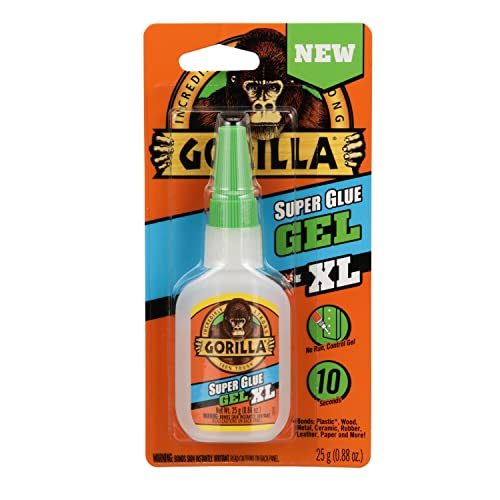
When you need more adhesive volume per session, the Gorilla Super Glue Gel XL delivers. At 25 grams, this is significantly more glue than most competing gel formulas, making it the practical choice for projects where you're bonding multiple parts at once or working with larger surface areas. The gel formula is thicker than standard liquid super glue, which keeps it exactly where you apply it rather than wicking into areas you don't intend to bond.
Impact Tough technology is the standout feature here. Gorilla engineered this formula to resist the kind of impact stress that makes standard cyanoacrylate bonds brittle. For PLA parts that will take real-world abuse — enclosures, functional hardware, tool handles — that increased impact resistance matters more than just set time. Speaking of set time, this formula bonds in 10 to 45 seconds with no clamping required, and reaches full cure in 24 hours. That's a practical window that gives you a few seconds to align pieces before the bond locks in.
The anti-clog metal pin cap is genuinely one of the better anti-clog systems on the market. It creates a proper airtight seal rather than just relying on a thin plastic plug, which means the bottle stays usable far longer than competitors that tend to seal shut after a few uses. For anyone who uses super glue intermittently — a repair here, an assembly project there — this feature alone justifies the purchase. The squeezable bottle body also makes dispensing smooth and consistent without the finger fatigue of rigid-body bottles.
Pros:
Cons:
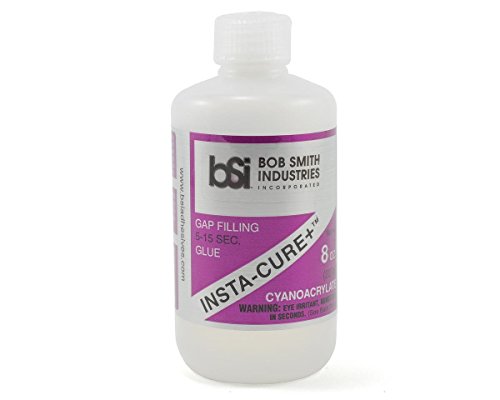
Bob Smith Industries has been a trusted name in the hobby and modeling community for decades, and the BSI-109 Insta-Cure Gap Filling formula is the reason experienced makers keep coming back. This is a medium-viscosity CA glue designed specifically to fill gaps — a critical feature when you're joining 3D printed parts that didn't quite come off the printer at perfect tolerance. Thin CA glues run right through gaps without bonding; this one bridges them.
The 8 oz bottle is a professional-tier quantity. If you're running a maker space, doing regular print production, or repairing a high volume of parts, the BSI-109 is the cost-effective bulk option that eliminates constant reordering. The gap-filling formula is thick enough to stay in imperfect joints while still being thin enough to wick into surface contact areas via capillary action. That combination of gap-filling and capillary bonding is what makes it so effective on PLA surfaces that aren't perfectly flat or uniform.
One thing to appreciate about BSI is their American manufacturing quality. The formula is consistent batch to batch, which matters for makers who rely on predictable cure behavior. For multi-part model assemblies where some joints have visible gaps that need filling before painting or finishing, this is your best tool. Apply, let it wick, and the joint disappears. The large bottle size also means you have enough to use accelerator (kicker) without worrying about wasting adhesive.
Pros:
Cons:
Zap-A-Gap from Pacer Technology has been a staple in the RC car, model airplane, and hobby communities for years, and it earns its reputation. The 1 oz size is exactly right for hobbyists who use CA glue regularly but don't need bulk quantities — you go through a bottle before it has a chance to cure in the tip, and the price point keeps it practical. Zap-A-Gap is a medium CA formula, which means it flows freely enough to penetrate into joint surfaces but has enough body to not run uncontrollably on smooth PLA.
What sets Pacer apart is their claim of a total adhesive system — they offer multiple viscosities (thin, medium, thick) under the Zap brand family, which means you can standardize on one manufacturer and have a compatible product for every bonding scenario. For PLA, the Zap-A-Gap medium formula is the one to reach for first. It handles both tight-fit joints and slightly imperfect bonds equally well, making it the most versatile single bottle for a 3D printing workspace.
The curing behavior is predictable and fast. At room temperature with average humidity, you get a strong initial grab in seconds and a functional bond within minutes. For makers who are doing creative projects — if you're building props, display models, or functional desk items the same way a graphic designer might be building a creative workspace setup, Zap-A-Gap gives you the speed to iterate quickly without waiting around for adhesive to cure. The 1 oz bottle also means easy storage and portability to wherever your project is happening.
Pros:
Cons:
When you need a bond that won't fail under real mechanical load, cyanoacrylate isn't the right tool. That's where two-part epoxy earns its place. The Gorilla 2 Part Epoxy is a 5-minute set formula that gives you enough working time to position parts, align joints, and make adjustments before the adhesive locks in. For structural PLA assemblies — mounting brackets, mechanical linkages, load-bearing fixtures — epoxy creates a bond that is often stronger than the PLA itself.
The dual-syringe applicator is one of the best dispensing systems on the market. It automatically mixes resin and hardener in equal proportions as you dispense, which eliminates the guesswork that leads to under-cured, soft spots in hand-mixed epoxy. Dries clear, which matters if the joint will be visible. The gap-filling property is also excellent — epoxy is inherently thick and stays put on uneven surfaces, filling voids without sagging or running.
The tradeoff with epoxy is working time management. Five minutes sounds like plenty, but once you mix, you're committed. You need to have parts positioned, surfaces clean, and application strategy figured out before you start. On PLA specifically, a quick scuff with 200-grit sandpaper and a wipe with isopropyl alcohol dramatically improves epoxy adhesion — PLA's smooth printed surface can be a weak point for any adhesive, and mechanical abrasion creates the tooth that epoxy needs to grip. Used correctly, this is the most structurally capable adhesive on this list.
Pros:
Cons:
Loctite Plastic Bonder occupies a unique position on this list: it's specifically engineered for plastic surfaces. While CA glues and epoxy are general-purpose adhesives that work reasonably well on PLA, Plastic Bonder's acrylic formula is chemically designed to fuse plastic substrates — including the polyester and acrylic polymers that PLA resembles in bonding behavior. The result is a structural plastic-to-plastic bond that outperforms generic super glue on PLA surfaces without requiring the surface prep that epoxy demands.
The double syringe design mirrors Gorilla's approach: equal-part dispensing ensures the correct ratio every time. The key differentiator is the 20–25 minute set time. That's significantly longer than the Gorilla epoxy's 5-minute window, which sounds like a disadvantage but is actually a feature for complex assemblies. You have genuine working time to place parts into fixtures, check alignment from multiple angles, and make fine adjustments before the bond sets. For multi-piece assemblies where alignment is critical, that extra working time is worth more than raw speed.
The high-strength formula bonds PLA, ABS, acrylic, polycarbonate, and most other common thermoplastics — so if you're working with mixed-material prints or bonding PLA to an injection-molded enclosure, this handles the entire job with one product. The rigid bond it creates is not flexible like rubber-toughened CA, so it's best for assemblies that don't need flex. For rigid structural plastic bonding in 2026, this is the most targeted tool on the list.
Pros:
Cons:
Plasti-Zap from Pacer Technology rounds out the list as the budget-conscious choice for makers who want a plastic-specific CA formula without spending much. The 1/3 oz size is small — deliberately so. It's sized for the occasional repair, the quick fix, the "my print broke and I need it functional in 5 minutes" scenario. And for that specific use case, it performs exactly as expected from a CA formula with Pacer's formulation quality behind it.
The Plasti-Zap formula is optimized for plastic bonding, which means it handles PLA's low-energy surface better than a generic household super glue. The small bottle keeps the formula fresh, which matters because CA glue in a large half-used bottle degrades faster than a small freshly-opened one. For makers who only occasionally need adhesive, a small bottle used in full is functionally better than a large bottle used halfway and left to thicken in the tip.
There's nothing exotic here — this is a clean, simple, functional CA glue at an accessible price point. If you've used any other Pacer/Zap product you know what to expect: consistent cure, reliable bond, no surprises. For beginners getting into 3D printing or makers who need a spare bottle of plastic-compatible glue to keep in the toolbox, Plasti-Zap is the no-fuss option. It won't replace a rubber-toughened formula for mechanical applications, but for display models, hobby builds, and general repairs, it gets the job done.
Pros:
Cons:
The three main adhesive types used for PLA each have distinct strengths. Cyanoacrylate (CA) glue — commonly called super glue — is the most convenient: fast set, no mixing, strong bond on contact. It's your go-to for quick repairs and tight-fitting joints. The limitation is brittleness under impact. Rubber-toughened CA formulas (like Loctite Ultra Gel) address this by adding elastomers to the formula, but even toughened CA is not as structurally capable as epoxy.
Two-part epoxy creates the strongest bond available for PLA and is the right choice when a joint will experience real mechanical loading. The tradeoff is preparation: you must mix the formula, work within the pot life window, and often surface-prep the PLA for best results. Two-part acrylic bonders like Loctite Plastic Bonder sit between these extremes — they're plastic-specific and strong, with a longer working time than epoxy but a cleaner application process than full two-part systems.
For most makers, a gel CA glue handles 90% of use cases. Buy an epoxy or acrylic bonder for the 10% that involves structural loads or difficult-to-bond surfaces.
CA glue viscosity determines how it flows and what types of joints it handles best. Thin CA wicks into hairline gaps via capillary action — ideal for joints that fit together perfectly but need adhesive pulled into the seam. It's fast but runs everywhere if your parts don't fit tightly. Medium CA (like Zap-A-Gap) is the all-rounder: it flows well enough to penetrate joints but has enough body to stay in place. Gel CA (Loctite Ultra Gel, Gorilla Gel XL) is the thickest, stays exactly where applied, won't run on vertical surfaces, and can bridge small gaps. For PLA assemblies with average fit quality off a home printer, gel or medium is the practical choice.
If you're curious about how PLA's surface properties compare to other filaments and how that affects bonding, our deep-dive on PETG vs PLA vs ABS covers the material science in plain language.
CA glue gives you seconds of working time — which is both an advantage and a limitation. You need parts aligned and positioned before applying adhesive. For complex assemblies, that pressure is real. If you need more working time, medium-viscosity CA (10–20 seconds) buys you a bit more than gel (5–10 seconds). Two-part epoxy with a 5-minute set time is the right call when you have multiple parts to fit simultaneously. The Loctite Plastic Bonder's 20–25 minute set is the most forgiving option for intricate assemblies.
Full cure time matters for structural use. Most CA glues reach usable strength in seconds but don't achieve maximum bond strength for 24 hours. Don't stress-test a glued PLA joint until it has had that full cure period, regardless of how solid it feels immediately after bonding.
PLA has a naturally smooth, low-surface-energy finish that resists adhesion. For CA glue on clean, flat-printed surfaces, you can often bond directly — the fast-setting nature of cyanoacrylate makes it forgiving. For epoxy and acrylic bonders, surface prep makes a significant difference. Scuff the bonding area with 180–220 grit sandpaper to create mechanical texture, then wipe with isopropyl alcohol to remove any grease, mold release, or skin oils. That two-step process — abrade, then clean — consistently improves bond strength across all adhesive types. For structural joints, never skip it.
The best overall glue for PLA in 2026 is Loctite Super Glue Ultra Gel Control. Its rubber-toughened cyanoacrylate formula bonds PLA quickly, resists impact and vibration, and the no-drip gel stays in place for clean, precise application. For structural mechanical bonds, upgrade to Gorilla 2 Part Epoxy or Loctite Plastic Bonder.
Yes, regular cyanoacrylate super glue works on PLA. PLA is a compatible substrate for CA adhesives. However, generic household super glues tend to be brittle under impact and may yellow over time. Products specifically formulated with rubber tougheners or plastic-bonding chemistry perform significantly better for long-term durability and impact resistance.
For CA glue on smooth, well-fitting joints, sanding is optional — the fast set handles it. For epoxy and acrylic bonders, sanding with 180–220 grit sandpaper followed by an isopropyl alcohol wipe is strongly recommended. The mechanical texture created by sanding gives epoxy the surface grip it needs to form a full-strength bond. Never skip the alcohol wipe — finger oils from handling prints are enough to degrade adhesion.
Yes, and it produces the strongest bond available for PLA. Two-part epoxy like Gorilla 2 Part Epoxy creates a structural bond that can exceed the tensile strength of the PLA itself. The key requirement is proper surface preparation: sand the bonding surfaces and clean with isopropyl alcohol before applying. The 5-minute working time is generous enough for most assemblies, and full strength develops over 24 hours.
Bob Smith Industries BSI-109 Insta-Cure Gap Filling is specifically designed for this scenario. Its medium-viscosity formula fills gaps that thin CA glues run through without bonding, while still wicking into surface contact areas for a strong hold. For the largest gaps or truly structural joints, Gorilla 2 Part Epoxy's inherent gap-filling property and high strength is the more capable option.
Cyanoacrylate fog (also called blooming) is caused by adhesive vapor curing on nearby surfaces. To prevent it: use gel CA rather than thin liquid CA (gel produces less vapor), apply adhesive sparingly, ensure good ventilation, and avoid applying CA glue near humid conditions. Applying glue from the inside of a joint rather than the outside also minimizes surface exposure to vapors. Accelerator spray can be useful for forcing rapid cure that limits vapor spread, but use it carefully as it can itself cause fogging if over-applied.


About Editorial Team
The DigiLabsPro editorial team covers cameras, lenses, photography gear, and creative technology with a focus on helping photographers make informed buying decisions. Our reviews and guides draw on hands-on testing and research across a wide range of equipment, from entry-level beginner kits to professional-grade systems.
You can get FREE Gifts. Or latest Free phones here.
Disable Ad block to reveal all the info. Once done, hit a button below
