Our top pick is the Herman Miller Aeron Chair Size B Fully Loaded Posture Fit — it remains the gold standard for therapists who need sustained lumbar support through back-to-back client sessions. Finding the right seating for a therapy practice involves more than picking an attractive office chair off a shelf. Therapists spend long hours seated, often leaning forward to engage clients, shifting positions to maintain attentive posture, and transitioning between note-taking and active listening. The physical demands are real, and the wrong chair contributes to chronic lower back pain, hip fatigue, and reduced focus by the end of the day.
In 2026, the market offers a wide range of options — from high-end ergonomic chairs engineered for eight-plus-hour use to nimble rolling stools designed for clinical mobility. Our team reviewed seven chairs across both categories, evaluating lumbar support, adjustability, material quality, and practical use in a therapy context. Whether the priority is a private practice office setup or a clinical room where quick repositioning matters, there is a strong option on this list. Anyone comparing therapy seating to other professional chair categories may also find our review of the Best Chair For Writers 2026 useful for context on long-session ergonomics.
The range of prices and styles here reflects how different therapy environments operate. A psychotherapist running a private office needs different features than a physical therapist or massage practitioner working in a clinical setting. We grouped the products accordingly — ergonomic desk chairs for long stationary sessions up front, followed by rolling stools suited for hands-on clinical work. According to OSHA's ergonomics guidelines, sustained seated postures without lumbar support and adjustability are among the leading contributors to musculoskeletal disorders in office-based professionals, which makes getting this purchase right an investment in long-term career health.
Contents





The Herman Miller Aeron Classic (1994–2016 production run) still commands serious respect in 2026, even though it has been discontinued and replaced by the Remastered version. This particular listing is a renewed unit sold by OFFICE LOGIX SHOP, which means buyers are getting the original Aeron engineering — legendary 8Z Pellicle mesh, fully adjustable PostureFit support at the sacrum and pelvis — at a price point considerably below a brand-new Remastered. The Size B fits most adults in the 5'3" to 6'0" range, and the "Fully Loaded" designation means it ships with all major adjustments intact, including tilt limiter, tilt tension, adjustable arms, and the lumbar-targeting PostureFit mechanism.
For therapists doing traditional talk therapy in a private practice office, this chair functions remarkably well. The breathable mesh eliminates the heat buildup that plagues foam-padded alternatives during extended seated hours, and the PostureFit's dual-pad system encourages the pelvis to tilt forward, which naturally promotes a more upright spinal curve. Our team found that the tilt limiter — allowing the backrest to lock at multiple recline angles — works especially well for practitioners who shift slightly during active listening phases. The overall build quality, even in renewed condition, is notably solid. Herman Miller's manufacturing tolerances have always been tight, and this unit retained that characteristic feel.
One honest caveat: buyers need to verify they are purchasing the Classic Aeron and not confusing it with the Remastered. The mechanisms differ. The Classic PostureFit supports the sacrum; the Remastered PostureFit SL adds a separate lumbar pad. Neither is objectively superior, but they feel different. For anyone primarily stationary during sessions, the Classic Aeron is still one of the most capable ergonomic chairs at any price. It's worth comparing notes with our Best Chairs For Breastfeeding 2026 review for another perspective on extended-use seating with lumbar demands.
Pros:
Cons:
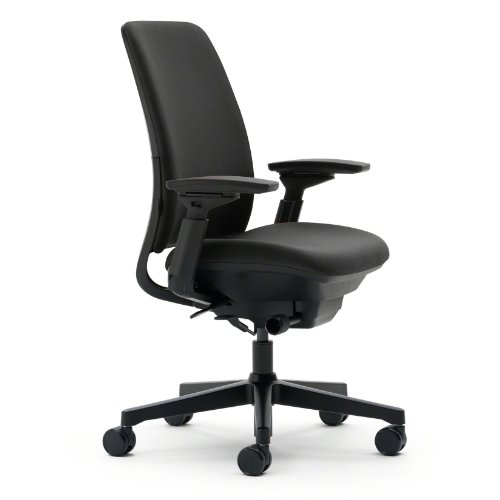
Steelcase built the Amia around one core idea: a chair that adapts to the user rather than requiring constant manual adjustment. The centerpiece is the hidden LiveLumbar system, a flexible mechanism embedded behind the backrest that responds dynamically to movement rather than requiring the occupant to set a static lumbar position. For therapists who naturally shift posture throughout a session — leaning slightly forward when engaging, sitting back during reflective pauses — this passive responsiveness is genuinely useful. The Buzz2 Black fabric used on this version is durable, breathable, and visually professional, making it a natural fit for private practice environments where the chair is visible to clients.
The seat itself features flexible front edges that reduce pressure on the back of the thighs, which matters for practitioners who cross their legs or shift laterally during long sessions. Additional cushioning in the seat pan provides comfort that holds up across 8–10 hours without the compression fatigue common in thinner-padded chairs. The 4D arm support — adjustable in height, width, pivot, and depth — gives a high degree of customization for different working postures. Full recline range with the option to lock upright is another practical feature, since many therapists prefer a more upright seated position during active clinical hours and a slight recline during documentation work.
Steelcase's manufacturing quality shows throughout. The Amia feels substantial without being heavy, and the adjustment mechanisms operate smoothly. At its price tier, it competes directly with the Herman Miller lineup, and in practice, the LiveLumbar's passive adaptability gives it a clear advantage for users who find manually-adjusted lumbar systems disruptive. Our team would place the Amia as the preferred choice for therapists who prioritize "set it and forget it" ergonomics over fine-grained manual tuning.
Pros:
Cons:
Humanscale takes a distinctly minimalist design philosophy with the Freedom Chair, and the result is something that looks quite different from the lever-laden ergonomic chairs that dominate this category. The most distinctive feature is the pivoting backrest that automatically adapts to spinal position during recline, using the occupant's body weight as the counterbalance mechanism rather than a manually set tension dial. This means the recline resistance automatically matches the user — a lighter therapist and a heavier one get appropriately calibrated resistance from the same chair without either touching an adjustment knob. For practitioners who dislike fiddling with settings between clients, this is an elegant solution.
The headrest is a significant differentiator in this group. Few chairs at this price include a genuinely useful headrest — many afterthought designs either sit too low or don't contour properly. The Freedom's headrest pivots to follow the neck position during recline, which provides real support rather than just a static cushion placed behind the skull. During documentation periods or between sessions when therapists are reviewing notes, the ability to recline and rest the neck properly reduces cumulative cervical strain. The graphite frame with black Fourtis fabric is understated and professional, avoiding the aggressive industrial look of some ergonomic chairs.
Standard hard casters are included for carpet flooring, which suits most office environments. The Duron arm height adjustment is straightforward, though it lacks the multi-axis range of the Steelcase Amia's 4D arms. The Freedom is best suited for therapists who value self-regulating mechanics over granular manual adjustability — a chair that works well without requiring the user to think about it. Our team considers it the strongest choice for practitioners who want premium ergonomics without the setup complexity.
Pros:
Cons:

Haworth is one of the more respected commercial furniture brands in the contract office space, and the Soji brings that manufacturing pedigree to a more accessible price point. The flexible mesh back is the chair's strongest feature — it contours softly to the spine rather than pushing against it with a rigid panel, and the built-in lumbar support adds targeted lower back pressure without requiring a separate adjustment. For therapists setting up a new practice or outfitting a secondary consultation room without a large furniture budget, the Soji offers a credible ergonomic option from a manufacturer known for quality control.
The adjustment package is substantial for the price: seat height, 4D armrests, adjustable lumbar, back lock, tilt tension control, and seat depth adjustment. A 350 lb weight capacity makes it suitable for a broad range of users. The plastic swivel base with hard casters is functional, though it lacks the premium feel of the aluminum bases on higher-end chairs. One notable omission is forward tilt — the Soji's product description explicitly states this model does not include forward tilt capability, which may matter for practitioners who use this posture for active engagement or keyboard-heavy documentation work.
Day-to-day use reveals a chair that punches above its price class. The mesh breathes reasonably well, the tilt mechanism operates smoothly, and the lumbar adjustment has a meaningful range. Build quality is not in the same league as Herman Miller or Steelcase, but the Soji holds up well under regular use. For a therapist who needs a dependable ergonomic desk chair without allocating $800–$1,500 to the purchase, the Soji is a strong contender worth serious consideration in 2026. For those also researching workspace equipment upgrades, our Best Desk For Video Editing 2026 review covers complementary workspace ergonomics that pair well with a quality chair investment.
Pros:
Cons:
Branch entered the direct-to-consumer workspace furniture market with a straightforward premise: deliver genuine ergonomic functionality at a mid-range price without the retail markup of legacy brands. The Branch Ergonomic Chair in Graphite/White delivers on that promise reasonably well. The breathable mesh backrest keeps air moving during extended sessions, and the seat height and depth adjustments allow the chair to fit a genuinely wide range of body proportions. For therapists operating out of home offices or telehealth setups where the chair doubles as a workspace seat during documentation, this is a practical and visually clean option.
Adjustable armrests, backrest angle, and seat position all operate smoothly on our test unit. The smooth-rolling wheels handle standard office flooring well. What distinguishes the Branch from similarly priced alternatives is the overall cohesion of its design — it doesn't feel like a collection of separately engineered components bolted together, but rather a chair designed as a unified product. The Graphite/White colorway is modern and clean, which suits the aesthetic many therapists prefer for client-visible office spaces in 2026.
Limitations are worth acknowledging. The Branch doesn't include the passive self-adjustment mechanics of the Humanscale Freedom or the LiveLumbar system of the Steelcase Amia. It's a competent manually-adjusted ergonomic chair at a mid-tier price. The lumbar support is adjustable but not dynamic. For home-office therapists who want a well-built, good-looking chair with solid ergonomic credentials — and don't want to spend $800+ on a Herman Miller — the Branch makes a compelling case.
Pros:
Cons:
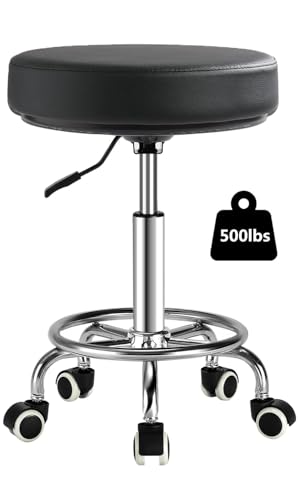
The LIMKOMES rolling stool occupies a different niche from the ergonomic desk chairs reviewed above. It's designed for practitioners who move frequently — physical therapists, occupational therapists, massage therapists, and clinical counselors who conduct sessions in medical-adjacent environments where the therapist positions themselves at different heights and distances from a client or treatment table. The 500 lb weight capacity is notably robust for this category, and the black patent leather seat surface wipes clean easily — a practical advantage in clinical settings where hygiene standards matter.
The round metal footrest ring is a genuine quality-of-life feature on extended use. Without a footrest, rolling stools create leg fatigue quickly as the feet dangle unsupported; with the ring, there's a stable surface to brace against. Five non-slip silent casters roll smoothly across hard floors and low-pile carpet without the grinding noise that cheaper stool wheels produce. LIMKOMES also offers replacement parts including wheels, casters, and gas lift cylinders through their storefront, which extends the useful life of the stool beyond what most budget clinical furniture can offer.
The ergonomic limitations of a stool without a backrest are real, and our team would not recommend this as a sole chair for therapists doing full-day stationary sessions. Back fatigue accumulates faster without lumbar support, and it requires active core engagement to maintain posture. But for therapists who alternate between a primary ergonomic desk chair and a rolling stool during hands-on clinical phases, the LIMKOMES fills that secondary role well. The price is competitive, and the 500 lb capacity and replacement parts availability make it a durable long-term purchase for clinical environments.
Pros:
Cons:
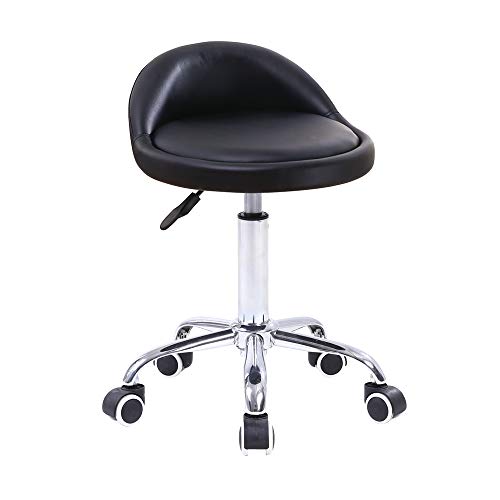
The KKTONER stool adds one important feature over the LIMKOMES: a backrest. For therapists who want a rolling stool but find fully backrest-free options uncomfortable after more than an hour, this hybrid design offers a practical middle ground. The PU leather cushion over high-density sponge provides reasonable seated comfort within its price class, and the 300 lb weight capacity covers most users. Seat height adjustment runs from 18.1 to 24.4 inches — a solid range that works for both standard desk heights and elevated clinical table configurations. The cushion diameter of 14.4 inches is generous for a round stool design.
360-degree rotation on five rolling caster wheels gives full maneuverability in tight clinical spaces. The 17.3-inch wheel diameter is on the smaller side, which suits smooth floors and low-pile carpet well but may feel slightly stiff on thicker carpet or uneven flooring. The backrest itself is compact — it supports the lower back rather than providing full lumbar-to-thoracic coverage — so it functions more as a back brace than a comprehensive support system. For short clinical positioning tasks, it does the job. For sustained 20-plus-minute seated use, most users will notice the limits.
At its price point, the KKTONER is a sensible buy for therapists outfitting a multi-room clinical practice where each room needs a mobile stool but budget constraints make a LIMKOMES or premium stool impractical for every space. The PU leather surface cleans easily, the build is straightforward, and the backrest addition over standard backless stools makes a meaningful comfort difference. Anyone looking at supplementary workspace purchases alongside their seating should check our comprehensive overview on the best ergonomic workspace products for broader context.
Pros:
Cons:
The most important distinction when evaluating chairs for therapy work is how lumbar support is delivered. Static lumbar support — a fixed pad or cushion set at a single height — works reasonably well for users who maintain consistent posture, but therapists naturally shift position throughout sessions. Dynamic systems like Steelcase's LiveLumbar or Humanscale's weight-responsive backrest adapt in real time to postural changes, which reduces the cumulative strain that static support misses during transitional movements. For practitioners doing back-to-back client sessions across six to eight hours, dynamic lumbar support is worth prioritizing even if it adds to the cost.
The division between ergonomic chairs and rolling stools is not purely aesthetic — it reflects genuinely different work patterns. Traditional psychotherapists, counselors, and coaches doing stationary seated sessions benefit most from a full ergonomic chair with backrest, lumbar support, and armrests. Physical therapists, occupational therapists, and hands-on clinical practitioners often need to reposition quickly around a treatment table or between seated and standing postures, where a rolling stool's mobility and low-profile seating height are practical advantages. Many clinical therapists maintain both: a primary ergonomic chair for desk and documentation work, and a stool for hands-on treatment phases.
More adjustability is generally better, but only if the adjustments are actually used. A chair with twelve adjustment points that the occupant never changes provides no more benefit than one with four. Our team recommends prioritizing three core adjustments for therapy use: seat height, lumbar position, and armrest height. Seat depth adjustment becomes important for practitioners with shorter or longer-than-average femur length. Tilt tension matters for chairs used in reclined postures during documentation. Additional adjustments — 4D arms, seat edge flex, tilt limiter — add value for users who take time to dial in a chair precisely, but should not drive the purchasing decision over core ergonomic mechanics.
A therapy practice chair is not replaced annually — it's a multi-year investment that sees hundreds of hours of use. Material choices matter significantly at this horizon. Mesh backrests maintain their support characteristics longer than foam-padded panels, which compress and lose rebound over years of use. PU leather surfaces on stools will crack at stress points with extended use and UV exposure; genuine or higher-grade synthetic alternatives hold up better. Frame materials — steel and aluminum versus plastic — determine long-term stability. For the ergonomic desk chairs in this review, the Herman Miller, Steelcase, and Humanscale options carry manufacturer warranties that reflect confidence in multi-year durability. Haworth and Branch sit a step below but still represent reasonable long-term value at their respective price points.
For full-day stationary use, the priority should be a high-quality ergonomic chair with dynamic lumbar support, breathable mesh backrest, and adjustable seat depth. The Steelcase Amia and Humanscale Freedom are particularly strong at this use case because both use self-adjusting support mechanisms that reduce the fatigue accumulated over long seated sessions without requiring constant manual repositioning. Fixed lumbar pads and foam-padded seats tend to underperform past the four-hour mark.
Rolling stools work well for therapists who move frequently during sessions — hands-on practitioners, physical therapists, or anyone who repositions around a client or treatment table regularly. For stationary talk therapy or documentation work, a rolling stool without a backrest creates cumulative lumbar fatigue that a proper ergonomic chair avoids. Many practitioners find the best setup combines both: an ergonomic chair as the primary seat and a stool as a secondary clinical tool.
The Classic Aeron (1994–2016) uses a PostureFit sacral support system targeting the base of the spine. The Remastered Aeron (2017+) updated the PostureFit to PostureFit SL, adding a separate adjustable lumbar pad for dual-zone support, and made changes to the tilt mechanics and 8Z Pellicle mesh zones. The renewed Classic units available on Amazon in 2026 offer the original engineering at a lower price, but without the warranty coverage of a new Remastered unit. For most buyers, the Remastered represents the current engineering refinement — but the Classic remains highly capable.
A headrest is most valuable during reclined posture — documentation periods, breaks between sessions, or any time the occupant leans back significantly. For therapists who maintain a primarily upright posture throughout client sessions, a headrest plays a limited role during active work hours. The Humanscale Freedom's pivoting headrest is notably well-designed, following the neck position during recline rather than staying fixed. For therapists who value end-of-day recovery posture or who frequently recline during documentation, a quality headrest adds meaningful value.
Aesthetic and professional appearance matter alongside ergonomics in client-facing therapy offices. Chairs with clean, understated designs — the Humanscale Freedom in graphite, the Branch in graphite/white, or the Steelcase Amia in black fabric — integrate naturally into professional environments without the industrial ergonomic appearance of some commercial models. Noise is also worth considering: squeaky tilt mechanisms or loud caster rolls are disruptive in therapeutic settings that require a calm, quiet atmosphere. Steelcase and Herman Miller products are typically quiet in operation, and the LIMKOMES stool specifically uses silent non-slip casters.
For therapists seeing clients full-time, the case for investing in a Herman Miller, Steelcase, or Humanscale chair is strong. These chairs carry multi-year warranties, use materials that maintain performance for a decade or more, and are backed by decades of ergonomic research. The cost-per-hour calculation over a chair's lifespan often makes premium options comparable to or cheaper than mid-range alternatives that require replacement every three to four years. For part-time practitioners or therapists just establishing a practice, the Haworth Soji or Branch offer credible ergonomic performance at a significantly lower entry point.
The chair a therapist sits in every day is as much a clinical tool as anything else in the room — buy for the long session, not the short one.


About Editorial Team
The DigiLabsPro editorial team covers cameras, lenses, photography gear, and creative technology with a focus on helping photographers make informed buying decisions. Our reviews and guides draw on hands-on testing and research across a wide range of equipment, from entry-level beginner kits to professional-grade systems.
You can get FREE Gifts. Or latest Free phones here.
Disable Ad block to reveal all the info. Once done, hit a button below
