Picture this: it's the middle of exam season, you're three hours into a study session, and your back is screaming at you. You shift, you slouch, you stand up and pace — anything to escape that nagging discomfort. A good study chair doesn't just make you more comfortable; it can literally keep you focused longer and protect your posture for years to come. With so many options on Amazon, though, it's easy to feel overwhelmed.
Whether you're setting up a dorm room, a home office, or a dedicated study nook, the chair you spend hours in matters more than most people realize. Ergonomics, adjustability, and build quality are the big three factors separating a chair that helps you ace your finals from one that sends you to a chiropractor. We've rounded up seven of the best chairs for studying in 2026 — ranging from budget-friendly picks to premium ergonomic workhorses — so you can find the right fit for your setup and budget.
If you're building out your full study workspace, you might also want to check out our guide to the best laptops with numeric keypads for students and professionals who crunch a lot of numbers. And don't underestimate how much a proper chair complements a well-rounded ergonomic setup — something we explore further in our full buying guide section. For now, let's dive into the picks.
Contents
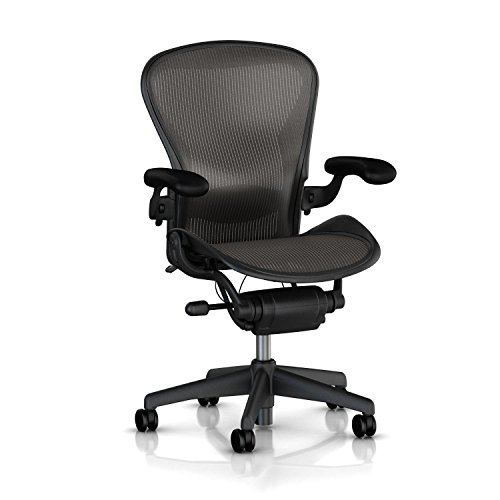






If you're serious about long study sessions, the Herman Miller Aeron is the chair that professionals and power users keep coming back to, and for good reason. This is the Size B version in Stainless Steel, which fits a wide range of body types — roughly 5'3" to 6'2" — and it comes fully loaded with every adjustment you'd ever want. The PostureFit lumbar system doesn't just support your lower back; it supports both the sacrum and lumbar region, which keeps your pelvis tilted correctly and prevents the dreaded end-of-day slouch. The mesh suspension distributes your weight evenly across the seat and back, eliminating pressure points that foam chairs create over time.
The tension control and tilt lock let you dial in exactly how much recline resistance you want, and the forward tilt option is genuinely useful for leaning into a desk for detailed work. Fully adjustable arms mean you can position them precisely where your shoulders need them. One thing to note: this is listed as an open-box unit, so inspect it carefully on arrival. That said, the 12-year warranty still applies, giving you serious peace of mind. Herman Miller's build quality is legendary for a reason — many Aeron owners report using theirs for a decade or more without significant wear.
It's an investment, no question. But if you spend four to eight hours a day studying or working, the cost-per-hour calculus changes quickly. You're not just buying a chair; you're buying protection for your back over years of intensive use. Pair it with a good desk setup and you've got a workstation that can carry you through college, grad school, and beyond.
Pros:
Cons:
Branch has quietly built a reputation for delivering near-premium ergonomics at a fraction of the Herman Miller price, and the Branch Ergonomic Chair delivers on that promise. It comes in a clean black finish and features a breathable mesh backrest that keeps airflow going during those marathon study nights. Where it really shines is its eight distinct adjustment points — you can fine-tune the recline, tilt tension, lumbar position height and depth, armrest height, width, depth, and pivot. That's a level of customization you typically only see on chairs costing twice as much.
The lumbar support is particularly well-designed. Rather than a fixed foam bump that either hits you in the right spot or doesn't, the Branch's lumbar pad adjusts up and down so you can align it precisely with your lumbar curve. The seat depth is also adjustable, which matters if you're on the shorter side — you want the front edge of the seat to sit a couple of inches behind your knees, and most chairs don't let you control that. The smooth-rolling caster wheels work well on both hard floors and carpet without scratching surfaces.
Assembly is straightforward and takes about 20–30 minutes. Build quality feels solid — no creaking, no wobble. For students and remote workers who want serious ergonomic features without the sticker shock of a Herman Miller or Steelcase, the Branch is genuinely hard to beat in 2026.
Pros:
Cons:
HON has been outfitting offices and university libraries for decades, and the Ignition 2.0 is their answer to the question: what do you get when you want commercial-grade durability without a commercial-grade price? The Navy/Black colorway has a professional look that works equally well in a dorm room or a home study. The hybrid fabric-and-mesh design is a thoughtful compromise — the mesh back keeps things cool, while the fabric seat offers a bit more cushion and texture than pure mesh seats.
The Ignition 2.0 features an adjustable lumbar support that you can position to your preference, along with seat height adjustment, arm height adjustment, and a synchro-tilt mechanism with tension control. It's not as extensively adjustable as the Branch or the Aeron, but everything it does offer is executed reliably. HON's commercial build quality is a genuine differentiator here — this chair is built to ANSI/BIFMA standards, meaning it's been tested for the kind of repeated, heavy daily use that average consumer chairs aren't rated for.
If you're looking for something that'll still feel solid in five years of daily studying, the HON Ignition 2.0 hits that sweet spot between affordability and durability. It won't wow you with a dozen customization options, but every adjustment it offers works smoothly and holds its position. For students who want a reliable, set-it-and-forget-it chair that lasts through undergrad and beyond, this is a strong pick.
Pros:
Cons:
Not everyone's working with a big budget for their study setup, and the Flash Furniture Kelista is proof that you don't need to spend a fortune to get a functional, ergonomically-minded chair. Flash Furniture has carved out a niche in the affordable commercial space, and the Kelista is one of their most practical offerings. The ventilated curved mesh back with integrated lumbar support helps keep you cool and upright during long sessions — a feature you often don't see at this price point. The flip-up armrests are a clever touch that lets you tuck the chair completely under your desk when not in use, saving space in tighter rooms.
The 3-inch padded waterfall seat is designed to reduce pressure on the backs of your thighs, which is a real comfort boost if you're sitting for several hours. It's not as plush as a foam executive chair, but the waterfall edge prevents that uncomfortable cutting sensation you get from firmer seats. Seat height is pneumatically adjustable via a gas lift, and the 360-degree swivel lets you move naturally without straining. This chair works well in dorm rooms, small apartments, and home offices — anywhere you need solid functionality in a compact footprint.
Where it falls short is in the depth of adjustment options — there's no seat depth control, and the lumbar is fixed rather than adjustable. But for the price, the Kelista delivers a surprisingly complete ergonomic package that outperforms most chairs in its category. If you're a student on a tight budget who still wants mesh breathability and real lumbar consideration, this should be near the top of your list.
Pros:
Cons:
Sometimes your study space is a corner of a bedroom or a narrow apartment desk, and a full-sized ergonomic chair just doesn't fit. That's exactly the problem the DUMOS Small Armless Chair was built to solve. At roughly 24" long by 16" wide, it has a notably compact footprint compared to standard task chairs, and the armless design lets it slide completely under most desks — a practical win when you're working in close quarters. The high-density 2.5-inch foam cushion upholstered in PU leather gives it a comfortable, polished look that works well in home environments where you want something a step above basic.
The ergonomic backrest is made from a U-shaped metal frame with padded foam, providing low-back lumbar support that's surprisingly effective for a chair this compact. It won't replace a full adjustable lumbar system, but it keeps your lower back from collapsing during shorter to medium-length sessions. The PU leather has a twill pattern that allows for some breathability — not as effective as mesh, but better than solid faux leather. Height is pneumatically adjustable, and the 360-degree swivel casters roll smoothly on hard floors.
The tradeoff for compactness is straightforward: if you're taller than about 5'10" or you prefer arm support while you type, this isn't your chair. But for smaller-framed users, or anyone dealing with a genuinely cramped workspace, the DUMOS is an intelligently designed solution that doesn't sacrifice comfort for footprint. It's also a decent pick for secondary spaces — a reading nook, a craft table, or a kid's study desk.
Pros:
Cons:
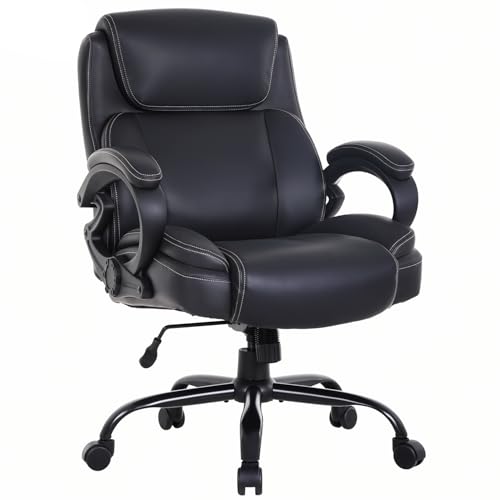
Standard office chairs are designed for an average body size that doesn't represent everyone, and if you're a larger or taller person, you've probably felt that mismatch — too-narrow seats, armrests that don't spread wide enough, or a chair that starts wobbling after a few months. The BestOffice Big and Tall addresses all of that with a 400-pound weight capacity, a wide seat, and reinforced construction designed specifically for heavier-duty use. The high-resilience backrest and extra-thick cushioning give it a distinctly more substantial feel than standard task chairs.
The PU leather upholstery strikes a balance between looking refined and allowing enough airflow to prevent overheating. The rocking function with 90°–120° recline is a nice bonus — you can lean back during a reading break without feeling like you're fighting the chair's resistance. Height adjustment is standard pneumatic, and the chair accommodates a wide range of desk heights. The ergonomic structure is designed to follow the natural curve of your spine, keeping your posture aligned even during extended use.
It's worth noting that "big and tall" chairs sometimes sacrifice style for function, but this one manages to look reasonably professional without being clunky. For larger-framed students who've had bad experiences with chairs that feel unstable or cramped, the BestOffice Big and Tall is a straightforward fix — built to handle more and accommodate more, without asking you to compromise. It's a newer model, so long-term durability data is still accumulating, but early feedback is encouraging.
Pros:
Cons:
The HAG Capisco isn't a conventional chair — it's a Scandinavian-designed seating system built around the idea that your body shouldn't be locked into one static position for hours. If you've invested in a standing desk for your study setup, this is the pairing you've been looking for. The saddle-inspired seat design encourages a forward-tilted pelvic position that naturally aligns your spine, and the wide height range means you can use it perched high at a standing desk, sitting normally at a conventional height, or anywhere in between. The Camira Era seat fabric is sustainable and has a premium texture that holds up well over time.
The HAG Footring accessory (included in this listing) mounts to the base of the Capisco and provides a place to rest your feet when you're working at elevated heights — a small detail that makes a significant difference in long-term comfort and posture when you're perched at standing-desk height. Without a footring, your legs tend to dangle, which creates thigh pressure and encourages slouching. With it, you can maintain proper alignment for much longer periods. The footring is height-adjustable to fit different users.
The Capisco can also be sat on backwards — saddle-style with the backrest supporting your chest — which opens up a whole range of alternative seating positions that conventional chairs simply can't offer. This is genuinely useful for different study tasks: leaning forward over reference materials, for instance. It's a niche chair that requires a bit of adjustment time, but for standing-desk users who want to move more and break the static-sitting habit, there's nothing quite like it. Bear in mind that this listing focuses on the footring accessory — confirm the seat is included or purchased separately before ordering.
Pros:
Cons:
Buying a study chair is one of those decisions that's easy to underestimate. You'll spend hundreds of hours in it — potentially thousands over the course of a degree or a career — so getting it right has a measurable impact on your health, focus, and productivity. Here's what to consider before you commit.
Ergonomics isn't a buzzword — it's the science of fitting a tool to the human using it, and for chairs, it's the most important purchasing criterion. According to the Occupational Safety and Health Administration (OSHA), poor seating ergonomics is one of the leading contributors to musculoskeletal disorders among desk workers and students. At minimum, look for a chair with adjustable seat height, lumbar support, and armrests. The gold standard adds adjustable seat depth, tilt tension control, and tilt lock — these features together let you dial in a posture that keeps your hips, spine, and shoulders aligned properly during extended study sessions.
Lumbar support is particularly critical. Your lower back has a natural inward curve, and most people lose that curve when they sit for long periods, which loads the spinal discs unevenly. A chair with adjustable lumbar support lets you maintain that curve without actively concentrating on it. If back health is a concern for you, you might also want to read our guide to the best office chairs for pregnancy, which covers related ergonomic principles in detail.
Material choice affects comfort, breathability, and durability. Mesh backs are excellent for airflow — if you run warm or study in a non-air-conditioned environment, a mesh chair will keep you significantly cooler over a three-hour session compared to foam or PU leather. The tradeoff is that mesh can feel firmer and doesn't conform to your body the way foam does.
Foam and fabric seats typically offer a softer initial feel and better pressure distribution for the seat surface specifically. Many higher-end chairs use a hybrid approach — mesh back for breathability, fabric or foam seat for cushioning — which is often the best of both worlds. PU leather looks polished and cleans easily, but it traps heat and degrades faster with heavy use. For a study chair used daily, mesh or hybrid construction tends to outperform solid PU leather over the long term.
Chairs are sized for the average person, which means they don't fit everyone well. If you're under 5'4" or over 6'2", pay special attention to seat depth, height range, and arm width. The right fit means your feet rest flat on the floor, your knees are at roughly 90 degrees, and your lower back contacts the lumbar support without you having to scoot forward. If the seat is too deep, you'll either sit with your lower back unsupported or perch on the edge — neither is good.
For larger users, always check the stated weight capacity and seat width before buying. A chair rated for 250 pounds will often show premature wear on a heavier user, and a narrow seat is simply uncomfortable regardless of cushioning quality. For compact spaces, measure your desk area and consider armless or flip-arm designs that slide under the desk cleanly.
It's tempting to buy the cheapest chair that sounds reasonable, but study chairs are a case where the cost-per-hour math matters. A $100 chair that lasts two years and gives you back pain works out worse than a $400 chair that lasts eight years and keeps you comfortable. That said, you don't need to go Herman Miller on a tight budget. The mid-range sweet spot — roughly $150–$300 — has genuinely excellent options in 2026 that offer most of the ergonomic features of premium chairs at a fraction of the price.
Look for chairs that come with at least a one-year warranty, and prioritize brands with a track record in commercial or office environments — they're typically built to more rigorous standards than generic consumer chairs. If you're also equipping the rest of your study space, our guide to the best foot and calf massagers covers a complementary ergonomic accessory that pairs well with a good chair for reducing lower-body fatigue during long sessions.
The most important features are adjustable seat height, lumbar support, and armrests. Beyond those basics, look for adjustable seat depth, tilt tension control, and a breathable backrest material like mesh. These features together let you maintain proper posture during extended sessions and reduce the fatigue and discomfort that break concentration. If you study for more than two hours at a stretch, treat these as necessities rather than nice-to-haves.
It depends on your priorities. Mesh chairs are significantly more breathable, which reduces heat buildup during long sessions — a real comfort factor. They also tend to have a longer lifespan since the mesh doesn't compress or crack the way foam and PU leather do. Padded chairs feel softer initially and can be gentler on the sit bones. Many people find that a hybrid design — mesh back with a padded seat — gives the best overall experience for extended studying.
Extremely important. When you sit for prolonged periods, your lower back naturally tends to flatten and round, which puts uneven stress on the spinal discs and surrounding muscles. Proper lumbar support maintains the natural inward curve of your lower back, preventing this collapse. Over months and years of daily studying, the difference between a chair with good lumbar support and one without can show up as chronic back pain or, conversely, as a healthy spine. Adjustable lumbar — where you can move the support pad up or down to align with your specific anatomy — is better than fixed lumbar.
The general rule is to set the chair height so your feet rest flat on the floor, your knees are at approximately a 90-degree angle, and your thighs are roughly parallel to the ground. Your elbows should be close to a 90-degree angle when your hands rest on the desk. If you can't achieve both foot contact and proper elbow height simultaneously, a footrest can bridge the gap for shorter users. Avoid letting your feet dangle — it creates pressure under the thighs and restricts circulation over time.
For students who study four or more hours a day, yes — a quality ergonomic chair is one of the highest-value study investments you can make. The performance and health benefits compound over semesters and years. That said, "expensive" is relative: you don't need to spend $1,000+ to get excellent ergonomics. The mid-range options in this list — the Branch Ergonomic Chair and the HON Ignition 2.0 — deliver premium-adjacent ergonomic features at accessible price points. If budget is tight, even a modestly priced chair with adjustable height and basic lumbar support beats a dining chair or a floor cushion.
Yes, and there's solid reasoning behind this. Physical discomfort is a major source of cognitive interruption — when your back hurts or your legs go numb, your brain shifts attention toward the discomfort and away from the material you're trying to learn. A comfortable, well-fitted chair removes that interference, letting you sustain focus for longer uninterrupted stretches. Studies in occupational health research have consistently linked poor seating ergonomics to reduced productivity and increased error rates. It's not a magic focus pill, but eliminating physical distraction is a straightforward win for study performance.


About Editorial Team
The DigiLabsPro editorial team covers cameras, lenses, photography gear, and creative technology with a focus on helping photographers make informed buying decisions. Our reviews and guides draw on hands-on testing and research across a wide range of equipment, from entry-level beginner kits to professional-grade systems.
You can get FREE Gifts. Or latest Free phones here.
Disable Ad block to reveal all the info. Once done, hit a button below
