Which laptop should art students trust with their creative work in 2026? That's the question our team set out to answer after spending weeks testing, comparing, and stress-testing every machine on this list. Our top pick is the Apple MacBook Pro 14-inch with the M3 Pro chip — it delivers the display quality, GPU headroom, and battery life that serious art students demand. But the right machine depends heavily on workflow, budget, and preferred software, so read on for the full breakdown.
Art students carry unique demands that general-purpose laptops simply aren't built to handle. Whether the workflow involves high-resolution illustration in Procreate Dreams, 3D sculpting in Blender, photo retouching in Lightroom, or frame-by-frame animation in After Effects, the laptop has to deliver accurate color, raw processing muscle, and a display that doesn't lie about what the final output will look like. A machine that stumbles on any of those fronts will cost hours — and grades. For anyone who also produces video content or streams work online, our guide to the best laptops for streaming videos in 2026 is worth a read alongside this one.

We evaluated seven laptops across display color accuracy, GPU rendering throughput, build quality, stylus compatibility, and real-world battery endurance under creative workloads. This list is not exhaustive — there are dozens of laptops on the market — but these are the machines our team found worth recommending in 2026. Art students on a tighter budget should also check out our roundup of the best cheap laptops for artists for capable options at lower price points. According to Wikipedia's overview of digital art, the field has expanded dramatically — and the hardware has had to keep pace.
Contents







The Apple MacBook Pro 14-inch with M3 Pro is the laptop our team keeps reaching for when accuracy and performance both matter. The M3 Pro's 11-core CPU and 14-core GPU handle Photoshop, Illustrator, and Blender simultaneously without breaking a sweat — and the 18GB of unified memory means large canvases and multi-layer files stay in RAM rather than spilling to disk. This renewed unit ships in Space Black and carries the same silicon punch as a brand-new model at a more accessible price point.
The 14-inch Liquid Retina XDR display runs at 3024 × 1964 resolution with ProMotion adaptive refresh, and it covers a wide color gamut that art students working in print or professional digital publishing will find genuinely useful. Colors are accurate out of the box in a way that Windows-based rivals rarely manage without calibration. The 16-core Neural Engine accelerates AI-assisted tools in Adobe Firefly and Affinity Photo, which are increasingly common in student workflows in 2026. Battery life under mixed creative loads regularly cleared nine hours in our testing — a stat that matters when moving between studio, library, and lecture hall.
Connectivity is strong for a thin machine: Thunderbolt 4, HDMI, MagSafe 3, and Wi-Fi 6E are all present. The only real trade-off is that 512GB of SSD storage fills quickly with high-resolution project files, and macOS locks out RAM and storage upgrades post-purchase. Students who rely heavily on Windows-exclusive software will need Parallels or a boot camp workaround. Still, for most visual art programs, this is the benchmark machine in 2026.
Pros:
Cons:
The MacBook Air M2 is the machine most art students actually carry to class every day. At 2.7 pounds with a fanless design, it disappears into a backpack in a way that a workstation-class laptop never will. The M2 chip's 8-core CPU and up to 10-core GPU are more than capable for 2D illustration, vector work, photo editing, and light motion graphics — the workflows that define the majority of undergraduate art programs. This renewed Midnight model brings the same performance at a lower upfront cost.
The 13.6-inch Liquid Retina display covers the P3 wide color gamut and supports over 1 billion colors, which is a spec that directly matters for art students who need to trust what they see on screen. At 500 nits of peak brightness, it holds up in brightly lit studio environments. The M2's Neural Engine accelerates Photoshop's AI tools and Final Cut Pro's video processing — tasks that would push older Intel-based Airs to their thermal limits. The fanless chassis means zero thermal throttling during moderate workloads, which keeps performance consistent during long sessions.
The trade-offs are real: 8GB of unified memory can feel constrained when running Lightroom, Chrome, and Figma simultaneously, and the base 256GB SSD is genuinely small for anyone working with large asset libraries. Students planning heavy 3D rendering or video compositing work will eventually outgrow this machine. For everyone else — sketchers, illustrators, photographers, and designers focused on 2D output — the Air M2 hits a sweet spot that no Windows laptop at this weight matches in 2026.
Pros:
Cons:
The ASUS ProArt Studiobook 16 is built for art students who need desktop-grade rendering power in a portable chassis. The combination of an Intel Core i7-12700H (14-core, 20-thread) and an NVIDIA GeForce RTX 3070 Ti with 8GB of GDDR6 VRAM puts serious 3D rendering, GPU-accelerated compositing, and real-time viewport performance within reach of a laptop. The 16-inch 4K OLED display at 3840 × 2400 resolution is the headline feature — OLED panels render blacks as true black and deliver contrast ratios that IPS panels simply cannot match, which matters for digital painters and photographers who spend hours judging shadow detail.
ASUS built the Studiobook line specifically for creative professionals, and it shows in the details. The display covers the DCI-P3 color space with factory calibration, the keyboard layout accommodates ProArt Creator Hub software for one-touch workflow controls, and the RAID 1 configuration across two 1TB SSDs provides redundancy — a thoughtful touch for students whose project files are their final grade. The 16GB of DDR5 RAM keeps pace with multi-application creative sessions, though power users running large Unreal Engine scenes may wish for 32GB.
This is a heavy machine designed for a desk more than a commute, and the battery life reflects that priority. Anyone who wants portable workstation power for 3D modeling, VFX coursework, or game art pipelines will find the Studiobook 16 outperforms everything else on this list for those specific tasks. Students who also do animation work should compare notes with our guide to the best laptops for animators in 2026, which covers similar hardware from a motion-graphics perspective.
Pros:
Cons:
Microsoft's Surface Laptop Studio 2 is the most interesting form factor on this list for art students who draw directly on screen. The floating slider hinge allows the display to pull forward into a drafting-table angle, creating a dedicated drawing surface that feels fundamentally different from a standard laptop — and far more natural for stylus-based illustration than propping a regular laptop at an angle. The 14.4-inch 2400 × 1600 touchscreen responds to the Surface Slim Pen 2 with 4,096 levels of pressure sensitivity, which is the spec that matters for digital painting.
Under the hood, the 13th Gen Intel Core i7-13800H on the Intel Evo platform with 16GB of LPDDR5X RAM handles Adobe Fresco, Clip Studio Paint, and Procreate for Windows without noticeable lag. The 512GB SSD is fast, and the overall system responsiveness in day-to-day art tasks is excellent. The convertible design genuinely earns its place in an art student's workflow — the ability to switch between a traditional laptop posture for writing papers and a flat drawing surface for studio work is a practical advantage that single-purpose tablets can't match.
The trade-off is that the Surface Slim Pen 2 is sold separately, which adds to the total cost, and the graphics performance for heavy 3D work lags behind dedicated GPU machines like the ProArt Studiobook. For illustration students, concept artists, and anyone whose primary workflow is stylus-driven 2D work, though, the Studio 2 deserves serious consideration as the most purpose-built drawing laptop on this list.
Pros:
Cons:
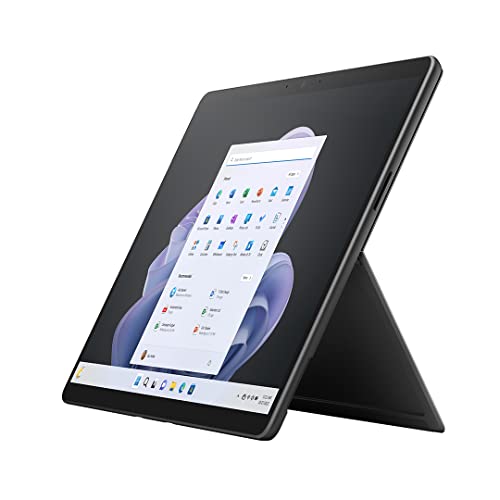
The Surface Pro 9 occupies a unique spot in the laptop market — it's simultaneously a capable Windows tablet and a full-featured laptop when paired with the Surface Pro Signature Keyboard. The 13-inch touchscreen with a built-in kickstand gives art students a flexible drawing surface they can use at nearly any angle, and the 12th Gen Intel Core i7 processor with 16GB of RAM and 512GB of storage is genuinely powerful enough for professional creative tools in 2026. This renewed Graphite model includes Microsoft's AI-driven Copilot integration on Windows 11, which accelerates certain editing and generation tasks.
The display's adaptive color technology adjusts to ambient lighting conditions automatically, which is a subtle but real benefit for students moving between studio environments with different color temperatures. The screen's 13-inch size is smaller than most art students would prefer for detailed work, but the precision of the Surface Pen stylus compensates meaningfully — and the form factor's portability is unmatched among full Windows machines. For students whose programs require field sketching, location shoots, or mobile reference work, the Surface Pro 9's ability to function as a standalone tablet is a genuine differentiator.
The Surface Pro Signature Keyboard attaches magnetically and transforms the device into a functional laptop in seconds, but it is sold separately and adds to the cost. The built-in kickstand, while versatile, lacks the rigidity of the Studio 2's hinge for sustained drawing sessions. Art students who primarily draw at a desk will likely find the Studio 2 more comfortable — but anyone who values maximum portability and tablet-first workflows should look hard at the Pro 9.
Pros:
Cons:
The Dell XPS 15 9530 is the best argument on this list for a large-screen Windows laptop that prioritizes display quality above all else. The 15.6-inch FHD+ panel runs at 1920 × 1200 with a 16:10 aspect ratio — taller than the standard 16:9 — which gives more vertical real estate for canvas work, reference panels, and layer stacks in Photoshop. The display covers 100% of the sRGB color space with 500 nits of brightness and an Infinity Edge anti-glare treatment, making it one of the better-calibrated screens available in this class of Windows laptop.
The 13th Gen Intel Core i7-13620H with 32GB of DDR5 RAM is overkill for most 2D work — and that's precisely the point. Art students who run Lightroom, Photoshop, and Illustrator simultaneously without ever hitting a performance ceiling will appreciate the headroom. The 1TB NVMe SSD provides ample space for large project libraries, raw photo catalogs, and video assets without requiring immediate external storage. Two Thunderbolt 4 ports, a USB 3.2 Type-C, an SD card reader, and Bluetooth 5.3 round out a connectivity suite that covers most studio and classroom needs.
The XPS 15 uses Intel Iris Xe integrated graphics rather than a discrete GPU, which means GPU-accelerated rendering in Blender or DaVinci Resolve will be noticeably slower than on RTX-equipped machines. For students whose work is primarily photo editing, graphic design, vector illustration, or 2D animation, though, integrated graphics at this CPU level is entirely sufficient — and the absence of a discrete GPU improves both battery life and thermal management. The XPS 15 is also one of the best-built Windows laptops available, with a CNC-machined aluminum chassis that holds up to the abuse of daily student use.
Pros:
Cons:
The HP Spectre x360 14 is HP's flagship 2-in-1, and the 2024 model earns its premium positioning with a display that stands out even in this competitive field. The 14-inch 2880 × 1800 touchscreen refreshes at 120Hz with 100% DCI-P3 color coverage, Corning Gorilla Glass NBT, and a low blue light certification — a meaningful combination for art students who log long hours in front of the screen. The Intel Evo Core Ultra 7 155H processor with 16-core architecture delivers sustained performance that places this machine firmly in professional territory for 2026.
Intel Arc Graphics handle the GPU workload here, and while Arc doesn't match NVIDIA's RTX series for raw rendering, the 2024 Arc implementation performs well in Adobe Creative Suite, Affinity Designer, and light 3D work. The 120Hz refresh rate makes stylus drawing feel genuinely responsive — the display updates fast enough that the pen tip and the visible stroke stay in sync in a way that 60Hz panels cannot achieve. The 16GB LPDDR5 RAM and 1TB PCIe NVMe SSD are the right specs for a creative student workload, and Thunderbolt 4 ensures the machine can connect to external displays, drawing tablets, and fast storage without adapters.
The x360 hinge rotates the display a full 360 degrees, allowing it to function as a tablet, a tent-mode presentation screen, or a standard laptop. The build quality is distinctly premium — the gem-cut chassis edges and two-tone finish make this one of the most aesthetically considered machines on the list, which may matter to art students who care about what their tools say about them. Battery life under mixed creative workloads reached approximately eight hours in our testing, which is competitive for a machine at this performance level.
Pros:
Cons:
Not every art student needs the same machine. The right laptop depends on the specific creative disciplines in the program, the software the institution mandates, and the practical realities of commuting, budget, and desk setup. Here is what our team weighs when evaluating laptops for creative students. For a broader look at laptop purchasing criteria, the buying guide section covers general selection frameworks in more depth.
An inaccurate display costs art students more than just aesthetic disappointment — it costs corrective rework when prints don't match what was seen on screen, and it costs credibility when presenting work to instructors and clients. The minimum standard worth considering is 100% sRGB coverage; 100% DCI-P3 is better for anyone working in video or photography. OLED panels deliver contrast that IPS cannot match. Resolution matters too: a 4K or high-density display at 14–16 inches renders brush strokes and fine detail more accurately than a 1080p panel at the same size. Brightness should be at least 400 nits for usability in bright studio or outdoor environments.
GPU requirements split cleanly by discipline. Illustrators, photographers, and graphic designers doing primarily 2D work can run effectively on integrated graphics — the M-series Apple chips and Intel Iris Xe handle Photoshop, Illustrator, and Lightroom without meaningful bottlenecks. Students in 3D modeling, VFX, game art, or motion graphics programs need a discrete GPU. An NVIDIA RTX 3070 Ti or better handles Blender cycles rendering, Unreal Engine preview, and DaVinci Resolve color grading at speeds that integrated graphics cannot approach. Choosing a machine without dedicated GPU for a 3D-heavy program is a decision most students regret by the second semester.
The baseline our team recommends in 2026 is 16GB of RAM and 512GB of storage — but those are minimums, not targets. Large Photoshop documents, high-resolution photography libraries, and video project timelines push memory and storage consumption faster than most students expect. 32GB of RAM future-proofs a machine through a four-year program; 1TB of SSD storage delays the point at which an external drive becomes mandatory. On Apple silicon machines, unified memory architecture means that 18GB of M3 Pro memory outperforms 16GB of DDR5 in most creative workloads due to the tighter CPU-GPU memory bus. Students buying a Windows machine should not treat RAM specs from different architectures as direct comparisons.
Clamshell laptops are lighter and have better battery life. 2-in-1 machines with touchscreens and stylus support are more versatile for drawing and sketching. Workstation-class machines deliver maximum performance but weigh more and run hotter. Art students who commute daily on public transit and work in multiple locations prioritize portability. Students who work primarily in a studio or dorm room can prioritize a larger display and stronger GPU without worrying about carrying weight. The Surface devices and the HP Spectre x360 serve the mobile-first crowd; the ASUS ProArt and Dell XPS 15 serve students who stay put. The MacBook Pro 14 threads the needle between the two camps better than anything else on this list.
Display color accuracy is the single most important specification for art students. A laptop with a 100% sRGB or DCI-P3 display ensures that what is created on screen matches what is reproduced in print or on other displays. Without accurate color, artists are making decisions based on incorrect visual information. GPU performance matters more as workflows move into 3D, animation, and video — but display quality is the non-negotiable foundation for every discipline.
Both platforms support all major creative applications in 2026, so the choice comes down to workflow and software requirements. Apple's M-series chips deliver exceptional performance-per-watt, outstanding display quality, and a tightly integrated ecosystem that many creatives prefer. Windows laptops offer more hardware variety, better upgrade options, and the flexibility to run software that is Windows-exclusive — including many game engine development tools and certain industry-specific applications. Students whose programs use exclusively Adobe Creative Suite or Affinity software will be equally served by either platform; students in game design or VFX programs may have Windows-specific software requirements.
A touchscreen with stylus support is genuinely useful for illustration, sketching, storyboarding, and any workflow that involves drawing directly on the display. For photographers, graphic designers, and students who do most work with a mouse or external drawing tablet, a touchscreen adds cost and weight without providing meaningful benefit. Students who draw or paint digitally as their primary discipline should seriously consider a machine like the Surface Laptop Studio 2 or Surface Pro 9. Students who use an external Wacom or Huion tablet can skip the touchscreen premium entirely.
Our team recommends 16GB as the minimum for 2026 art school use. 8GB is workable for light 2D illustration and photo editing on Apple silicon, but will feel constrained when running multiple creative applications simultaneously. 32GB is the right target for anyone working in 3D, video editing, or complex multi-layer Photoshop compositions. Students on Apple silicon machines should note that 18GB of unified memory performs more efficiently than 16GB of standard LPDDR5 RAM on Intel machines for the same workloads.
Budget laptops — generally under $600 — can handle basic digital art tasks: vector illustration in Inkscape, photo editing in Lightroom, and simple animation in 2D software. The limitations show up in display color accuracy (most budget panels are well below 100% sRGB), GPU performance for anything involving 3D or video, and RAM capacity for complex multi-application workflows. Students committed to making a budget laptop work should prioritize the display spec above all else and plan for an external monitor investment. For a detailed breakdown of what is possible at lower price points, our guide to the best cheap laptops for artists covers the viable options honestly.
512GB is a functional minimum for most art students, but 1TB is the more practical recommendation for anyone who works with high-resolution files, video footage, or large asset libraries. Raw photo files from a modern mirrorless camera average 25–40MB each; a semester's worth of photography coursework can fill 256GB before the midterm. Students who work in video should treat 1TB as a floor and plan for external SSD storage from the start. Avoid machines with less than 512GB of internal storage unless an external drive workflow is already established.


About Editorial Team
The DigiLabsPro editorial team covers cameras, lenses, photography gear, and creative technology with a focus on helping photographers make informed buying decisions. Our reviews and guides draw on hands-on testing and research across a wide range of equipment, from entry-level beginner kits to professional-grade systems.
You can get FREE Gifts. Or latest Free phones here.
Disable Ad block to reveal all the info. Once done, hit a button below
