You've finally decided to move beyond PLA. Maybe a functional bracket cracked under heat, or a print warped at the worst possible moment. You pull up Amazon, search "PETG filament," and suddenly you're staring at dozens of spools with nearly identical specs and wildly different prices. Sound familiar?
PETG sits in a sweet spot that most makers eventually discover: it's tougher than PLA, easier to print than ABS, and resistant enough to moisture and mild chemicals for real-world use. Whether you're printing tool holders, drone parts, or enclosures for electronics, PETG is worth learning. But not all PETG spools are created equal — diameter consistency, moisture control during packaging, and the specific formula all affect how a spool actually behaves on your printer.
In this 2026 roundup, we've tested and researched seven of the most popular PETG filaments available right now, covering everything from budget-friendly everyday options to specialty ESD-safe formulas. If you're also comparing filament materials more broadly, our guides on the best ABS filament and the best carbon fiber filament cover the alternatives in similar depth. And if you're curious about printer safety before diving in, is 3D printing safe? is worth a read first. Let's get into the picks.
Contents






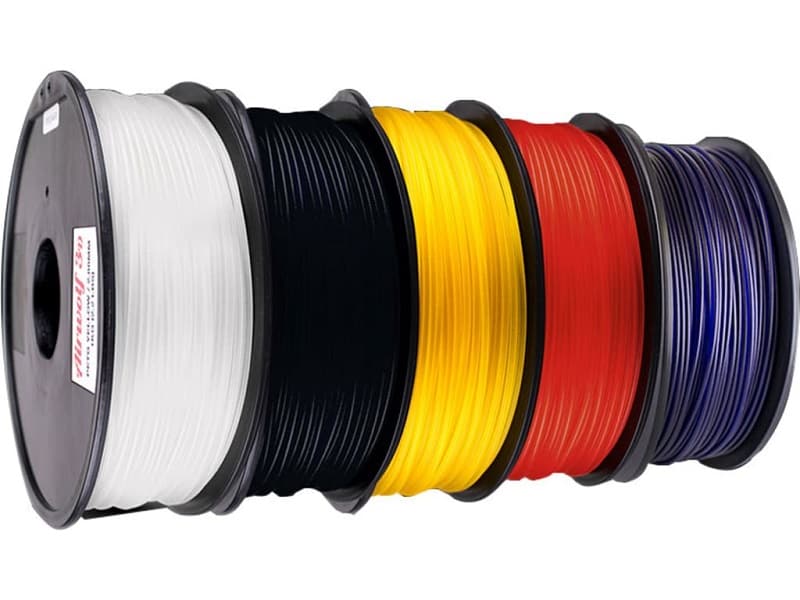
HATCHBOX has built a strong reputation in the hobbyist community, and their PETG filament is a big reason why. The spool ships at 1 kg and runs at 1.75 mm with a dimensional accuracy of ±0.03 mm — tight enough for most desktop FDM printers without demanding obsessive calibration on your part. The recommended extrusion temperature sits between 230°C and 260°C, which overlaps comfortably with what most mid-range printers can handle.
What makes this spool stand out for newcomers is the consistency. HATCHBOX controls their manufacturing process closely, and you're unlikely to experience mid-print diameter spikes or unexpected under-extrusion. The material itself is odorless during printing, which matters if your printer lives in a shared workspace or a bedroom. PETG combines the printability of PLA with the toughness of ABS, and HATCHBOX's version delivers on that promise: the finished parts flex slightly rather than shattering, and they hold up to moderate heat better than a standard PLA print.
If you're new to PETG, you'll appreciate that HATCHBOX filament responds well to basic settings — a 230°C nozzle, a 70–80°C bed, and a little hairspray or PEI sheet gets you going quickly. Experienced users can push it harder with faster speeds and more complex geometries. The one trade-off is that the ±0.03 mm tolerance, while acceptable, is a step behind the tightest options on this list. For functional prototypes and everyday prints, though, it's rarely an issue.
Pros:
Cons:
Prusament is Prusa Research's in-house filament brand, and that heritage shows. Every spool of Prusament PETG is manufactured to an industry-leading ±0.02 mm tolerance, and each spool's actual measurements are publicly posted online — you can look up your specific spool's data by scanning the QR code. That level of transparency is rare in this market and gives you a real sense of what you're getting before it even goes on the printer.
Performance-wise, Prusament PETG is engineered specifically for mechanical and functional applications. Brackets, clamps, tool holders, enclosures, replacement hardware — this filament is made for parts that need to actually work. The layer adhesion is exceptional, which translates to prints that resist delamination and cracking under load. You also get very low warping and shrinkage, which is critical when you're printing larger parts and can't afford dimensional drift on a finished piece.
The low-stringing formulation is another practical benefit that's easy to underestimate until you've spent time cleaning stringy PETG off a complex part. Prusament behaves cleanly at standard retraction settings, and the tangle-free winding means you won't lose a long overnight print to a spool jam. The primary downside here is price — Prusament costs noticeably more per kilogram than most competitors on this list. If you're printing precision parts for professional or semi-professional use in 2026, that premium is justified. For casual hobby prints, it might be more than you need.
Pros:
Cons:
eSUN is one of the most established names in affordable 3D printing filament, and their PETG offering is a solid representative of what the brand does well. At ±0.05 mm dimensional accuracy, it sits at the wider end of the tolerance spectrum, but in practice, eSUN's quality control is consistent enough that you rarely see the worst-case variation. The filament feeds smoothly, melts cleanly, and produces prints with a noticeably glossy surface finish that looks particularly polished in solid black.
The material's mechanical properties hit the expected PETG benchmarks: good toughness, decent impact resistance, weather resistance, and solid waterproofing that makes it appropriate for outdoor or moisture-exposed applications. eSUN also emphasizes stable layer bonding and reduced stringing, which holds up in testing — you'll want to tune retraction to your specific machine, but the filament doesn't fight you. The spool runs 350–355 meters and is wound cleanly with good roundness, meaning tangles and overlaps are uncommon.
Where eSUN PETG wins is straightforward: cost per kilogram. If you're burning through filament on iterative prototypes, test prints, or high-volume hobbyist projects, eSUN lets you print more for less without sacrificing the essential characteristics that make PETG worth using in the first place. It's not the filament for a critical precision part, but for the other 80% of your print queue, it does the job well. For a broader look at your 3D printing filament options, check out our filament buying guide to compare materials side by side.
Pros:
Cons:
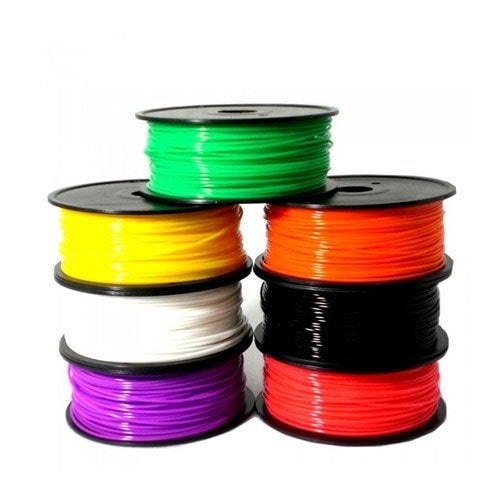
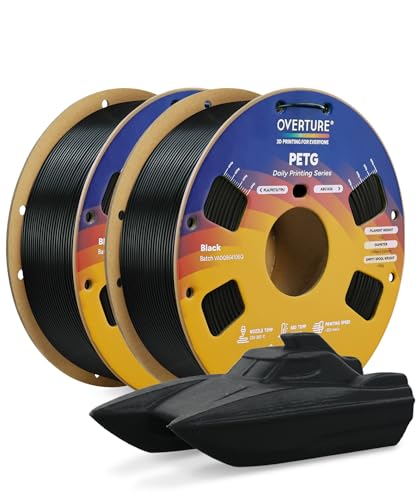
OVERTURE's 2-pack gives you two 1 kg spools in one purchase, and the price-per-kilogram math works strongly in your favor if you already know you'll go through multiple spools. But quantity alone wouldn't earn this a spot on the list — the quality backs it up. OVERTURE uses a patented clog-free formula combined with 24-hour pre-packaging drying and vacuum-sealed resealable foil bags. That moisture management matters more than most buyers realize: PETG is hygroscopic, meaning it absorbs atmospheric moisture, and wet filament causes bubbling, stringing, and weak layer adhesion.
The dimensional accuracy is rated at ±0.02 mm (with 98% of production falling within that range), matching Prusament at a noticeably lower price. OVERTURE uses an advanced CCD diameter measuring system during manufacturing, which provides real-time feedback and self-correction during the extrusion process. In practice, prints come out with consistent wall thickness and reliable layer bonding. The neatly wound spooling is a genuine feature — you're unlikely to experience a tangle-related print failure, which is particularly important during long overnight prints.
One thing to note: OVERTURE recommends storing any unused filament with desiccants or drying at 65°C for six or more hours if you've left it exposed. This applies to all PETG, but OVERTURE's resealable packaging makes it practical to follow that guidance between sessions. If you run a print farm, a workshop, or just print frequently enough to burn through filament fast, this 2-pack delivers premium-tier consistency at a mid-tier price. It's a genuinely compelling value proposition in 2026.
Pros:
Cons:
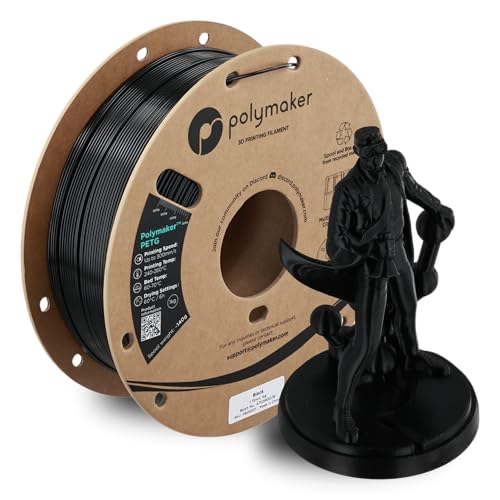
Polymaker's updated PETG formula is designed to meet the demands of the modern high-speed printing era. If you own a Bambu Lab, a fast Voron build, or another machine capable of sustained high-speed printing, standard PETG formulas sometimes struggle to keep up — they don't melt and flow fast enough, leading to under-extrusion or weak layers. Polymaker PETG is rated for speeds up to 300 mm/s, which opens this material up to printers that would choke on a standard PETG spool.
Beyond raw speed, the updated formula emphasizes superior interlayer bonding. That's not marketing language — the adhesion between layers directly determines how a functional part behaves under mechanical stress. Parts printed with poor interlayer bonding crack along layer lines when loaded. Polymaker's enhanced formula resists that failure mode, making it appropriate for brackets, clips, and structural components that see real-world force. The material also claims an 80°C heat resistance and warp-free printing without an enclosure, which is a meaningful advantage if your printer sits open on a bench.
Polymaker PETG is also compatible with multi-material systems like Bambu Lab's AMS, which makes it a strong choice if you're printing multi-color functional parts. The surface finish is clean, and the filament works with the broad range of FDM printers without exotic settings. The main consideration is that Polymaker PETG is the successor to their PolyLite PETG line — the original PolyLite is being phased out, so if you've been using that, this is the natural upgrade path. It's priced fairly for a performance-oriented formula.
Pros:
Cons:
DEEPLEE pushes the high-speed envelope even further than Polymaker. Their Rapid PETG is formulated specifically for high-fluidity, fast-melt printing, with a rated maximum speed of 600 mm/s on compatible hardware. That's a number that was essentially unthinkable for PETG just a couple of years ago, and it positions this filament at the cutting edge of what's possible with today's fastest consumer 3D printers. If your machine can sustain those speeds — and very few stock printers can without significant modifications — DEEPLEE Rapid PETG is built for it.
The material retains solid mechanical properties despite its speed optimization. DEEPLEE emphasizes high toughness, impact strength, and resistance to water and weathering. That means you're not trading durability for speed — the finished parts remain appropriate for functional outdoor or mechanical applications. The filament also produces a glossy surface with high light transmission, which shows up well in translucent colors and gives solid black prints a clean, professional look.
The ±0.02 mm dimensional accuracy is genuinely competitive, matching the tightest tolerances on this list. Where you should temper expectations is on the real-world maximum speed front: 600 mm/s is a ceiling that requires a tuned, high-performance machine. On a standard Bambu or Ender running at 200–300 mm/s, you won't see a meaningful difference from Polymaker. But if you're running a speed-optimized build and want to push PETG to its limits in 2026, DEEPLEE is one of the few filaments actually formulated for it. It's also worth reading about 3D printing safety if you're running machines at high speed in enclosed environments.
Pros:
Cons:
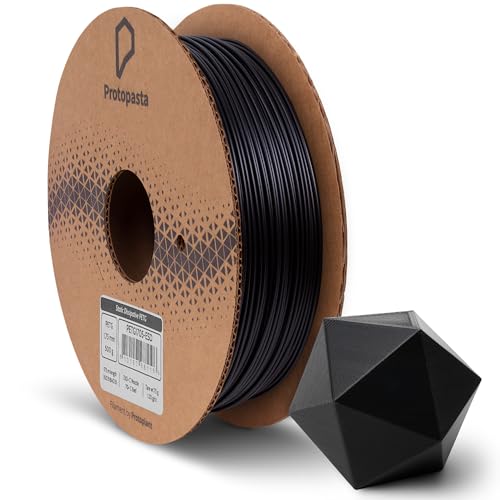
This one is purpose-built for a specific audience, and if you're in that audience, nothing else on this list compares. Protopasta's Static Dissipative PETG is an ESD-safe filament — meaning prints made from it dissipate static electricity in a controlled way rather than allowing it to build up. That's critical in electronics assembly, repair, and prototyping environments where static discharge can damage sensitive components like CPUs, memory modules, or microcontrollers.
The applications are focused: component trays, electronics enclosures, fixtures for PCB assembly, jigs used during device repair, drone electronics housings, and automotive prototyping where electronics are involved. For those applications, using standard PETG creates a real risk — a static-charged plastic enclosure near an ESD-sensitive part is exactly what you're trying to avoid. Protopasta's formulation addresses that problem while retaining the practical advantages of PETG as a base material: low warping, good durability, and reliable printability without requiring an enclosure.
The spool is 500 g rather than 1 kg, which reflects the niche application — you're unlikely to burn through ESD-safe filament at the same rate as general-purpose PETG. It ships on a recyclable cardboard spool, and the 1.75 mm filament is compatible with common FDM printers including Creality Ender, Anycubic, and FlashForge machines. The price per gram is higher than any standard PETG on this list, but the comparison isn't really fair — this is a specialty engineering material, not a commodity spool. According to Wikipedia's overview of electrostatic discharge, ESD events can damage electronics at energy levels too small to feel, making ESD-safe materials genuinely important for professional electronics work.
Pros:
Cons:
The tolerance rating on a filament spool isn't just a marketing number. Inconsistent diameter causes inconsistent extrusion — your printer's extruder is calibrated to push a specific volume of material based on the expected filament width. When that width fluctuates, the actual output varies, leading to over-extrusion, under-extrusion, stringing, or weak layer bonds. For most hobbyist printing, a ±0.05 mm tolerance is adequate. For functional mechanical parts where dimensional accuracy of the finished print matters, you'll want ±0.03 mm or tighter. The premium picks on this list at ±0.02 mm — Prusament, OVERTURE, and DEEPLEE — are appropriate when precision is genuinely required.
PETG is hygroscopic, which means it actively absorbs moisture from the air. Wet filament produces brittle prints, surface bubbling, increased stringing, and poor layer adhesion. When you're buying PETG, look for spools that arrive vacuum-sealed with desiccant packets. OVERTURE's 24-hour pre-drying plus vacuum packaging is a good example of manufacturer-side moisture control done right. On your end, store opened spools in sealed containers with fresh silica gel between sessions. If a spool has been sitting open for days, dry it at around 65°C for 4–6 hours before a critical print. This step alone solves a surprising number of PETG print quality issues.
In 2026, high-speed printers have moved from enthusiast curiosities to mainstream consumer products. If your printer runs at standard speeds (under 150 mm/s), any PETG on this list will work fine. But if you own a fast machine and want to print PETG at 250 mm/s or beyond, you need a formulation with higher melt fluidity — standard PETG doesn't flow fast enough at those speeds, causing under-extrusion and poor interlayer bonding. Polymaker PETG (rated 300 mm/s) and DEEPLEE Rapid PETG (rated 600 mm/s) are the purpose-built options here. Running a speed-optimized formula at normal speeds doesn't cause problems — it just means you're not using the filament's full capability.
Standard PETG is a general-purpose material, but specific applications call for specific formulations. If you're printing in or near electronics — component trays, enclosures, assembly fixtures — standard PETG carries electrostatic risks. Protopasta's ESD-safe PETG is the solution. For high-impact applications like drone frames, protective covers, or parts that take physical abuse, prioritize filaments that emphasize toughness over printability. And if you're printing outdoor parts that will face UV, moisture, or temperature cycling, look for brands that explicitly list weather resistance as a tested property rather than a general claim. Your use case should drive the choice — one filament doesn't win at everything.
Most PETG filaments print well between 230°C and 250°C at the nozzle, with a heated bed at 70–85°C. HATCHBOX recommends 230–260°C, which covers the high end. Start at the lower end of your specific brand's recommendation and increase by 5°C if you see under-extrusion or poor layer adhesion. Bed temperature is important — PETG tends to adhere very aggressively to glass beds, so a PEI sheet, hairspray, or a dedicated release agent is worth using to avoid damaging your build surface when removing prints.
In most practical ways, yes. PETG is more impact-resistant and flexible than PLA, meaning it bends before it breaks rather than shattering. It also handles higher temperatures — PLA starts softening around 60°C, while PETG holds up to 75–80°C depending on the formulation. That makes PETG appropriate for parts that sit in cars, near heat sources, or in outdoor environments where PLA would warp. However, PLA is stiffer and can be easier to print with for fine-detail work, so neither material is universally superior.
PETG is naturally prone to stringing because it has low viscosity at printing temperatures — it flows easily and tends to ooze from the nozzle during travel moves. The fix is tuning your retraction settings: most users find success with retraction distances of 2–6 mm (lower for direct-drive, higher for Bowden) at speeds of 25–45 mm/s. Reducing travel temperature, increasing travel speed, and enabling "combing" or "avoid crossing perimeters" in your slicer also help significantly. Some filaments like Prusament are formulated to string less than average at standard settings.
If your spool arrived well-sealed and you're printing it promptly, it's often fine straight from the bag. But PETG is hygroscopic — it absorbs atmospheric moisture — and a spool that's been sitting open for more than a few days may print with noticeably more stringing, surface bubbling, or weak layers. Drying at 65°C for 4–6 hours in a filament dryer or a low-temperature oven solves the problem. Storing opened spools in airtight containers with fresh silica gel packets prevents the issue from developing in the first place.
Yes — this is one of PETG's practical advantages over ABS. PETG has very low warping and shrinkage, so most prints succeed on open-frame printers without draft shielding. Some of the filaments on this list, including Polymaker PETG, specifically market warp-free printing without an enclosure as a tested feature. For very large parts or prints with thin features, a draft shield in your slicer adds insurance. But in general, if you've been avoiding PETG because you don't have an enclosure, that's not a barrier — most PETG prints on open machines without problems.
PETG is polyethylene terephthalate glycol-modified — the "G" refers to the addition of glycol during polymerization, which changes the material's properties significantly. Standard PET (used in water bottles) is crystalline, brittle when thin, and difficult to print reliably. The glycol modification makes PETG amorphous rather than crystalline, which improves clarity, reduces brittleness, lowers shrinkage, and makes it far more printable on standard FDM equipment. PETG retains PET's chemical resistance and food-safe potential (though printed parts are rarely considered food-safe due to layer gap contamination risks) while adding flexibility and impact resistance.


About Editorial Team
The DigiLabsPro editorial team covers cameras, lenses, photography gear, and creative technology with a focus on helping photographers make informed buying decisions. Our reviews and guides draw on hands-on testing and research across a wide range of equipment, from entry-level beginner kits to professional-grade systems.
You can get FREE Gifts. Or latest Free phones here.
Disable Ad block to reveal all the info. Once done, hit a button below
