You've stretched the screen, taped the frame, and your design is locked in — now you're standing in front of a wall of ink options wondering which one will actually hold up after a hundred washes. That paralysis is real, and it happens to beginners and experienced screen printers alike. The wrong ink choice means bleeding colors, cracked prints, or work that fades after a single wash cycle.
In 2026, the screen printing ink market has matured significantly, giving you access to water-based, plastisol, and discharge formulas at every price point. Whether you're printing custom tees in your garage or running small-batch orders for clients, the ink you load into that squeegee defines the entire quality of your output. This guide cuts through the noise so you can make a confident, informed choice.
We tested and evaluated the top options across fabric performance, coverage consistency, heat-cure reliability, and ease of cleanup. From all-in-one starter kits to professional-grade discharge formulas, here are the best screen printing inks available right now. If you're building out a full creative workstation, you might also want to check out our guide to the best tablets for Adobe Illustrator to sharpen your design workflow before you ever pull a squeegee.

Contents







When you need a dependable, workhorse fabric ink that performs across nearly every textile substrate, the Speedball Fabric Screen Printing Ink in Black is the standard that other inks get compared to. This 8-ounce jar delivers vibrant, opaque coverage on cotton, polyester, linen, rayon, canvas, and synthetic blends — the kind of versatility that matters when your print runs span multiple fabric types in a single session. The formula stays workable through long print runs without drying in the screen, which is a significant advantage over cheaper alternatives that skin over quickly under warm studio lighting.
Once heat-set — typically with a heat press at 320°F for 35 seconds or a flash dryer — this ink bonds permanently to the fibers and produces a genuinely soft hand feel. You won't get that stiff, plasticky sensation associated with lower-grade water-based inks. The black pigment in this formula is dense enough to lay opaque over dark fabrics in a single pass when used with a proper mesh count (80–110 for opacity work), though on very dark substrates you may want a white underbase for maximum contrast. It also extends reliably to paper and cardboard, making it useful for artists who cross between textile and fine-art printing.
Cleanup is straightforward — warm water and soap before the ink dries. This is one of the few inks that earns its reputation year after year by simply doing exactly what it promises, every single time.
Pros:
Cons:
Jacquard has been supplying professional textile artists for decades, and the Versatex Printing Ink Set #1 represents exactly the kind of quality you expect from that lineage. The set includes eight colors at 2.25 fluid ounces each — a compact but complete palette covering the primaries and key mixing colors. What separates Versatex from mass-market alternatives is its intermixability: every color in the line blends cleanly without separation or mudding, which means you can build an entire custom color system from this single set.
Versatex inks are water-based and formulated specifically for screen and block printing on fabric. They're designed to remain open on the screen longer than most water-based formulas, reducing the mid-run screen clogging that frustrates printers working in warm environments. The pigment concentration is high enough that you get genuine color saturation on light to medium-weight fabrics without doubling up passes, though the opacity on dark substrates is limited — Versatex performs best on white and light-colored materials. Heat-setting is required for wash durability, and the cured ink is soft and flexible.
For artists who also work in fine-art printmaking, this set bridges textile and paper applications elegantly. The colors are clean, the mixing behavior is predictable, and the set gives you enough volume to complete multiple project runs before restocking.
Pros:
Cons:
Not every screen printing project lands on a t-shirt. If your work involves posters, art prints, book covers, or packaging prototypes, the Speedball Acrylic Screen Printing Ink is purpose-built for hard-surface printing on paper, wood, and cardboard. Made in the USA, this formula is specifically engineered for the demands of fine-art printmaking where color richness and edge definition matter more than fabric softness. The full range spans 30 colors — including process colors, fluorescents, and glow-in-the-dark variants — giving you a serious toolkit for graphic and illustrative work.
The acrylic base delivers dense, opaque coverage in a single pull on most paper weights, with sharp edge definition that holds fine detail in halftones and tight registration work. Colors print with genuine richness and remain accurate to the jar — what you see is what you pull. This consistency matters for professional and hobbyist applications alike. The ink works for both beginners setting up their first print studio and seasoned printers who need a reliable workhorse for non-textile jobs. For anyone designing their prints digitally first, pairing this with a quality tablet setup is worth considering — our picks in the best laptops for art students guide can help you build that digital-to-print workflow.
Cleanup is water-based and simple before curing. Speedball's acrylic formula dries to a permanent, water-resistant finish on hard surfaces without requiring a heat press, making it significantly more accessible for flat-work printmakers who don't have curing equipment.
Pros:
Cons:
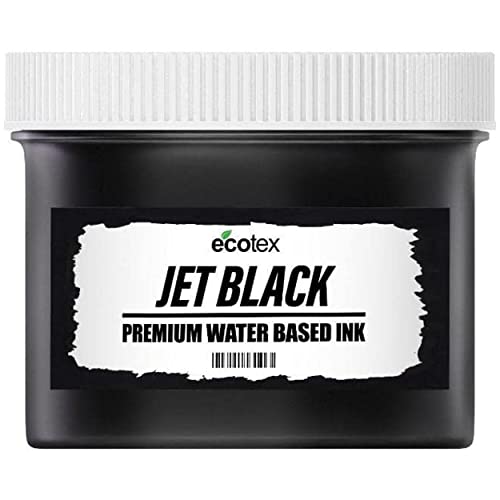
Discharge printing is one of those techniques that separates serious screen printers from hobbyists — and Ecotex Jet Black is the water-based discharge ink that gives you professional results at a scale-friendly price point. Available in a quart (32 oz) container, this USA-made formula is ready to use directly from the container or activated with a discharge activator for true discharge printing on reactive-dyed garments. That dual-mode functionality makes it exceptionally versatile: use it straight as a soft-hand water-based ink, or activate it to remove dye from dark shirts and replace it with pure pigment color for a truly soft, breathable print.
The jet black pigment concentration in this formula is notably high — coverage is uniform and opaque on light and medium fabrics even in a single pass at standard mesh counts. For production printers running quart-plus volumes per session, the 32-ounce size delivers real value per ounce compared to smaller jars. The water-based formula keeps shop air quality clean, an increasingly important consideration as EPA guidelines around printshop VOC emissions tighten. Cleanup is straightforward with water before curing, and the formula has good on-screen stability for extended runs.
If you're running a semi-professional or small production operation and printing primarily on cotton or cotton-blend shirts, the Ecotex Jet Black in quart size is a smart buy. The cost-per-print economics favor this over smaller jars once your volume exceeds a few dozen prints per week.
Pros:
Cons:
Permaset Aqua has earned a genuine following among environmentally conscious screen printers, and for good reason — the formula is certified Oeko-Tex and designed from the ground up to minimize environmental impact without compromising print quality. The Mid Red in 300ml delivers a deep, saturated crimson that punches above its weight class on both fabric and paper substrates. This ink handles lino printing, block printing, glass surface printing, and traditional screen printing with equal confidence, making it a genuine multi-discipline ink for artists who work across techniques.
The pigment brilliance in Permaset's range is a defining characteristic. Colors are noticeably deeper and more luminous than budget water-based alternatives, and they hold that vibrancy through wash cycles after proper heat-setting. The formula is designed for textile screen printing with a press, but its adaptability to block printing and card stock work makes it valuable for printmakers who need one ink that travels across their practice. The 300ml volume is a practical studio size — enough for multiple project runs without the storage commitment of larger containers.
On the technical side, Permaset Aqua stays workable on the screen without premature skinning, and its medium viscosity flows cleanly through mesh counts from 60 to 160. For textile artists who sell their work and need verified eco credentials — GOTS compliance, Oeko-Tex certification — Permaset is one of the few inks that actually delivers documented environmental accountability.
Pros:
Cons:
If you're entering screen printing for the first time and want a complete color foundation without the guesswork of assembling individual jars, the Speedball Fabric Screen Printing Ink Starter Set is the smartest starting point in 2026. The six-color set — Black, White, Red, Yellow, Blue, and Green — gives you the full primary and secondary spectrum plus the critical neutrals you need to mix any color in the wheel. Each jar contains 4 fluid ounces, totaling 24 ounces of professional-quality ink for a price that makes sense for anyone who isn't sure yet how deep they're going into the craft.
The water-based formula is water-soluble before curing, making cleanup as simple as soap and water — a genuine advantage when you're learning and mistakes are frequent. The inks are ultra-low odor, which matters if you're printing in a home studio, garage, or shared creative space. Coverage is smooth and uniform with no clumping, even through fine mesh counts, and the intermixability between colors in the set is excellent. You can build a full custom palette from these six colors alone, which extends the practical value of the set well beyond its initial price.
After heat-setting, these inks produce durable, permanent prints with a soft hand feel that outperforms vinyl iron-on and basic plastisol alternatives. They're rated for cotton, canvas, polyester, blends, linen, rayon, and synthetics — plus paper and cardboard for flat-work projects. For a beginner building their first setup, this set pairs well with learning resources on design fundamentals. Experienced art students building a printmaking practice will also want to explore our picks in the best laptops for art students roundup for their digital design workflow.
Pros:
Cons:
Plastisol ink is the industry standard for high-volume commercial screen printing — it doesn't dry in the screen, delivers intense opacity on dark garments, and cures to a hard, durable finish that withstands industrial washing. The challenge has always been getting started with plastisol: you need the right curing equipment and cleaning chemistry alongside the ink itself. The Nevertheless Plastisol Ink Starter Kit solves that problem in a single purchase by bundling five quart-sized ink colors with a curing heat gun and a press wash, giving you a genuinely complete plastisol printing setup out of the box.
The five-color bundle — Black, White, Blue, Red, and Yellow — covers the essential palette for most beginning-to-intermediate print work. Each color is a full quart (32 oz), which means you have real production volume from day one rather than running out mid-batch. The included 1500W dual-setting heat gun provides enough thermal output to properly cure plastisol at the 320°F target temperature, and the Kor-Chem press wash with spray nozzle handles both ink cleanup from screens and squeegees. This chemistry matters: plastisol doesn't wash out with water, and having the correct solvent from the start saves screens from premature damage.
Plastisol's opacity is its defining strength. White plastisol on black cotton is the defining test of any ink system, and this kit delivers consistent, vibrant white that doesn't require an underbase on most mid-weight garments. The tradeoff is hand feel — plastisol prints have a slight texture and rigidity that water-based inks don't, though modern soft-hand plastisol additives can be mixed in if desired. For anyone serious about building a print business or moving toward commercial-grade output, this is the kit that gets you there without piecing together components across multiple vendors.
Pros:
Cons:
Before you add any ink to your cart, you need to understand four fundamental decisions that will determine which type of ink actually serves your workflow. Screen printing ink is not a universal commodity — the right choice depends entirely on your substrate, your curing setup, your print volume, and the durability requirements of your end product. Browse our full buying guide section for more in-depth product category guidance across creative tools.
This is the decision that shapes everything else. Water-based inks — which include standard water-based, discharge, and specialty formulas like Versatex and Permaset — are water-soluble before curing, low-odor, and produce a soft hand feel on fabric. They're ideal for art printing, environmentally conscious studios, and home setups where ventilation is limited. The tradeoff is that water-based inks dry in the screen during long pauses, require heat-setting on fabric for durability, and have limited opacity on dark garments without an underbase.
Plastisol inks don't dry at room temperature — they only cure under heat (320°F+). This property makes them the professional standard for commercial T-shirt printing because screens stay open indefinitely during a run. Plastisol delivers unmatched opacity on dark garments, exceptional durability, and vibrant color, but requires solvent-based cleanup and produces a heavier hand feel. If you're building a serious production operation, plastisol wins on pure performance criteria. If you're a studio artist or home printer prioritizing environmental impact and soft-hand results, water-based is the right call.
Not all inks perform across all substrates. Fabric inks are formulated to bond with textile fibers — they stay flexible after curing and resist cracking through repeated washing. Using a fabric ink on paper or cardboard works in a pinch, but purpose-built acrylic screen printing inks like Speedball's acrylic formula deliver better edge definition and color richness on flat stock. Conversely, acrylic paper inks on fabric can crack and feel stiff after washing.
If your work spans both textiles and fine-art printing, invest in separate ink sets optimized for each application. Dual-purpose inks exist but rarely excel at both. Check the manufacturer's substrate recommendations on every product before committing to a large purchase.
Printing on dark or black garments is where most beginners hit their first serious wall. Standard water-based inks are semi-transparent — they print beautifully on white and light-colored substrates but wash out on dark backgrounds. Your two solutions are: lay down a white underbase first (a separate screen pass with a white ink before your color pass), or use a discharge ink that chemically removes the garment's dye and replaces it with pigment color.
Plastisol white is the gold standard for dark garment opacity because its pigment density is far higher than water-based alternatives. If dark garment printing is central to your work, plastisol or discharge inks are the practical answer, not standard water-based formulas at higher deposits.
Every screen printing ink requires some form of curing or heat-setting to achieve wash durability. Water-based and fabric inks typically require a heat press at 320°F for 30-45 seconds, a conveyor dryer, or extended heat gun exposure. Plastisol requires reaching a full cure temperature of 320°F throughout the ink deposit — flash curing (surface only) is not enough for wash durability. Acrylic inks on paper cure to a water-resistant finish simply by air-drying, no heat required.
Match your ink choice to your existing equipment. If you don't have a heat press or dryer, acrylic inks for paper printing or water-based inks with careful iron-on curing are your most accessible options. If you're investing in a complete fabric printing setup, a heat press is the minimum equipment for reliable durability results — a good digital art setup can complement your print workflow, and you might find our picks for the best tablets for Adobe Illustrator useful for finalizing designs before printing.
Plastisol ink is PVC-based and only cures under heat — it stays wet at room temperature, which means it won't dry in the screen during long print runs. Water-based inks use water as the carrier and dry through evaporation, which can cause screen clogging during pauses. Plastisol delivers higher opacity and durability on dark garments, while water-based inks produce a softer hand feel, are easier to clean up, and have lower environmental impact.
For fabric inks to be wash-durable, yes — heat is required. A heat press at 320°F for 30-45 seconds is the most reliable method for home and studio printers. A flash dryer or conveyor dryer works for production volumes. A household iron can work as a temporary alternative but delivers inconsistent results. Acrylic inks designed for paper printing are the exception — they cure to a water-resistant finish by air-drying without any heat equipment.
Standard water-based inks have limited opacity on dark garments and typically require a white underbase — a separate screen pass with white ink before your color layers. Plastisol white delivers the best opacity on dark shirts in a single pass. Discharge inks are another professional solution: they chemically remove the garment's dye and replace it with pigment, producing a print that is part of the fabric rather than sitting on top of it. The result is exceptional softness and breathability.
Water-based inks are most susceptible to drying in the screen, especially in warm or dry environments. Work in a temperature-controlled space, keep unused ink covered, and flood the screen between passes during breaks. For longer pauses, cover the screen with plastic wrap or a damp cloth. Some water-based formulas include open-time extenders you can mix in to slow evaporation. Plastisol ink doesn't have this problem — it only cures under direct heat and stays wet at room temperature indefinitely.
Mesh count determines how much ink passes through the screen and the level of detail you can hold. For thick inks and heavy opacity work on dark fabrics, use 80-110 mesh. For standard fabric printing with water-based inks, 110-160 mesh is the most common range. For fine-detail work, halftones, and process color printing, 200-305 mesh is appropriate. Higher mesh counts require thinner ink — if your ink is too viscous for your mesh, reduce with the manufacturer's recommended extender base, not water.
Most water-based screen printing inks have a shelf life of one to two years when stored properly — sealed containers, stored at room temperature (60-80°F), away from direct sunlight. Plastisol has a longer shelf life of two to three years under the same conditions. Freezing temperatures can damage water-based inks permanently by breaking the emulsion. Always reseal containers tightly after use, stir before each session to re-homogenize any settled pigment, and discard any ink that has developed mold, strong odor, or cannot be restored to a smooth consistency by stirring.
The best screen printing ink for you is the one that matches your substrate, your curing equipment, and your production scale — start with the Speedball Fabric Starter Set if you're just beginning, move to Ecotex or Nevertheless Plastisol when your volume and ambition grow, and reach for Permaset Aqua when eco credentials and premium pigment quality matter most. Pick the right ink, heat-set it properly, and your prints will outlast the garment itself.


About Editorial Team
The DigiLabsPro editorial team covers cameras, lenses, photography gear, and creative technology with a focus on helping photographers make informed buying decisions. Our reviews and guides draw on hands-on testing and research across a wide range of equipment, from entry-level beginner kits to professional-grade systems.
You can get FREE Gifts. Or latest Free phones here.
Disable Ad block to reveal all the info. Once done, hit a button below
