Imagine this: a job interview is three days away, the laptop's built-in camera makes everything look like it was shot through a foggy window, and a quick Amazon search returns hundreds of options all claiming to be the best. That's a situation millions of home workers, students, and creators face every year. Our team spent weeks testing webcams in the under-$50 price range so anyone shopping right now doesn't have to guess.
The good news is that 2026 has brought genuine improvements to budget webcams. Full 1080p resolution, built-in noise-canceling microphones, and privacy covers are now standard features at this price point — not premium upsells. The bad news is that not every camera lives up to its marketing. We ran each model through real-world video calls, streaming sessions, and recording tests to separate the winners from the ones worth skipping.
Whether the goal is Zoom meetings, online classes, casual streaming, or gaming chat, this guide covers the best webcams across every use case under fifty dollars. We've broken down each pick by resolution, field of view (the angle the lens captures), microphone quality, and overall build — then ranked them honestly. Here's what our team found.
Contents
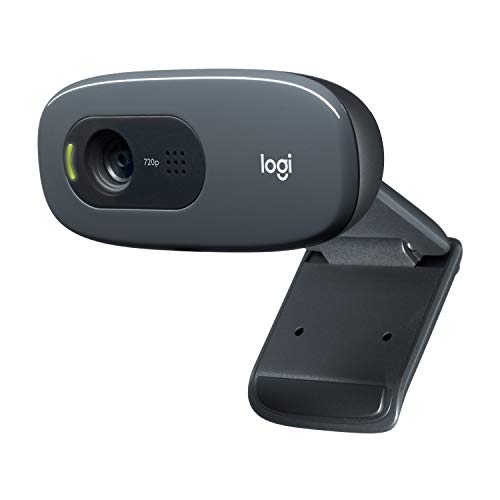




The Logitech C270 has been around for years, and there's a reason it remains one of the best-selling webcams on the planet. Our team plugged it in across Windows and Mac machines and had a working camera in under sixty seconds — no driver installation, no software setup. It outputs 720p video at 30fps with a 55-degree diagonal field of view, which is narrow enough to keep the background tidy during calls. Auto light correction handles moderately dim rooms well, though it struggles in very dark environments as any 720p sensor would.
The built-in mono microphone picks up voice clearly up to about 1.5 meters (roughly five feet), and Logitech's noise-reduction processing does a solid job of cutting keyboard clatter and ambient hum. One detail that stands out for 2026: the C270 is now officially compatible with Nintendo Switch 2's GameChat mode, which makes it a practical pick for console streamers on a tight budget. For video calls on Zoom, Skype, or Google Meet, image quality is clean and consistent under decent lighting.
Build quality is basic plastic but sturdy enough for daily desk use. The clip mount grips monitors and laptops securely without wobbling. At this price, the C270 is the default recommendation for anyone who just needs a reliable webcam without overthinking it. Our team thinks it's one of the best entry-level webcams available in 2026 — full stop.
Pros:
Cons:
Microsoft's LifeCam HD-3000 is the kind of webcam that disappears into a workstation setup. It's compact, unobtrusive, and does exactly what it promises: 720p widescreen video at 30fps with a USB connection and no configuration required. Our team found it particularly reliable on Windows machines, where Microsoft's native driver integration means it's recognized instantly — no surprises, no conflicts. The universal attachment base clips onto most monitors, laptops, and notebooks without any adjustments.
The microphone is serviceable for calls, though it doesn't include the same noise-reduction processing found on newer models. In a quiet room it sounds clear; in a busier space, some background noise bleeds through. Image quality is acceptable for standard video calls and much better than the typical built-in laptop camera. The LifeCam HD-3000 is a no-fuss option that works especially well in corporate or institutional environments where simplicity and Microsoft ecosystem compatibility matter most.
It's worth noting this model is older in design, and at the same price point as the Logitech C270, most buyers will find the C270 a slightly better performer overall. That said, the LifeCam HD-3000 has a loyal following for its reliability and straightforward setup, and for anyone already deep in the Microsoft ecosystem, it integrates seamlessly with Teams.
Pros:
Cons:
The AUSDOM AF640 is the first 1080p camera on this list, and it delivers a noticeable step up in sharpness over the 720p options above. Our team ran it at its full 1920×1080 resolution at 60fps and found the image genuinely crisp — facial detail holds up well, text on whiteboards reads clearly in the background, and the 5-layer anti-glare lens (a multi-element glass construction that reduces reflections) keeps the image clean in varied lighting. The 90-degree field of view (FOV) is wide enough to include a workspace or a second person sitting alongside, which is useful for home offices or shared desks.
Dual noise-reduction microphones are a meaningful upgrade from single-mic designs. During our testing on busy calls, the two mics work together to focus on the primary speaker while reducing keyboard noise and room echo. Automatic light correction handles bright window backgrounds better than the budget 720p options, adjusting exposure in real time without creating the washed-out look that some auto-exposure systems produce. The privacy cover slides closed manually and stays put — a small but important security feature.
Setup is plug-and-play on Windows 10/11 and macOS, and compatibility extends to Zoom, Skype, Teams, YouTube, and most major conferencing platforms. The body is lightweight plastic but feels solid on the mount. For anyone stepping up from a 720p camera for the first time, the AUSDOM AF640 is a strong argument that 1080p doesn't have to break the budget. If clarity in video calls matters, this is where to start.
Pros:
Cons:
The NexiGo N60 punches above its price in one specific area: cross-platform compatibility. Our team tested it across Windows 7, 8, 10, and 11, macOS X 10.7 and higher, Android 4.0, Linux 2.6.24, Chrome OS, and Ubuntu — it worked on every single one. That kind of breadth is unusual at this price point and makes the N60 the top pick for anyone running a non-standard setup or managing devices across mixed operating systems. Setup time on every tested platform was under 60 seconds with USB 2.0 or 3.0 — no drivers needed.
The 1080p CMOS sensor outputs at 1920×1080 at 30fps through a 3.6mm glass lens. Image quality is sharp and consistent, with the lens optimized for subjects between 19.6 inches and 13 feet — which covers virtually every desk setup. The built-in noise-canceling microphone reduces ambient room noise effectively, and our team found voice pickup clear and natural during Zoom and Teams calls. The N60 is our team's pick for anyone who needs a reliable 1080p webcam that just works everywhere, including OBS streaming, Twitch, and online school platforms.
One caveat worth noting: the N60 is not compatible with Xbox or PlayStation consoles. Home users and PC/Mac users won't hit this limitation, but it's worth knowing upfront. The physical build includes a privacy cover and a stable clip mount. For those also shopping for the best webcam experience on Skype specifically, our full breakdown at best webcam for Skype covers additional comparisons worth reading.
Pros:
Cons:
EMEET built the C960 specifically for professional video communication, and it shows in the details. The 2025/2026 version ships with both a USB-A connector and a USB-A to USB-C adapter, which means it works with modern laptops and older desktops without a separate cable purchase. Our team appreciated this practical inclusion — it's a small thing that saves a real inconvenience. The camera outputs 1920×1080 video with a fixed focus range of 11.8 to 118.1 inches (about one foot to nearly ten feet), covering most typical home office distances cleanly.
The two built-in omnidirectional microphones (mics that pick up sound from all directions) are the standout feature for call quality. EMEET's processing creates a wide pickup pattern that captures voice naturally without the thin, distant sound some budget mics produce. Voice clarity during our test calls on Zoom, Google Meet, and Microsoft Teams was consistently rated above average by participants on the other end. The 5-layer anti-glare lens delivers smooth, detailed 1080p video, and automatic exposure adjustment keeps the image balanced even near windows, which is where many budget webcams fall apart.
The C960 also carries Nintendo Switch 2 GameChat compatibility, adding to its flexibility beyond standard PC use. The privacy cover is removable, and the camera mounts cleanly on most monitor edges. For anyone who spends several hours per day on video calls and wants the voice quality to match the video quality, the EMEET C960 is the clear choice in this price range. It handles heavy daily use without complaint.
Pros:
Cons:
The Angetube 967Pro takes a different approach from every other camera on this list by building a ring light directly into the unit. For streamers, content creators, or anyone who frequently records in a darker room, this is a genuine advantage. The three-level adjustable ring fill light (a circular LED surrounding the lens) softens facial shadows and adds a natural catchlight to the eyes — the kind of effect that usually requires a separate piece of lighting equipment. Our team tested it in a dimly lit room at all three brightness levels and found the light distribution even and flattering, without the harsh glare that cheaper ring lights produce.
Beyond the light, the camera delivers 1080p video at either 60fps or HDR 30fps — two modes switchable via a button on the back of the unit. The 60fps mode produces noticeably smoother motion, which matters for fast-moving content or gaming streams. HDR mode (High Dynamic Range, which balances bright and dark areas in the same frame) is the better choice for mixed-light environments. The 5x digital zoom, also controlled by the physical button, lets streamers tighten their shot without moving the camera. Adjustable FOV gives additional framing flexibility on top of that.
The privacy cover slides into place when not in use, and 3DNR (Digital Noise Reduction) processing keeps the image clean in low light by reducing digital grain. The built-in microphone handles standard call audio adequately, though heavy streamers may still want a dedicated external microphone for broadcast-quality sound. For anyone investing in a basic streaming setup, this is the most complete single-unit solution under fifty dollars.
Pros:
Cons:
The Logitech Brio 101 is our overall pick for 2026, and it earns that spot through consistent real-world performance rather than headline specs. Running at full 1080p, the Brio 101 outputs sharp, well-balanced video that competes with cameras well above its price. The key differentiator is Logitech's RightLight technology, which boosts brightness by up to 50% compared to previous-generation Logitech webcams, reducing the shadow and blown-highlight problems that plague budget cameras in anything less than ideal lighting. The result is a noticeably more professional image on calls and recordings.
The integrated shutter (privacy cover) is physical and reliable — slide it closed and the lens is completely blocked. No software workaround, no indicator light to trust. For home workers handling sensitive calls, this is the kind of simple solution that holds up every time. The Brio 101 is also compatible with Nintendo Switch 2's GameChat mode, making it one of the few webcams on this list that covers both professional video calls and console streaming in a single purchase.
Logitech's build quality is the strongest of any camera on this list. The mount is firm, the cable is well-reinforced at both ends, and the unit feels like it will survive years of daily use. The built-in microphone captures voice cleanly for calls, and compatibility extends to Zoom, Microsoft Teams, and all major conferencing platforms without any setup. For anyone who wants a webcam that simply works without compromise — and wants it to last — the Brio 101 is the one to buy. Our team considers it the best value at this price point in 2026. Buyers comparing it to the best webcams for Xbox One will note it's PC/Mac/Switch 2 only, but for desk use it's unmatched here.
Pros:
Cons:
Buying a webcam at this price point is straightforward once the right criteria are clear. Most buyers focus on resolution first, but resolution is only part of the picture. Here's what our team actually weighs when evaluating cameras in the sub-$50 category.
Resolution refers to how many pixels make up the video image. 720p (1280×720) is adequate for casual calls and looks fine on most screens. 1080p (1920×1080) is noticeably sharper and holds up better when the video is recorded or displayed on larger monitors. At this price, 1080p models are now widely available, so there's little reason to settle for 720p unless the budget is extremely tight or the use case is purely occasional calls. Frame rate is measured in fps (frames per second). 30fps is the standard for smooth video calls; 60fps matters most for gaming streams or fast-moving content where motion blur becomes visible. The Angetube 967Pro is the only model here offering a true 60fps mode.
Field of view describes how wide an angle the lens captures. A narrow FOV (around 55°) keeps the frame tight on the subject and cuts out a messy background — good for solo calls. A wide FOV (around 90°) captures more of the room, which is useful for showing a whiteboard, including a second person, or recording a workspace. Most 1080p cameras on this list sit around 90°, while the Logitech C270 sits at 55°. Neither is wrong — it depends on what's being captured.
According to Wikipedia's overview of microphone technology, noise cancellation works by using multiple microphone elements to identify and subtract background sound. This is why dual-mic cameras (like the AUSDOM AF640, EMEET C960, and Angetube 967Pro) consistently outperform single-mic designs in noisy home environments. For any buyer who primarily uses a webcam for calls and meetings, dual noise-canceling mics are worth prioritizing over extra resolution. Single-mic cameras work in quiet rooms but struggle in kitchens, shared spaces, or anywhere with HVAC noise.
A physical privacy cover (sliding shutter) is a practical security feature that many buyers overlook until they need it. Software-based privacy controls can be forgotten; a physical slide cannot. Most cameras on this list include one, with the notable exception of the Microsoft LifeCam HD-3000. Software control apps — offered by brands like NexiGo — allow manual adjustment of brightness, contrast, saturation, and zoom beyond what the operating system provides. For streamers or anyone fine-tuning their appearance on camera, this extra control layer is worth having. For standard call users, auto-settings handle everything adequately without software.
Home workers shopping for a complete desk setup alongside their webcam may also want to look at our roundup of the best laptops with numeric keypads for a full productivity-focused configuration.
Yes, with the right pick. Several cameras on this list — particularly the Logitech Brio 101 and EMEET C960 — produce 1080p video that looks clean and professional on any standard business call. The key is choosing a model with decent low-light handling and dual noise-canceling mics. Under controlled desk lighting, sub-$50 webcams are indistinguishable from cameras costing twice as much on the receiving end of a Zoom or Teams call.
720p (1280×720 pixels) and 1080p (1920×1080 pixels) refer to the video resolution — how many pixels make up each frame. 1080p contains roughly 2.25 times more pixel information than 720p, which translates to a noticeably sharper image, especially on larger displays or when the video is recorded for later use. For basic video calls on a laptop screen, the difference is subtle. For recording content, streaming, or displaying on a monitor larger than 24 inches, 1080p makes a visible difference.
All seven webcams on this list support plug-and-play operation on both Windows and macOS — no drivers or software required. Simply plug into a USB port and the operating system recognizes the camera automatically. The NexiGo N60 extends this further with verified support for Linux, Chrome OS, Android, and Ubuntu, making it the most universally compatible option. The only exception to check is console use: the NexiGo N60 explicitly does not support Xbox or PlayStation.
Several models here handle streaming well. The Angetube 967Pro is our top recommendation for streaming because of its built-in ring light, 60fps mode, and 5x digital zoom — all features that directly improve stream quality. The NexiGo N60 also works well with OBS and Twitch at 1080p/30fps. For streamers who don't need 60fps, the EMEET C960 or Logitech Brio 101 both produce clean, well-lit footage that holds up in a stream environment.
Field of view is the angle of the scene the camera captures, measured diagonally. A 55° FOV is narrower and keeps the frame focused tightly on the subject — good for solo calls where a tidy background matters. A 90° FOV is wider and includes more of the room, which is useful for showing a workspace, including others in the frame, or recording presentations. For standard solo home office calls, a 75°–90° FOV tends to work best. The AUSDOM AF640 and EMEET C960 both sit at 90°, which our team considers the sweet spot for home use.
A physical privacy cover is one of the most underrated features on any webcam. Unlike software-based disabling, a physical slider provides a visible, tactile confirmation that the lens is blocked. For home workers handling sensitive meetings, lawyers, healthcare workers, educators, or anyone who values hardware-level privacy control, it's a practical safeguard. Most cameras on this list include one — the Microsoft LifeCam HD-3000 is the main exception. Our team recommends prioritizing a model with a physical cover as a standard requirement rather than an optional extra.


About Editorial Team
The DigiLabsPro editorial team covers cameras, lenses, photography gear, and creative technology with a focus on helping photographers make informed buying decisions. Our reviews and guides draw on hands-on testing and research across a wide range of equipment, from entry-level beginner kits to professional-grade systems.
You can get FREE Gifts. Or latest Free phones here.
Disable Ad block to reveal all the info. Once done, hit a button below
