You are halfway through a post-operative assessment when the patient becomes unresponsive to verbal prompts, and the attending physician needs a fast, reliable read on urinary retention before making a catheterization call. In that moment, knowing exactly how to use a bladder scanner is not a minor procedural detail — it is a direct patient safety issue. This guide covers the complete technique, the edge cases, the myths that persist in clinical settings, and the scenarios where the technology is less reliable than most operators assume. Whether you are learning the procedure for the first time or refining technique you developed years ago, you will find hands-on, evidence-grounded guidance here. For more how-to content on imaging and scanning technology, explore the photography articles section on this site.
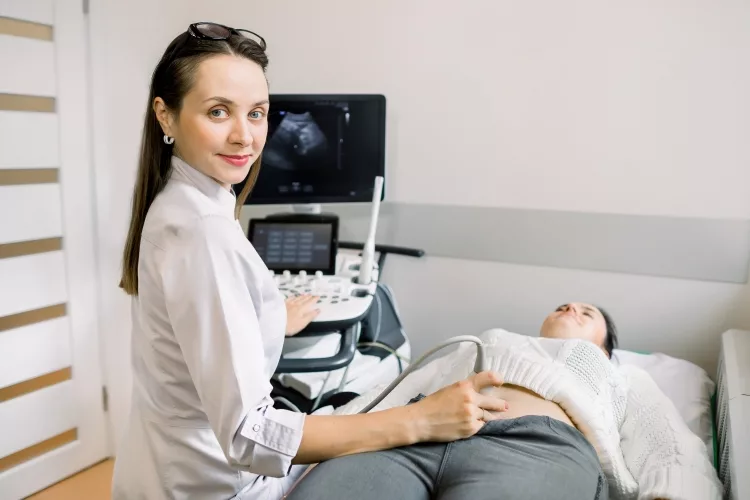
Portable bladder ultrasound has become a bedside standard in nursing, urology, emergency care, and long-term care settings. The technology is non-invasive, fast, and accurate — but only when the operator understands what they are doing. Poor technique routinely produces readings that are off by 80 to 150 mL, and in clinical practice, that margin matters enormously. A false high triggers an unnecessary catheterization; a false low means retention goes untreated.
The device itself looks deceptively simple: a handheld probe, ultrasound gel, and a small display unit. What separates reliable operators from unreliable ones is not access to better equipment. It is understanding how acoustic windows work, how patient anatomy shifts the scan geometry, and how to recognize when a reading is telling you something real versus something artifactual.
Contents
A bladder scanner — properly called a portable bladder ultrasound device — uses high-frequency sound waves to measure the volume of urine retained in the bladder without inserting a catheter. The probe transmits ultrasound pulses through the suprapubic soft tissue, and the returning echoes are processed by onboard algorithms to generate a three-dimensional volume estimate. According to the Wikipedia overview of bladder scanning technology, modern devices achieve accuracy within 15% of true bladder volume in most standard clinical scenarios — a margin that is acceptable for clinical decision-making but should not be confused with precision measurement.
The calculation is not a simple area measurement. The device takes multiple two-dimensional cross-sectional slices at preset angular intervals and integrates them into a volume estimate. This is precisely why probe placement and angle are so critical. A probe that is even slightly off-center clips the bladder geometry and produces a number that underestimates actual volume. The machine cannot detect that it is looking at the wrong thing. You have to ensure it is correctly positioned every time.
Most clinical environments use one of two device categories: dedicated bladder scanners — such as the BladderScan series from Verathon — or general-purpose point-of-care ultrasound units with bladder volume software. Dedicated units are simpler to operate and faster for routine checks. General-purpose ultrasound units offer more flexibility but require significantly more operator training to use reliably for bladder assessment specifically.
The physical components are consistent across both categories: a probe head with a piezoelectric transducer array, a display screen showing the scan image and calculated volume, and a patient data interface for entering gender and relevant biometric data. Newer models commonly include wireless connectivity for direct electronic health record integration — if your facility uses a networked scanner, our guide on how to connect a scanner to your computer wirelessly covers the pairing and data export workflow in practical detail.
Begin by confirming patient identity and explaining the procedure clearly. Patient positioning matters more than most new operators realize — the patient should be supine with the head of the bed flat or at no more than a 30-degree incline. If the patient is sitting upright or has their knees drawn up, the bladder shifts position and the angle you are using will be wrong before you even press the scan button.
Power on the device and enter the correct gender setting before doing anything else. This is not a formality. The scanner's volume algorithm applies different geometric assumptions based on biological sex, because pelvic anatomy differs significantly between males and females. An incorrect gender entry introduces systematic error into every scan you take on that patient. Some devices also request height — enter it accurately. Clean the probe head, then apply ultrasound gel either directly to the probe or to the skin over the suprapubic area. Aqueous gel pads are an acceptable alternative in facilities where loose gel is impractical at the bedside.
Pro tip: Warm the gel before applying it to patients who are already uncomfortable — cold gel causes involuntary muscle tensing that can shift the bladder slightly and affect your acoustic window quality.
Place the probe just above the pubic symphysis, angling it toward the bladder — which means tilting slightly toward the patient's head, not directing straight down into the tissue. The probe should sit at the midline. On most dedicated bladder scanners, the display shows a targeting indicator or a live preview confirming whether the bladder is centered in the field of view. Do not acquire the scan until you see the bladder clearly represented in that targeting display.
Press the scan button. The device takes its measurement in two to three seconds. Hold the probe steady during acquisition — any movement during that window corrupts the geometry calculation. After the scan completes, review the image on screen. Most units display a cross-sectional outline of the bladder alongside the calculated volume. If the outline is irregular, fragmented, or clearly off-center, the reading is unreliable. Reposition and repeat. Always take a second scan to confirm; clinical protocols at most institutions require two readings within 10% of each other before acting on the result.
Bladder volume readings are reported in milliliters. The clinical threshold for intervention varies by institution and patient population, but the table below outlines the most widely used interpretive framework. Record the higher of your two consistent readings, the time of the scan, the patient's position during scanning, and any factors that may have affected accuracy — such as ascites, obesity, or a recent prior void.
| Volume (mL) | Clinical Interpretation | Typical Action |
|---|---|---|
| < 100 | Minimal residual; normal post-void | No intervention; continue routine monitoring |
| 100–199 | Low residual; clinically acceptable in most cases | Monitor; reassess per protocol if symptomatic |
| 200–299 | Elevated residual; borderline | Reassess within 1–2 hours if patient is symptomatic |
| 300–499 | Significant retention | Clinical assessment required; consider catheterization |
| ≥ 500 | Acute retention; high risk | Immediate intervention typically indicated |
The primary indication is post-void residual measurement — confirming how much urine remains after a patient has voided. This is routine after urological surgery, pelvic procedures, and spinal anesthesia, and it is standard practice for patients with neurological conditions that affect bladder function. You also reach for the scanner when a patient reports inability to void, lower abdominal discomfort, or when intake-and-output charting is not producing expected numbers. Any patient on medications that impair bladder contractility — anticholinergics, opioids, tricyclic antidepressants — is a candidate for systematic PVR monitoring rather than waiting for symptoms to escalate.
Bladder scanning is also valuable as a decision-support tool before inserting a urinary catheter. Rather than catheterizing based purely on time elapsed since last void or patient complaint alone, you use the scan to confirm that retention is actually present. Done consistently, this practice reduces unnecessary catheterizations and the catheter-associated infection risk that comes with them.
Do not scan through open wounds, active skin infections, or surgical dressings over the suprapubic area. The device is also unreliable in patients with large amounts of ascitic fluid — free peritoneal fluid creates an acoustic environment the algorithm was not designed to handle, and it can mistake ascites for bladder volume, producing a dramatically elevated false reading. Morbid obesity similarly affects accuracy. When the suprapubic fat pad is thick, the acoustic signal attenuates significantly before reaching the bladder, and the returning echo is weaker and less geometrically reliable.
Warning: In patients who are pregnant or may be pregnant, bladder scanning should only be performed when clinically necessary and in accordance with your institution's specific protocol — the probe sits in close proximity to the uterus during the first and second trimester.
The most widespread misconception is that bladder scanners are precise instruments. They are not — they are estimation tools. The accepted accuracy target is ±15% of true volume, which means a reading of 400 mL could reflect a true volume anywhere from 340 to 460 mL. This is clinically acceptable for most decisions, but it means you should never treat the displayed number as an exact measurement. Trends across serial readings carry more clinical weight than any single value.
A related myth is that newer, more expensive units are substantially more accurate than older ones. In controlled clinical testing, the accuracy difference between current-generation dedicated bladder scanners is marginal in standard patient populations. Operator technique accounts for more real-world measurement variation than device generation. A skilled nurse with a five-year-old device will consistently outperform an untrained technician using the latest model.
Some operators treat the gender setting as relevant only for certain patient populations. This is incorrect. The gender parameter adjusts the volumetric algorithm's geometric model, and it applies to every scan. For patients whose gender identity does not align with the binary male/female options currently available on most devices, consult your institution's protocol — most recommendations direct operators to select the setting that best reflects the patient's pelvic anatomy for the purposes of the scan calculation.
Another persistent myth: a single clean reading is sufficient. Experienced clinicians always take at least two scans. Bladder position shifts slightly with respiration and body tension, and a single scan can capture the bladder at an angle the algorithm handles poorly. Two readings within 10–15% of each other provide meaningful confidence in the result. If two readings diverge beyond that range, take a third and evaluate the outlier.
New operators make predictable, correctable errors. The most common is placing the probe too low — directly on the pubic bone rather than just superior to it. The pubic symphysis blocks ultrasound transmission; you need clear soft tissue above it. The second common mistake is holding the probe perpendicular to the skin when the bladder's acoustic window requires a slight cephalic tilt. If the device's targeting display shows the bladder only partially in frame, you have not found the correct window.
Experienced operators develop an intuitive sense of when a reading is suspicious. They look at the bladder outline shape on the scan image — not just the number the device displays. A bladder that appears irregularly shaped, has a thickened wall, or shows internal echoes may indicate pathology that changes how the volume should be interpreted. Advanced users integrate scan results with full clinical context — time since last void, fluid intake, current medications, patient report — rather than acting on a number in isolation.
They also know the specific limitations of their device by model. If your facility uses multiple scanner types across different units, reviewing the manufacturer's accuracy data for each is worth the time. For those evaluating scanning equipment more broadly and comparing feature sets across device categories, our roundup of the best TWAIN scanners demonstrates how significantly scanning specifications — resolution, connectivity, software integration — can vary between device lines and generations.
In post-anesthesia care units, bladder scanning is near-universal. Spinal and general anesthesia both suppress bladder sensation and contractility, and patients frequently leave the operating room with a full bladder they cannot perceive. The protocol at most institutions calls for scanning every patient at a defined interval after spinal anesthesia — commonly every two to four hours until a spontaneous void is documented. Identifying early retention in the PACU prevents the discomfort, agitation, and hemodynamic consequences of a severely overdistended bladder before they compound other recovery challenges.
In post-surgical orthopedic wards, the same dynamic plays out over a longer timeframe. Hip and knee replacement patients maintained on epidural analgesia can retain urine for 12 to 24 hours without subjective complaint. Systematic bladder scanning on these wards measurably reduces catheter insertion rates when done correctly, because nursing staff can distinguish true retention from patients who simply have not yet voided due to restricted oral intake in the perioperative period.
In long-term care, bladder scanning supports incontinence assessment and management programs at the resident level. For residents who are cognitively impaired and cannot reliably report symptoms, the scanner provides objective data that drives care planning rather than assumption. Community nurses doing home visits use portable units to assess patients with neurogenic bladder conditions — multiple sclerosis, Parkinson's disease, spinal cord injury — where self-catheterization schedules need to be calibrated to actual bladder filling patterns rather than fixed time intervals that may not match individual physiology. This is one of the most clinically valuable applications of the technology, because it directly personalizes care in ways that standardized time-based protocols cannot replicate.
Most portable bladder scanners achieve accuracy within ±15% of true bladder volume under standard conditions. Accuracy decreases in patients with obesity, ascites, or significant anatomical anomalies. Operator technique accounts for a substantial portion of real-world measurement variability, often more than device differences.
Yes. Ultrasound gel or a gel pad is required to eliminate the air gap between the probe and the skin surface. Air blocks ultrasound transmission completely, so scanning without adequate gel will produce an error reading or a false zero. Use a sufficient amount and ensure full probe-to-skin contact across the entire probe face.
A post-void residual below 50 mL is generally considered normal. Values between 50 and 200 mL fall in a clinical gray zone requiring contextual judgment. Residuals consistently above 200 mL typically indicate incomplete bladder emptying and warrant further assessment and documentation.
Bladder scanning during pregnancy is not absolutely contraindicated, but it requires clinical justification and compliance with institutional protocol. The probe sits in close proximity to the uterus in early and mid-pregnancy, so the procedure should be performed only when clinically necessary and with appropriate documentation of the indication.
Inconsistent readings almost always indicate probe positioning errors — the bladder is not being consistently centered in the acoustic window between scans. Additional causes include patient movement, postural changes between acquisitions, or air bubbles in the gel layer. Clean the probe, reapply fresh gel, reposition carefully, and confirm targeting before re-scanning.
Yes, significantly in high-BMI patients. A thick suprapubic fat pad attenuates the ultrasound signal before it reaches the bladder, weakening the returning echo and reducing volumetric accuracy. Most modern devices perform acceptably in mild to moderate obesity, but in patients with very high BMI, catheterization for direct volume measurement may be more reliable than scan estimation.
Follow the manufacturer's maintenance and disinfection schedule for your specific device. The probe surface should be inspected before each use — a cracked or degraded transducer face reduces acoustic transmission and compromises accuracy on every scan. Wipe the probe with an approved disinfectant wipe between patients and allow it to air-dry fully before reuse.
Mastering how to use a bladder scanner is one of those clinical skills that appears straightforward until the day a reading does not match what you expect — and you need to know exactly why. Start by practicing the full step-by-step process on patients with known bladder status so you can calibrate your own technique against a ground truth, then build the troubleshooting habits that experienced operators rely on automatically. If your facility is evaluating scanner protocols or updating competency requirements, push for hands-on verification rather than policy sign-offs alone — accurate bladder assessment is a direct patient safety skill, and it deserves that standard.


About James W.
A contributing writer at DigiLabsPro covering photography gear reviews, buying guides, and camera comparisons. Specializes in evaluating cameras, lenses, and accessories for photographers at the intermediate and enthusiast level looking to upgrade their kit.
You can get FREE Gifts. Or latest Free phones here.
Disable Ad block to reveal all the info. Once done, hit a button below
