Which TWAIN scanner actually delivers the best balance of speed, compatibility, and image quality in 2026? If you work with document management software, medical imaging platforms, or any legacy system that relies on the TWAIN protocol, you already know that not every scanner plays nicely with your workflow. The good news: several models stand out this year, and the Fujitsu fi-7160 sits at the top of our list for its rock-solid driver support and blazing duplex speeds.
TWAIN (Technology Without An Interesting Name — yes, that's the real acronym) has been the standard scanner interface since the early 1990s. While newer protocols like SANE and WIA have emerged, TWAIN remains the backbone of enterprise document capture across healthcare, legal, finance, and government sectors. If your software expects a TWAIN data source, you need a scanner with a proven, well-maintained TWAIN driver — and that narrows the field more than you might think. For a broader look at scanning solutions, check out our guide to the best duplex scanners available right now.

We tested seven scanners across multiple TWAIN-dependent applications, evaluating driver stability, scan quality, feed reliability, and overall value. Whether you need a high-volume document feeder for an office or a flatbed for digitizing photos and film, this roundup covers the full spectrum. Let's dig in.
Contents
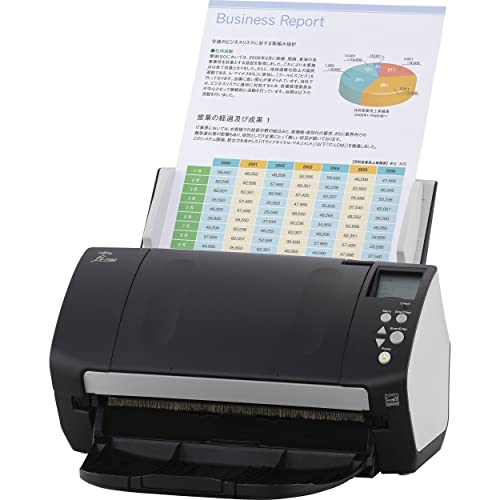




The Fujitsu fi-7160 is the scanner that IT departments quietly rely on year after year. It handles duplex scanning at up to 60 pages per minute (120 images per minute), which means you can tear through a full 80-sheet stack in well under two minutes. The TWAIN driver is arguably the most polished in the industry — Fujitsu's PaperStream IP driver has been refined over multiple hardware generations and works flawlessly with virtually every TWAIN-compliant application you'll encounter.
Build quality is commercial-grade. The ADF mechanism uses ultrasonic multi-feed detection to catch double feeds before they happen, and the straight paper path minimizes jams even with mixed document sizes up to 8.5 x 14 inches. USB 3.0 connectivity ensures the interface never becomes the bottleneck. If you're scanning invoices, contracts, medical records, or any high-volume paperwork, this is the machine that just works.
Where the fi-7160 falls short is versatility. It's a dedicated document scanner — no flatbed, no film scanning, no photo work. And the price point reflects its enterprise pedigree. But if TWAIN compatibility and throughput are your top priorities, nothing else on this list matches it.
Pros:
Cons:
The ES-400 II hits a sweet spot that's hard to argue with. You get a capable duplex document scanner with a 50-sheet ADF, solid TWAIN driver support, and Epson's ScanSmart software — all at a price that won't require a purchase order approval. Scan speeds reach up to 35 ppm in simplex and 70 ipm in duplex mode, which is more than adequate for small to mid-sized offices.
What sets this model apart from cheaper options is the included TWAIN driver that actually works reliably with third-party document management systems. Epson explicitly markets TWAIN compatibility here, and in our testing it integrated smoothly with applications ranging from PaperPort to custom healthcare EMR systems. The ScanSmart software adds automatic file naming and one-click cloud uploads, which streamlines the workflow for users who don't have enterprise capture software.
The trade-off is build quality. The ES-400 II feels lighter and more plasticky than the Fujitsu, and the 50-sheet ADF maxes out faster on big batch jobs. The peak daily duty cycle isn't published as prominently as competitors, which suggests Epson sees this as a moderate-use machine. For occasional to regular scanning with reliable TWAIN support, though, it delivers excellent bang for the buck.
Pros:
Cons:
The DS-530 II is Epson's step-up model that targets users who need a scanner they can lean on day after day. The headline spec is the peak daily duty cycle of up to 4,000 sheets — that's a meaningful number if you're running batch scans in a legal office, accounting firm, or records department. Scan speeds match the ES-400 II at 35 ppm / 70 ipm, and you get the same 50-sheet ADF.
Where the DS-530 II earns its premium over the ES-400 II is in the durability-focused features. Slow Speed Mode lets you feed delicate or wrinkled documents without jamming. Programmable scan jobs let you set up one-button workflows for common tasks — scan to folder, scan to email, scan to cloud — which saves time when multiple people share the scanner. The TWAIN driver is the same proven Epson implementation, so compatibility is equally solid.
Is it worth the step up from the ES-400 II? If you're scanning under 1,000 pages a day, probably not. But if you regularly push beyond that or deal with mixed media — receipts, carbon copies, slightly crumpled forms — the DS-530 II's enhanced paper handling justifies the difference. It sits in a comfortable middle ground between consumer convenience and enterprise durability.
Pros:
Cons:
If your scanning needs go beyond documents, the V600 is a different beast entirely. This is a flatbed scanner with a built-in transparency unit, which means you can digitize 35mm slides, negatives (up to 12 frames at once), and medium-format film up to 6 x 22 cm. The maximum optical resolution of 6400 x 9600 dpi lets you create enlargements up to 17 x 22 inches from a single 35mm frame — quality that holds up for gallery prints.
For TWAIN users, the V600 provides a mature driver that works with photo editing software, archival systems, and specialized imaging applications. The ReadyScan LED technology eliminates warm-up time, so you can scan immediately after powering on. It handles documents up to 8.5 x 11.7 inches on the flatbed, making it viable for occasional document work too. If you're interested in digitizing old photos and negatives, our best negative scanner guide covers more specialized options.
The obvious limitation: no ADF. Every page requires manual placement on the glass, which makes batch document scanning impractical. And the USB 2.0 connection (not 3.0) creates a noticeable bottleneck when transferring high-resolution scans. The V600 is a specialist — brilliant at what it does, but don't expect it to replace a document scanner in a busy office.
Pros:
Cons:
Not everyone needs a speed demon or a film scanner. The V39 II targets home users and small businesses who need a reliable, affordable flatbed that just works. At 4800 dpi optical resolution, it produces clean, detailed scans of photos, documents, artwork, and illustrations. The compact, lightweight design takes up minimal desk space, and it draws power entirely through USB — no separate power adapter needed.
The TWAIN driver is functional and compatible with most scanning software, though it lacks the advanced profiling options you'll find on Epson's pricier models. Epson ScanSmart software handles the heavy lifting for everyday tasks — automatic image stitching for oversized originals, cloud storage uploads, and basic image correction. The high-rise, removable lid accommodates thick originals like books and magazines, which is a thoughtful design touch at this price point. For more on scanning bound materials, see our best book scanner roundup.
Limitations are predictable at this tier. No ADF, no transparency unit, no wireless. Scan speeds are noticeably slower than the document feeders on this list. But if you scan a few pages a day and need dependable TWAIN compatibility without spending much, the V39 II delivers exactly what it promises.
Pros:
Cons:
The ES-500W II is essentially the ES-400 II with wireless added — and that single addition changes the use case significantly. You can scan directly to smartphones, tablets, and cloud storage accounts without touching a computer. The Epson Smart Panel mobile app lets you initiate scans from your phone, which is genuinely useful when the scanner lives in a shared workspace. Core specs mirror the wired sibling: 35 ppm / 70 ipm duplex, 50-sheet ADF, Single-Step Technology for one-pass duplex capture.
For TWAIN workflows specifically, you'll still want the USB connection. TWAIN operates through a direct driver interface, which means wireless scanning typically bypasses the TWAIN layer and uses Epson's own software stack instead. This is an important distinction: if your primary application requires TWAIN, you'll use USB for that and wireless for everything else. It's the best of both worlds, but only if you understand the boundary.
The price premium over the ES-400 II is modest, so if there's any chance you'll want wireless scanning down the road, it makes sense to buy this model upfront. The scanner handles multiple paper types and sizes in a single batch, and the overall build quality matches the ES-400 II. For a shared office where multiple users need access, the wireless convenience is worth every dollar.
Pros:
Cons:
The HP ScanJet 7000 s3 is built for environments where scanning never stops. One-pass duplex scanning at up to 150 images per minute in both black-and-white and color puts it in a performance class above everything else on this list. HP EveryPage technology uses ultrasonic sensors to detect multi-feeds and automatically re-scans missed pages — a feature that's critical when you're processing stacks of mixed media sizes and can't afford to check every page manually.
The TWAIN and ISIS drivers are enterprise-grade, designed to integrate with HP's own capture solutions as well as third-party document management platforms like Kofax, ABBYY, and OpenText. The slim, modern form factor is surprisingly compact for a scanner this powerful, fitting comfortably on a desktop without dominating the workspace. HP's driver ecosystem is well-maintained, with regular updates that keep compatibility current across Windows versions.
The 7000 s3 is not a casual purchase. It's priced for enterprise budgets and built for enterprise workloads. If you're scanning fewer than a few hundred pages daily, you're paying for capacity you won't use. But for mailrooms, records departments, and centralized scanning operations that need iron-clad TWAIN support at serious volume, HP's offering earns its place.
Pros:
Cons:
This is the single most important factor, and it's the one most buyers overlook. Not all TWAIN drivers are created equal. A scanner might technically include a TWAIN driver but implement it poorly — missing features, crashing with certain applications, or failing to update for new OS versions. Before buying, check the manufacturer's support page for recent driver updates. Fujitsu and Epson have the strongest track records here in 2026. HP's enterprise line is also solid but tends to focus on their own ecosystem first. The TWAIN Working Group maintains the protocol specification if you want to verify compliance details.
Test compatibility with your specific software before committing. Most scanner manufacturers offer downloadable drivers, so you can verify TWAIN integration before the return window closes.
Your workload dictates the answer. Sheet-fed scanners with automatic document feeders (ADFs) are built for volume — stacking 50 to 80 pages and letting the machine do the work. Flatbed scanners handle originals that can't go through a feeder: bound books, fragile documents, photos, film, and irregular media. Some workflows need both, in which case you're either buying two scanners or compromising in one direction.
For pure TWAIN document capture — invoices, contracts, forms — a sheet-fed scanner is almost always the right choice. For archival photo scanning or mixed media, a flatbed with a good TWAIN driver gives you more flexibility at the cost of throughput.
Pay attention to the duty cycle rating, not just the pages-per-minute number. A scanner rated at 35 ppm might handle 4,000 sheets per day (like the DS-530 II) or it might be designed for a few hundred. Running a scanner beyond its duty cycle accelerates wear on the feed rollers, separation pads, and imaging sensor — leading to jams, streaks, and premature failure.
Also note the difference between simplex (one-sided) and duplex (two-sided) speed ratings. Manufacturers sometimes list ipm (images per minute) for duplex, which counts both sides as separate images. A scanner rated at 70 ipm duplex scans 35 physical pages per minute — the same as its simplex speed if it uses single-pass duplex technology.
USB remains the gold standard for TWAIN scanning because the protocol requires a direct driver connection. Wireless scanners like the ES-500W II offer convenience for general scanning, but your TWAIN application will almost certainly need the USB cable. Make sure the scanner includes the USB version your system supports — USB 3.0 makes a real difference for high-resolution color scans, where file sizes can reach hundreds of megabytes per page.
Beyond TWAIN, evaluate the bundled software. Good scanning software adds OCR, automatic file naming, cloud integration, and batch processing capabilities that complement the TWAIN workflow. Epson ScanSmart is a standout in this regard, while Fujitsu's PaperStream Capture offers enterprise-grade features. For more on digital document workflows, our buying guide covers related peripherals and accessories.
TWAIN is a software protocol and API that allows imaging applications to communicate directly with scanner hardware. It acts as a universal bridge between your scanning software and the scanner itself. TWAIN matters because many professional document management, medical imaging, and legal software systems require a TWAIN data source to acquire scanned images. Without a compatible TWAIN driver, your scanner simply won't work with these applications.
In most cases, no. TWAIN requires a direct driver-level connection between the scanner and the host computer, which typically means USB. Some network scanner solutions use a "Network TWAIN" bridge that redirects TWAIN calls over the network, but these add complexity and can introduce compatibility issues. If TWAIN is your primary requirement, plan on using a USB connection for TWAIN scanning and treat wireless as a bonus for non-TWAIN tasks.
WIA (Windows Image Acquisition) is Microsoft's native scanning framework built into Windows. It's simpler to implement and works well for basic scanning, but it offers fewer controls over image parameters like resolution, color depth, and page size. TWAIN provides more granular control and is supported across both Windows and macOS. Professional and enterprise scanning applications typically require TWAIN because of its richer feature set and cross-platform compatibility.
For a typical small office scanning 50 to 200 pages per day, a scanner rated at 25 to 35 ppm is more than sufficient. Medium offices handling 500 or more pages daily should look at 40 to 60 ppm models like the Fujitsu fi-7160. High-volume departments processing thousands of pages need enterprise models rated at 75 ppm and above, such as the HP ScanJet 7000 s3. Remember that the daily duty cycle matters more than raw speed for longevity.
Yes, many flatbed scanners include TWAIN drivers. The Epson Perfection V600 and V39 II on this list both offer TWAIN support. However, flatbed scanners are inherently slower for document work because each page must be placed manually on the glass. They're best suited for TWAIN workflows involving photos, artwork, film, or occasional document scanning rather than high-volume batch processing.
Sheet-fed scanners have consumable parts — primarily the pick rollers and separation pads — that wear out over time. The Fujitsu fi-7160's consumables typically last around 200,000 scans before replacement, while Epson's models generally rate their consumables for 100,000 to 200,000 scans. Budget approximately $30 to $80 for a replacement roller kit depending on the model. Flatbed scanners have no consumable parts, which is one advantage of that form factor for light-use scenarios.
The right TWAIN scanner depends on where your pages come from and where they need to go. If you need enterprise-grade document throughput, the Fujitsu fi-7160 or HP ScanJet 7000 s3 won't let you down. If you're digitizing photos and film, the Epson V600 is hard to beat. And if you want solid TWAIN support without breaking the budget, the Epson ES-400 II delivers real value. Whichever direction you lean, check TWAIN driver compatibility with your specific software before purchasing — that single step will save you more headaches than any spec comparison ever could.


About James W.
A contributing writer at DigiLabsPro covering photography gear reviews, buying guides, and camera comparisons. Specializes in evaluating cameras, lenses, and accessories for photographers at the intermediate and enthusiast level looking to upgrade their kit.
You can get FREE Gifts. Or latest Free phones here.
Disable Ad block to reveal all the info. Once done, hit a button below
