Picture this: you just set up a new home office or finally wall-mounted your TV, and now you're staring at a tangle of cables snaking across the floor and down the wall. It looks messy, it's a trip hazard, and frankly it's embarrassing when guests come over. That's exactly why cable raceways exist — and in 2026, the options are better than ever.
A cable raceway (also called a cord cover or wire channel) is a plastic or rubber housing that neatly conceals wires along walls, under desks, or across floors. Whether you're hiding a single TV power cord or managing a full home office setup with a dozen cables, the right raceway makes the difference between a clean, professional-looking space and a chaotic mess. If you're also setting up a workspace, check out our guide to the best chairs for programmers — because the full desk setup deserves attention.
We've tested and researched the top options on the market to bring you this roundup. Below you'll find honest reviews of seven top-rated cable raceways, a practical buying guide, and answers to the most common questions buyers ask. You can also browse our full buying guide section for more product comparisons across tech and home categories.

Contents
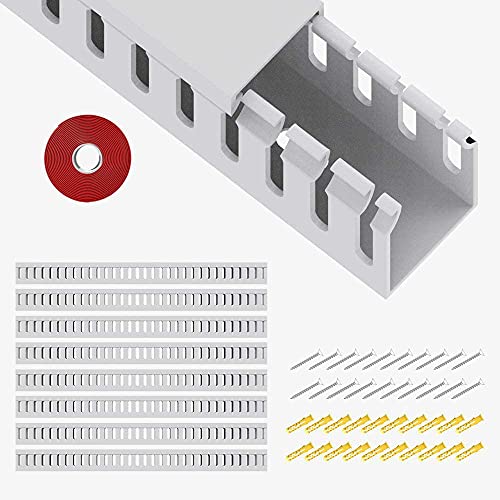




If your main goal is getting the cable chaos under your desk under control, this 8-piece open slot raceway kit is a smart starting point. The kit gives you a total of 123 inches of coverage, which is enough to run cables across the length of most standard desks with room to spare. The channel design is open-slot, meaning cables go in and out easily through the side openings — you don't have to thread them through end-to-end. That's a real time-saver when you're adding or rerouting wires later.
Installation is genuinely simple. You get two options: peel-and-stick adhesive for quick attachment on smooth surfaces like the back of a desk, or screws for a more permanent hold on walls. The slim profile — just 1.18 inches tall and 1.57 inches wide — keeps things low-profile, and the white finish blends with most white or light-colored furniture and walls. The manufacturer even notes you can paint it to match your background, which is a useful detail. Build quality is solid for the price, with a flexible but durable material that won't crack when you press cables in.
The one limitation here is the channel size. Thicker cables — like large power bricks or bundled multi-cable setups — can be a tight fit. For standard USB cords, ethernet lines, and single power cables, though, this kit handles everything cleanly. It's a great pick for anyone doing basic desk organization in 2026.
Pros:
Cons:
Delamu's cord hider kit is one of the most popular wall cable management solutions available, and it earns that reputation. You get 157 inches of total coverage — enough for a full floor-to-TV run in most living rooms. The snap-on cover design is the star feature here: the base attaches to the wall first, you lay your cables in the channel, and the cover literally clicks shut with a satisfying snap. No tools required for the cover itself — just press and it locks in place. Removing it later is equally painless.
The safety credentials are worth calling out. Delamu's material passes the UL94 V-0 flammability rating — that's the standard set by Underwriters Laboratories, meaning the plastic self-extinguishes within 10 seconds if exposed to a flame. That's a meaningful upgrade over generic raceways with unknown material specs, especially when you're running cables near electronics that generate heat. The white finish is clean and uniform, and the slim 0.95-inch width by 0.55-inch height keeps the profile subtle against most walls.
One thing to keep in mind: at 0.55 inches tall, this is a fairly shallow channel. It's ideal for one or two cords side by side, but if you need to bundle five or six cables together, you'll want something with more interior volume. For a wall-mounted TV setup with a power cable and an HDMI or two, this is the cleanest option in its price range. If you're setting up a full entertainment center, pairing this with a great TV stand — like one of the options in our barn door TV stands guide — pulls the whole look together.
Pros:
Cons:
EVEO's J-channel raceway kit is the go-to pick when you need to cover a lot of ground without spending a lot of money. The 6-pack gives you a total of 96 inches of coverage — six 16-inch segments — that work beautifully under a sit-stand desk, along a conference table, or mounted along a wall run. The J-channel shape (open on one side) means dropping cables in is completely tool-free: press them into the channel from the open side and you're done. No lid to snap on, no threading required.
Each segment comes with a strong adhesive strip pre-applied on the back, so installation is fast. EVEO also notes a useful tip: if you ever need to remove a segment, use a hair dryer to gently heat the adhesive and it releases cleanly without damaging most surfaces. The slim, white design disappears against most desk undersides, and the segments align end-to-end without noticeable gaps when installed carefully.
The trade-off with J-channel designs is containment. Because the channel is open on one side, cables won't fall out under normal conditions, but they're not locked in place either. If you're mounting vertically on a wall, gravity can work against you and cables may sag out of the channel over time. Horizontally under a desk, however, this style works perfectly. For a budget-friendly under-desk cable management solution, this 6-pack delivers excellent results.
Pros:
Cons:
If you've tried other raceways and been frustrated that your thick power cables, 3-pin plugs, or heavy-duty ethernet lines won't fit, the ENONCI kit solves that problem directly. The standout spec is the 0.4-inch (10mm) slot opening — wide enough to accommodate AWG 1/0 wire (that's a very thick gauge, commonly used for power cables) and standard 3-pin power plugs. The internal channel itself measures 1.6 inches wide by 0.98 inches tall, which means you can pack in up to 8 Cat-5 or Cat-6 ethernet cables side by side. That's a serious amount of capacity for a residential raceway.
The 5-piece kit gives you 77 inches of total coverage, with each piece measuring 15.4 inches. ENONCI includes a solid accessory bundle: adhesive tape, two wire holders, and five Velcro cable ties. Installation takes about 15 minutes for a full desk run, according to the manufacturer, and the included adhesive works best on clean, smooth surfaces like finished desks or drywall. For messier setups with lots of power cables, this raceway is a genuine upgrade over slim alternatives.
The one concession you make for all that capacity is size. This is a physically larger channel than, say, the Delamu or D-Line options. If aesthetics and a minimal profile are your priority, this might feel bulky. But if function over form is your mantra — if you need every cable reliably covered and organized — the ENONCI kit delivers where others fall short.
Pros:
Cons:
D-Line is a recognized name in cable management, and this 157-inch black cord cover kit shows exactly why. You get 10 raceway lengths at 15.7 inches each, plus an impressive 19 accessories — including clip-over bends, T-connectors, flat elbows, and smooth-fit connectors. That accessory variety is what separates D-Line from budget alternatives. When you're running cables around corners, over door frames, or in L-shaped configurations, the included connectors let you create a professional, seamless look without awkward gaps or exposed cable.
The patented half-round profile is another D-Line differentiator. Unlike the boxy rectangular shape of most raceways, this slightly rounded cross-section looks more elegant on a wall. It also has a practical benefit: the clip-over bend accessories snap directly onto the outside of the channel, so if your corner cut isn't perfectly precise, the accessory covers it. Self-adhesive backing is peel-and-stick, and the shorter 15.7-inch segments mean you're less likely to need cuts on a typical installation.
The black finish is specifically popular for wall-mounted TV setups where the cable channel runs down from a dark-colored TV — it blends with the TV bezel rather than contrasting against it. For lighter walls, D-Line does offer this same kit in white. The 1.18-inch width by 0.59-inch height gives you a moderate capacity — not as wide as the ENONCI, but more than sufficient for a power cable plus two or three signal cables running together.
Pros:
Cons:
The ZhiYo raceway is built for a completely different use case than everything else on this list. This is a heavy-duty cable duct (a closed channel with a removable lid) designed for server racks, network closets, power distribution cabinets, and complex wiring environments. The 2-inch by 2-inch interior can hold up to 40 cables depending on their thickness — that's an industrial-grade capacity for a home or office product. If you're managing a small server room, a NAS setup, or a dense network switch installation, this is the right tool.
The material is new-quality PVC (polyvinyl chloride) with a UL94 V-0 flame retardant rating — the same safety standard you'll find on industrial electrical equipment. The design features parallel openings on both sidewalls, which makes it easy to route cables in and out at any point along the channel. The lid is firm and stable, and the base is thick enough to resist warping even when fully loaded with cables. The grey color is standard for IT infrastructure and blends with most rack equipment.
Be clear on what this isn't: it's not a decorative wall raceway for your living room. It's functional and utilitarian in appearance. But for technical users who need reliable, high-capacity cable management for a rack or wiring closet, the ZhiYo delivers specs and build quality you simply won't find in the lighter-duty options above. It's a genuinely specialized product that does its job extremely well.
Pros:
Cons:
Every other raceway on this list is designed for walls or desk surfaces. The C2G Wiremold kit solves a different problem: cables that have to cross a floor. Whether you're running an extension cord to a lamp in the middle of a room, managing a projector cable across an office floor, or protecting a TV power cord that has to travel along the baseboard, this 5-foot rubber floor protector handles the job safely. The rubber construction creates a smooth, trip-free surface — anyone walking over it won't feel a dangerous bump or edge.
Wiremold is a brand that professional installers have trusted for decades, and this product carries that reputation. The gray rubber channel comes with pressure-sensitive adhesive tape that bonds to indoor flooring surfaces including hardwood, tile, and carpet (smooth carpet works best). You can cut it to your exact desired length using scissors or a utility knife — no special tools needed. The pressure-sensitive backing grips the floor without damaging it, making it a viable option even in rental apartments where you don't want to leave marks.
The 5-foot length is the primary constraint. For longer floor runs, you'd need multiple units. But for the intended use case — bridging a gap, protecting a single cord from foot traffic — 5 feet covers most situations. If you're also shopping for tech accessories for a home office, our roundup of the best chairs for studying is worth a look for completing your workspace setup. According to Wikipedia's overview of cable management, floor-level cable protection is one of the most overlooked aspects of a safe workspace — and the Wiremold kit addresses that gap directly.
Pros:
Cons:
With so many options available, it's easy to buy the wrong raceway for your situation. Here are the four key factors you should think through before adding anything to your cart.
This is the most common buying mistake people make. A raceway that looks perfectly sized in a product photo may be too narrow for your actual cables. Start by identifying your thickest cable — that determines your minimum channel opening size. A single HDMI cord or phone charger cable? Almost any raceway will work. A 3-pin power cable for a desktop PC? You need at least a 0.4-inch slot opening, like the ENONCI. Running 10 ethernet cables in parallel? You need the ZhiYo's 2x2 inch duct. Measure your cables before you buy — especially the thickest ones.
Also count your total cables. A shallow channel (0.5 inches deep) can handle one or two standard cables side by side. For five or more cables bundled together, look for a channel at least 1 inch deep with a wide opening. Buying slightly more capacity than you think you need is always the right call — you'll add cables later.
Where you're mounting the raceway matters enormously. Smooth, painted drywall and smooth desk surfaces bond well with adhesive-backed raceways. Textured walls, bare concrete, or rough wood surfaces grip adhesive poorly — for these you'll want a screw-mount option or a raceway like the open-slot duct that includes both. Floor applications require rubber construction specifically designed for foot traffic, like the Wiremold. Wall-to-ceiling corners require either flexible material or accessory kits (like D-Line's) that include corner and bend pieces. Think through your full installation route before committing to a product.
Cable raceways are visible by design — they replace a cable tangle with a clean channel, but the channel itself is still there. The goal is to make it blend in. White is the universal default and works with most walls and furniture. Black is popular for TV setups where the channel runs down from a dark TV. Gray is standard for server and IT environments. Beyond color, consider the channel's cross-section: the D-Line's half-round profile looks less industrial than a flat rectangular channel. If visual integration matters to you, spend time on this decision. You can also paint most white raceways to match your exact wall color once installed.
Open-slot raceways (like the ENONCI or the first product in our list) have slots or openings along their length, making it easy to add and remove cables at any point. This is the most flexible design for dynamic setups where you're regularly swapping equipment. Closed duct designs (like the ZhiYo) have a solid lid that snaps on over the cable channel. These look cleaner and are better for permanent, high-capacity installations where you won't be changing cables frequently. J-channel designs (like the EVEO) are the most open of all — cables sit in an open trough. Best for under-desk use where gravity keeps cables in place. Match the design to how often you expect to change your cables.
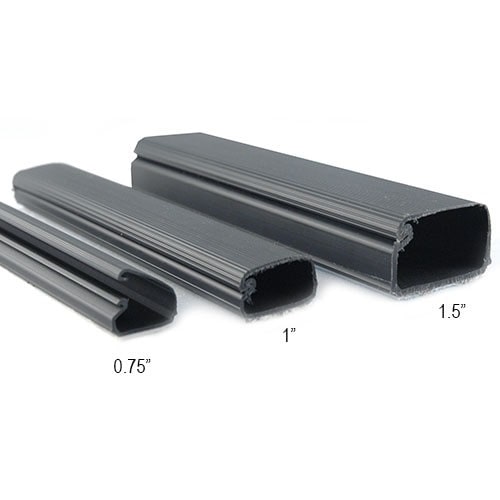
A cable raceway is a channel or housing — usually made of plastic or rubber — that encloses and conceals wires and cables along walls, under desks, or across floors. The term is interchangeable with cord cover, wire channel, and cable duct. Raceways are used in homes, offices, and data centers to organize cables neatly, reduce tripping hazards, and improve the appearance of spaces with multiple electronic devices.
Most wall cable raceways use peel-and-stick adhesive backing. Clean the wall surface with a dry cloth to remove dust and oils, peel the protective backing from the raceway's adhesive strip, press it firmly against the wall, and hold for 30 seconds. For a stronger permanent hold, or for surfaces where adhesive won't stick well, use the included screws instead. Run your cables through the channel from one end, then snap or press the cover closed. The whole process for a typical TV cord run takes under 20 minutes.
Yes — most white PVC cable raceways can be painted with standard interior wall paint. Lightly sand the surface with fine-grit sandpaper first, wipe clean, then apply a thin coat of paint. Let it dry fully before installing. Keep in mind that painting works better on closed-duct raceways than on open-slot designs, where paint can gum up the slot openings. Some raceways come pre-painted from the factory in matching colors, but DIY painting is a reliable alternative for custom matching.
The terms are often used interchangeably, but there is a technical distinction. A cable raceway typically refers to a surface-mounted channel used in homes and offices to conceal visible cables along walls or under furniture. A cable duct usually refers to a larger-capacity enclosed channel used in server rooms, electrical panels, and industrial environments. The ZhiYo product in this review is technically a cable duct — it's designed for high-volume wiring in structured environments. In everyday conversation, most people use both terms to mean the same thing.
Yes, when you use quality products. Look for raceways rated UL94 V-0 — this flame retardancy standard means the plastic self-extinguishes within 10 seconds of a flame being removed. Both the Delamu and ZhiYo raceways carry this certification. That said, you should never run high-voltage electrical wiring inside a decorative cable raceway unless the product is specifically rated for electrical conduit use. Standard home and office signal cables (HDMI, ethernet, USB, low-voltage power cables) are all appropriate for decorative raceways.
It depends on the raceway's interior dimensions and the thickness of your cables. A slim raceway like the Delamu (0.95 x 0.55 inches) comfortably fits two to three standard cables side by side. A mid-size option like the ENONCI (1.6 x 0.98 inches) can hold up to 8 Cat-5/6 ethernet cables. The ZhiYo's 2x2 inch duct holds up to 40 cables. As a general rule, don't fill a raceway more than 70% of its capacity — leaving some room makes it easier to route cables and prevents the cover from popping open under cable pressure.


About Editorial Team
The DigiLabsPro editorial team covers cameras, lenses, photography gear, and creative technology with a focus on helping photographers make informed buying decisions. Our reviews and guides draw on hands-on testing and research across a wide range of equipment, from entry-level beginner kits to professional-grade systems.
You can get FREE Gifts. Or latest Free phones here.
Disable Ad block to reveal all the info. Once done, hit a button below
