Over 60% of home office workers say they still print documents at least several times a week — yet the average household replaces its printer only once every five to seven years. That means the machine sitting on your desk right now could be costing you far more in ink, downtime, and frustration than the price of a modern replacement. Whether you need to print school projects, scan tax receipts, copy forms, or fax the occasional document, finding the right all-in-one printer for home use in 2026 can genuinely change how smoothly your day runs.
The good news: today's all-in-one printers (also called multifunction printers, or MFPs) pack far more capability per dollar than they did even three years ago. Inkjet tanks that hold enough ink for years, laser engines that spit out 30 pages per minute, wireless apps that let you print from your phone in seconds — the options are genuinely impressive. The challenge is sorting out which machine fits your home, your print volume, and your budget. You don't want to overpay for features you'll never use, and you don't want to buy a bargain unit that nickels-and-dimes you on ink.
We've tested and researched seven of the most popular all-in-one printers available right now to give you an honest, balanced look at each one. We've also put together a buying guide at the bottom to walk you through the key questions you should ask before you click "add to cart." If you want a broader look at the multifunction space, check out our roundup of the Best Multifunction Printer 2026 for even more options. Now, let's get into it.

Contents
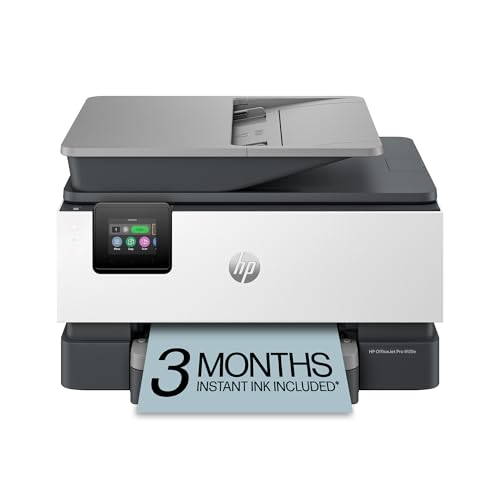






If your home produces a steady stream of color documents — presentations, brochures, invoices — the HP OfficeJet Pro 9125e is worth a hard look. It prints at up to 18 pages per minute in color and 22 ppm in black, which puts it ahead of most inkjet competitors in sheer throughput. The auto document feeder (ADF) and auto duplex (automatic two-sided printing) make it feel less like a consumer device and more like a compact office workhorse. HP's AI-assisted print formatting is a genuinely useful feature: it strips out ads, navigation menus, and background clutter when you print web pages or emails, so you're not wasting pages on junk you didn't ask for.
Setup is handled through the HP Smart app, which walks you through Wi-Fi pairing in a few minutes. The 250-sheet input tray means you won't be refilling paper every other day. HP also includes a three-month trial of Instant Ink (a subscription service that ships replacement cartridges before you run out), which is a nice bonus if you print frequently. That said, once the trial ends, ongoing ink costs can add up — so keep that in mind when calculating total cost of ownership. If you tend to go through a lot of ink, you might want to compare it against the cartridge-free EcoTank models below.
Build quality is solid for an inkjet in this price range. The touchscreen panel is responsive and the overall footprint is reasonable for a desk. Fax capability is there if you still need it. For a home that functions more like a small office — regular color printing, scanning, copying — this is one of the most balanced performers available in 2026.
Pros:
Cons:
The Epson EcoTank ET-4850 flips the traditional printer economics on its head. Instead of small ink cartridges that cost a fortune to replace, it uses large refillable ink tanks (hence the "Supertank" name). The upfront cost is higher than a standard inkjet, but the replacement ink bottles are dramatically cheaper per page — and if you print a lot, the savings add up fast. Replacement ink costs are a fraction of cartridge pricing, which is exactly why this machine has become so popular with home offices and families who print regularly.
On the performance side, the ET-4850 prints at up to 15.5 ppm in black and 8.5 ppm in color. That's not the fastest in its class, but it's perfectly respectable for home use. Print quality sits at 4800 x 1200 dpi (dots per inch — a measure of print sharpness), which delivers clean text and vibrant images. The ADF, duplex printing, fax, Ethernet port, and Wi-Fi are all included. The Epson Smart Panel app makes mobile printing straightforward, and Scan to Cloud is handy if you want to digitize documents without sitting at a computer.
This is the printer you buy when you're tired of the cartridge replacement cycle. The tanks hold enough ink to print thousands of pages before you need to think about refilling. If you're comparing it to a traditional inkjet and wondering about the cost difference, run the numbers on your estimated monthly print volume — for most households that print more than 100 pages a month, the ET-4850 pays for itself relatively quickly. It's also worth looking at our guide to the Best Remanufactured Ink Cartridges 2026 if you're still considering a cartridge-based printer and want to manage costs.
Pros:
Cons:
Think of the ET-2803 as the ET-4850's more affordable sibling. You get the same cartridge-free Supertank concept — refillable ink tanks that eliminate the cartridge treadmill — but in a more compact, budget-friendly package. Each bottle set included in the box is equivalent to roughly 80 individual ink cartridges, and the ink supply that ships with it is designed to last up to two years of typical home printing. That's a genuinely compelling pitch if your main frustration with printers is constantly buying expensive small cartridges.
The ET-2803 handles print, scan, and copy, and supports AirPrint for seamless printing from your iPhone or iPad. Wireless setup is simple, and the compact footprint makes it a good fit for tighter spaces — a bedroom desk, a small study, or a kitchen counter. It prints up to 4,500 pages black and 7,500 pages color from each replacement ink set, which means ink buying is an occasional task rather than a monthly chore.
Where it falls short compared to its bigger sibling: no ADF (you load one page at a time on the flatbed), no fax, and no Ethernet connection. Print speeds are also more modest. If you print occasionally — school homework, the odd recipe, a few forms a month — those omissions won't bother you. But if you need to scan multi-page documents regularly or you require fax functionality, step up to the ET-4850. For light casual printing, though, the ET-2803 offers excellent long-term value.
Pros:
Cons:
Laser printers work differently from inkjets — instead of spraying liquid ink onto paper, they fuse powdered toner (fine powder) using heat. The result is crisp, smear-resistant black-and-white text that looks professional on everything from reports to invoices. The HP LaserJet MFP M234dw is built around that strength, delivering up to 30 pages per minute single-sided and 19 ppm two-sided — which HP claims is the fastest two-sided printing in its class. If you print a lot of text documents and speed matters to you, laser is hard to beat.
The M234dw covers print, scan, and copy, with wireless connectivity and the HP Smart app for mobile printing. Setup is fast and straightforward. Auto-duplex printing is standard, and HP's security features (including automatic firmware updates and built-in malware protection) make this a sensible choice for a home that takes network security seriously. It's also Instant Ink eligible if you'd rather pay a flat monthly fee than track toner levels.
The limitation here is obvious: this is a monochrome (black-and-white only) printer. If you ever need to print color photos, invitations, or color presentations, you'll be disappointed — or you'll need a second device. But for the home that primarily prints documents, forms, school papers, and reports, the M234dw is a practical, reliable choice. Laser toner also lasts much longer per cartridge than inkjet ink, so the per-page cost for black-and-white printing is very competitive. Worth noting: if you need color laser output, check our guide to the Best Color Laser Printer For Photos 2026.
Pros:
Cons:
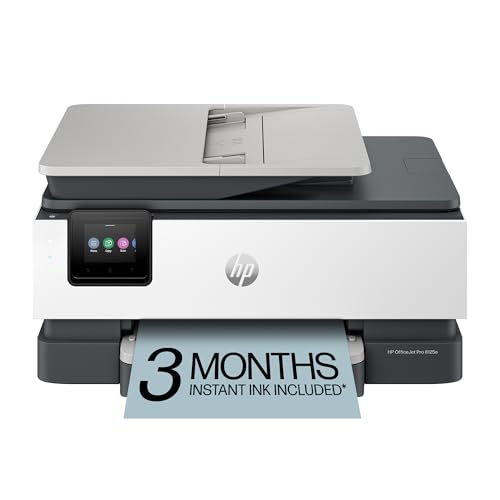
The HP OfficeJet Pro 8125e sits at the intersection of home and office — it's designed for people who work from home and need professional-quality color output without the cost of a full office machine. It prints at up to 10 ppm color and 20 ppm black, which is solid for a home inkjet. The 225-sheet input tray is practical, and auto-duplex printing is included, so two-sided documents happen automatically without you flipping pages by hand.
Like its bigger sibling the 9125e, this printer comes with HP's AI-assisted print formatting, which tidies up web pages and emails before they hit the page. The auto document feeder handles multi-page scan and copy jobs without babysitting. And the three-month Instant Ink trial is a good way to try HP's subscription ink model before committing. The HP Smart app makes setup and day-to-day use genuinely convenient, and the mobile printing options are well-implemented.
The 8125e is the more sensible choice over the 9125e if your print volumes are moderate rather than heavy. You get most of the same features at a slightly lower price point — the trade-off being somewhat slower color print speed and a slightly smaller paper tray. If you're running a true home office that's also handling light business workloads, this printer gets the job done without the bulk or cost of a heavier commercial model. Note: no fax capability on this model, so if faxing is a requirement, look elsewhere.
Pros:
Cons:
If your budget is tight and your printing needs are basic, the Canon PIXMA MG3620 is worth considering. It's one of the most affordable all-in-one printers you'll find, and it covers the essentials: print, scan, and copy with wireless connectivity. You can print from your iPhone, iPad, or Android device using AirPrint, Google Cloud Print, or the Canon PRINT app. NFC (near-field communication — a tap-to-connect feature) is also available on compatible devices. For a household that needs to print a few pages here and there, it does what it needs to do.
Print quality is decent for casual use. The MG3620 handles plain paper documents, envelopes, and a wide range of photo papers — glossy, semi-gloss, matte, and more. Canon's FINE cartridge technology delivers reasonable sharpness for photos when you're using Canon's own photo papers. Wireless setup is relatively quick, and the compact white design fits easily in a small space.
Be realistic about the limitations here, though. This printer is designed for light, occasional use — not for homes that print dozens of pages daily. There's no ADF, no duplex printing, and no fax. Ink costs per page are higher than the Supertank models. The paper tray is small. If you currently print a lot and want this to be your workhorse, look at the other options on this list. But if you want something affordable, compact, and reliable for printing the occasional document or photo, the MG3620 does the job without fuss. You can find our full roundup of the best printers across all categories in our buying guide if you want to compare further.
Pros:
Cons:
The Brother MFC-L2750DW is a powerhouse if your printing is mostly documents and speed is a priority. It prints at up to 36 pages per minute in black — the fastest single-sided speed on this list — with a monthly duty cycle of 15,000 pages. That last number tells you this printer is built to handle serious workloads without breaking a sweat. Auto-duplex covers print, scan, copy, and fax in two-sided mode, and the 50-sheet ADF handles multipage jobs without babysitting.
The 256MB printer memory and 500-page fax memory add reliability to high-volume workflows. The 2.7-inch color touchscreen display is intuitive and responsive — you're not fumbling through confusing button menus to trigger a scan. Laser print resolution of 2400 x 600 dpi produces sharp, detailed output that holds up on contracts, reports, and technical documents. Connectivity covers wireless, Ethernet, NFC, and USB, making it flexible enough for any home network setup. PC Fax (sending faxes directly from your computer) is built in.
Like the HP LaserJet M234dw, the MFC-L2750DW is monochrome only. No color. If that's a dealbreaker, it's a dealbreaker — but if your needs are squarely in the "fast, reliable, black-and-white workhorse" category, this machine is arguably the strongest performer on this list in that role. Toner cartridges for Brother laser printers are also widely available and competitively priced, which matters when you're printing at this volume. If you frequently need to compare laser options, our guide to the Best Cheap Laser Printer 2026 covers a range of price points in more depth.
Pros:
Cons:
With seven solid options in front of you, the decision comes down to matching the printer's strengths to your specific situation. Here are the key factors to think through before you commit.
This is the most fundamental question, and it shapes everything else. Inkjets are better for color, photos, and lower upfront cost. Lasers are better for high-speed, high-volume black-and-white document printing with lower long-term per-page costs.
Inkjet all-in-ones — like the HP OfficeJet Pro models, both Epson EcoTanks, and the Canon PIXMA — use liquid ink and excel at color output. They're also generally more compact and versatile for mixed home use. The downside: ink can be expensive per page, and cartridges dry out if you don't print often. Supertank inkjets like the Epson EcoTank line solve the cost problem but ask you to pay more upfront.
Laser all-in-ones — like the HP LaserJet M234dw and the Brother MFC-L2750DW — use toner powder that doesn't dry out. They print black-and-white text very fast and at low cost per page. They're ideal if you mostly print documents, reports, and forms. The limitation is color: the two laser options here print only in black and white.
Be honest with yourself about your print volume. Print volume is usually described as pages per month. If you print a handful of pages occasionally, you don't need a machine rated for 15,000 pages a month — and you might be better off with a budget Supertank like the ET-2803 or the Canon PIXMA. If your home functions more like a small office and you're regularly printing dozens or hundreds of pages, the Brother MFC-L2750DW or Epson ET-4850 will serve you much better.
Ink cost per page is the number that sneaks up on people who buy a cheap printer. A $70 printer that costs 10 cents per page in ink will cost you more over two years than a $200 printer that costs 2 cents per page — if you print regularly. Do a quick back-of-envelope calculation using your estimated monthly volume before you decide.
All-in-one printers come loaded with features, but you won't use all of them equally. Here's a quick guide to which ones are worth paying for:
Printer dimensions vary more than you might expect. A Brother MFC-L2750DW is a physically larger machine than a Canon PIXMA MG3620. Measure your desk or shelf space before you order. Also factor in where you'll keep the printer relative to your router — if it's in a room with weak Wi-Fi, you may want to look for a model with Ethernet as a backup.
For long-term costs, the calculus has shifted in 2026: Supertank inkjets have become mainstream enough that they're a genuinely smart choice for many homes. If you're buying a traditional cartridge inkjet, check the price of replacement cartridges before you buy the printer. Some manufacturers price cartridges high specifically to offset the low printer cost — a practice sometimes called the "razor and blades" model. Subscription services like HP Instant Ink can help manage this, but they come with their own terms. For a comprehensive look at printer value across the spectrum, our Best Multifunction Printer 2026 roundup is a useful reference.
There isn't a single "best" option for every home — it depends on what you print, how often, and what you need the printer to do. The Epson EcoTank ET-4850 is an excellent choice for households with moderate to high print volume who want to minimize long-term ink costs. The HP OfficeJet Pro 9125e is strong for homes that need fast color output. For black-and-white document printing, the Brother MFC-L2750DW is the fastest option on this list. And for tight budgets or light use, the Canon PIXMA MG3620 or Epson EcoTank ET-2803 make practical sense. Use the buying guide above to match the printer's strengths to your specific situation.
Inkjets are better for color output, photos, and general mixed-use home printing. They're typically more compact and affordable upfront. Laser printers are better for high-speed black-and-white document printing, with lower per-page toner costs over time and toner that doesn't dry out from infrequent use. If you primarily print text documents at high volume, laser is worth considering. If you need color or photo printing, inkjet is the right technology.
For most households that print regularly — more than 50 to 100 pages per month — yes, EcoTank printers are worth the higher upfront price. The replacement ink bottles are dramatically cheaper than cartridges on a per-page basis, and the large tanks mean you rarely need to think about ink at all. The ink included in the box typically lasts one to two years. If you print only occasionally, the savings may not justify the extra cost, and a cheaper cartridge-based inkjet might serve you better.
Duplex printing means printing on both sides of a sheet of paper automatically. An auto-duplex printer flips the page and prints the reverse side without you needing to do it manually. It's a useful feature for anyone who prints multi-page documents and wants to save paper. All the HP OfficeJet Pro models, both Epson EcoTanks, the HP LaserJet M234dw, and the Brother MFC-L2750DW on this list support auto-duplex. The Canon PIXMA MG3620 does not.
Most households no longer need fax. However, certain professions — healthcare, real estate, legal, government — still rely on fax for official document transmission. If you work in one of those fields and need to send or receive faxes at home, look for a model that includes it. Of the printers on this list, the HP OfficeJet Pro 9125e, Epson EcoTank ET-4850, HP LaserJet M234dw, and Brother MFC-L2750DW all include fax functionality. The HP OfficeJet Pro 8125e and Canon PIXMA MG3620 do not.
The most effective ways to lower your printing costs are: choose a printer with low per-page ink or toner costs (Supertank and laser models generally win here), use duplex printing to cut paper consumption in half, print in draft or economy mode for internal documents that don't need high quality, and consider a subscription like HP Instant Ink if you use a cartridge-based HP printer. You should also avoid leaving inkjet printers unused for extended periods, as ink can dry in the printhead — which leads to costly cleaning cycles that waste ink. Regular light use keeps the system healthy.


About Editorial Team
The DigiLabsPro editorial team covers cameras, lenses, photography gear, and creative technology with a focus on helping photographers make informed buying decisions. Our reviews and guides draw on hands-on testing and research across a wide range of equipment, from entry-level beginner kits to professional-grade systems.
You can get FREE Gifts. Or latest Free phones here.
Disable Ad block to reveal all the info. Once done, hit a button below
