The HP OfficeJet Pro 9125e is our top pick for 2026 — it nails the balance between color quality, speed, and smart AI-assisted printing that most offices actually need. But the right duplex printer depends entirely on your setup, and the gap between a great choice and a frustrating one is bigger than most buyers expect.
Two-sided printing sounds simple. It isn't. Duplex printing — automatic two-sided output — can cut your paper usage nearly in half, but only if the printer's duplexer is fast enough not to bottleneck your workflow. Slow duplexers, jam-prone mechanisms, and ink that smears on the back pass are real problems that specs sheets don't warn you about. We dug into the full field for 2026 to find the machines that actually deliver.
In this guide, you'll find seven tested duplex printers ranging from compact monochrome lasers for small teams to wide-format inkjets for creative professionals. Whether you're equipping a home office or a busy team of five, there's a clear winner for your situation. If you're also considering broader printer types, check out our Best All-in-One Printer for Home Use 2026 roundup for more context. For everything you need to know about evaluating any printer purchase, visit our buying guide.
Contents
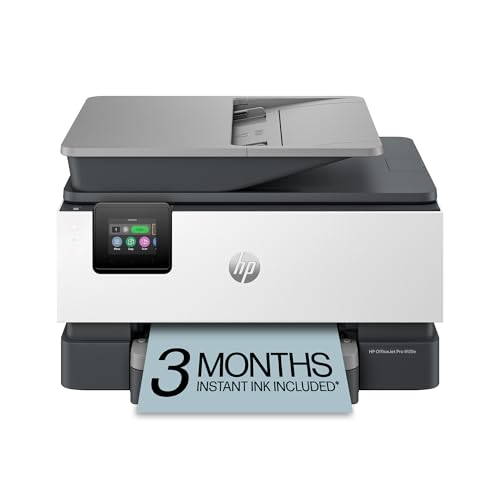



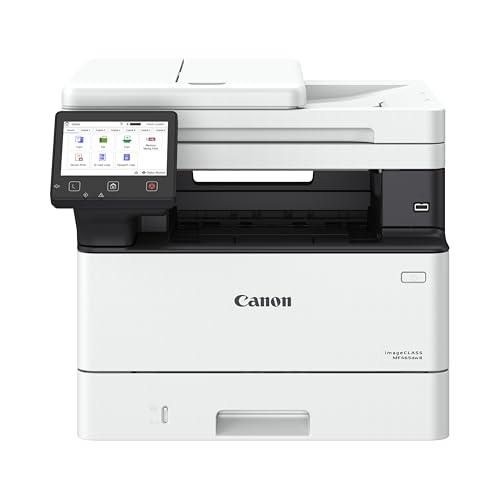
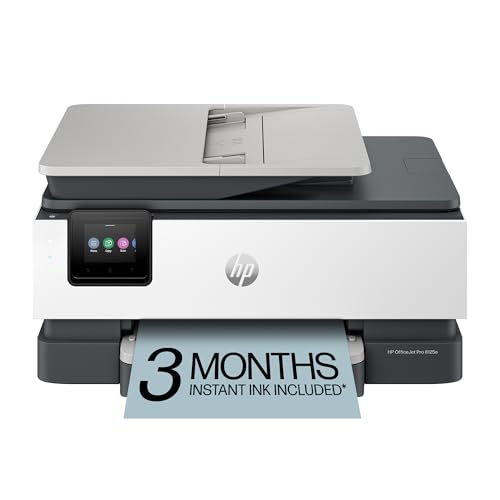


The HP OfficeJet Pro 9125e is built for offices that print a lot of color — think presentations, brochures, and client-facing documents — without the cost and bulk of a full laser system. At up to 22 ppm black and 18 ppm color, it's one of the faster inkjet all-in-ones in its class, and the auto duplex keeps pace without introducing the lag you get from cheaper duplexers. The 250-sheet input tray means fewer refill interruptions during heavy runs.
What sets the 9125e apart in 2026 is HP's AI-assisted formatting. When you print web pages or emails, the AI strips out ads, navigation bars, and junk content automatically — your print looks clean and intentional, not like a raw browser screenshot. That's a genuinely useful feature if you're printing research, receipts, or reference material regularly. The included 3-month Instant Ink trial also gives you a low-cost window to evaluate whether subscription ink works for your volume.
Setup is straightforward via the HP Smart app, and wireless connectivity is reliable. The auto document feeder handles scanning and copying multi-page files without babysitting. If you want color duplex output at office speeds without paying laser prices, this is the machine to get in 2026.
Pros:
Cons:
If your team prints black-and-white documents all day and needs a machine that keeps up without drama, the HP LaserJet MFP M234dw is the answer. It claims the title of fastest two-sided printing in its class — 30 ppm single-sided, 19 ppm two-sided — and those numbers translate to real time savings when you're running reports, contracts, or meeting packets through the duplex cycle repeatedly. Laser output means pages come out dry, sharp, and smear-proof from the first sheet.
The M234dw is sized for one to five users, which is exactly the right scope. It doesn't try to be everything — there's no color, no wide-format, no fax on the base model — but within its lane it executes cleanly. Security is built in, which matters for small teams handling sensitive documents. The HP Smart app handles mobile printing and setup without needing IT involvement.
If you're comparing against inkjet options, the laser engine here wins on per-page cost over time. Toner cartridges last longer and don't dry out when the printer sits unused over a weekend. For a 1-5 person team printing mostly text, this is the most efficient duplex machine you'll find at this price point.
Pros:
Cons:
The Canon imageCLASS MF465dw II hits 42 pages per minute — the fastest print speed on this list — and it's a monochrome laser, so every one of those pages comes out sharp, consistent, and immediately dry. This is the machine for environments where throughput is the primary metric. If you're printing dense legal documents, internal reports, or high-volume correspondence, 42 ppm means you're not waiting. The duplex mechanism keeps pace without slowing the engine down noticeably.
Canon's 3-year limited warranty is a standout value add. Most competitors offer one year. The imageCLASS line has a long track record for reliability, and that warranty reflects Canon's confidence in the hardware. Wireless setup is easy, and the 4-in-1 functionality — print, scan, copy, fax — covers everything a standard office workflow requires. The expandable paper capacity means you can configure it for larger input when volume demands it.
The tradeoff is clear: no color. If your workflow includes any color printing, this isn't your machine. But if you're a law office, accounting firm, or any team that lives on black-and-white output, the MF465dw II is the fastest, most reliable monochrome duplex printer in its price range in 2026. Also worth considering if you're evaluating multifunction laser options: our Best Multifunction Printer 2026 guide covers the full landscape.
Pros:
Cons:
The HP OfficeJet Pro 8125e is the home office version of the 9125e — scaled down in speed but not in smarts. You get the same HP AI-assisted print formatting that strips clutter from web and email prints, the same auto duplex and auto document feeder, and the same 3-month Instant Ink trial. What changes is the speed: 20 ppm black and 10 ppm color. For a solo home office user printing reports, invoices, and the occasional flyer, that's more than sufficient.
The 225-sheet input tray is slightly smaller than the 9125e's 250-sheet version, which is a fair tradeoff at this price point. Color output quality is solid for home office use — presentations and business documents look professional. The footprint is compact enough to fit on a desk without dominating the space. Wireless connectivity through the HP Smart app works reliably, and mobile printing from your phone is smooth.
If you're working from home and want a color duplex printer that handles everyday tasks without requiring an IT department, the 8125e delivers. It's a practical, well-rounded machine that doesn't overcharge you for features you won't use. The AI formatting alone saves real paper and frustration when printing from browsers.
Pros:
Cons:
The Epson WorkForce Pro WF-7840 is in a different category from the rest of this list. It prints wide-format output up to 13" x 19" — double the width of standard letter-size printers — with full auto duplex capability. If you're producing posters, architectural drawings, marketing materials, or tabloid-size documents, this is the only machine here that physically handles the job. The 500-sheet paper capacity supports serious volume without constant reloading.
Epson's PrecisionCore Heat-Free technology drives fast, energy-efficient output, and DURABrite Ultra ink dries quickly to resist smudging on the back pass during duplex cycles — a genuine differentiator for inkjet duplex quality. The 50-page auto document feeder and 4.3" color touchscreen make navigation and multi-page jobs practical. Mobile connectivity through the Epson Smart Panel and iPrint apps covers iOS and Android without friction.
The WF-7840 is not the cheapest machine on this list, and wide-format ink consumption adds up. But if your workflow genuinely requires oversized output — and most of the other printers here simply cannot produce it — the Epson is the clear answer. It's one of the best duplex printers for creative professionals and small design studios in 2026.
Pros:
Cons:
The Brother MFC-L2750DW packs a serious feature set into a monochrome laser body. 36 ppm black-and-white output, automatic duplex printing, copying, scanning, and faxing — plus a 50-sheet auto document feeder, NFC, Ethernet, and a 2.7" color touchscreen. This is a complete workstation printer that covers every standard office function without compromise. The 250-sheet input tray and single-sheet bypass handle everything from envelopes to standard paper stock.
Resolution at 2400 x 600 dpi delivers genuinely detailed output — fine text, tables, and dense data-heavy documents reproduce cleanly. The 15,000-page monthly duty cycle means this machine can sustain heavy workloads without mechanical fatigue. With 256MB of printer memory and 500-page fax memory, it handles queued jobs and fax traffic reliably. NFC connectivity adds a modern touch for tap-to-print workflows.
The duplex here extends beyond printing — automatic two-sided copying and scanning are included, which saves significant time on multi-page document handling. If you need a monochrome all-in-one that truly handles everything without color, the MFC-L2750DW is the most feature-complete option on this list. For budget-conscious buyers who want laser quality without overspending, also check our Best Cheap Laser Printer 2026 guide.
Pros:
Cons:
The Brother HL-L3280CDW proves that color laser output doesn't require a massive footprint. This compact machine delivers laser-quality color at 27 ppm with automatic duplex printing — fast, precise, and dry from the first page. It's built for small offices and home offices that want color output with the consistency and per-page economics of laser technology, without the bulk of a large departmental machine. Works with Alexa for voice-activated print jobs.
The 2-month Refresh subscription trial gives you a window to evaluate the toner subscription model before committing. Color laser output at this speed is genuinely impressive — presentations, charts, and color documents come out with consistent saturation and sharp edges. The duplex mechanism is automatic and fast, keeping the 27 ppm speed from collapsing under two-sided loads the way slower duplexers do.
It's a print-only machine — no scan, copy, or fax — which is the main limitation to understand before buying. If your workflow separates those functions (you scan from your phone, for example), that's not a real tradeoff. But if you need a full all-in-one, look at the Brother MFC-L2750DW above or our Best Multifunction Printer 2026 roundup. For a pure color print engine in a compact body, the HL-L3280CDW is the best option on this list.
Pros:
Cons:
This is the first decision you need to make — and it shapes every other choice. Here's how they break down for duplex use specifically:
Manufacturers list both single-sided ppm and two-sided ipm (images per minute) — and the gap between them reveals how good the duplexer actually is. A machine that drops from 30 ppm single-sided to 8 ipm duplex has a bottleneck. Here's what to look for:
A 250-sheet tray sounds like plenty until you're running a 300-page batch and stopping halfway through to reload. Paper capacity and duty cycle are the two specs most buyers underestimate.
Every printer on this list supports wireless, but connectivity depth varies. Before buying, confirm your specific requirements:
A duplex printer automatically prints on both sides of a sheet of paper in a single pass through the machine. The paper goes through the print engine once for the front side, then the duplexer flips or re-feeds it to print the back side. Automatic duplex — sometimes called auto-duplex or two-sided printing — requires no manual intervention, unlike manual duplex where you flip the paper yourself. All seven printers in this guide include automatic duplex as a standard feature.
For most office environments, laser wins. Laser duplex is faster, produces smear-proof output on the back pass (toner is heat-fused permanently), and costs less per page over time. Inkjet duplex can produce superior color and photo quality, but ink needs time to dry between passes — cheap inkjet duplexers smear. If you need color output and occasional duplex, a quality inkjet like the HP OfficeJet Pro 9125e or Epson WF-7840 handles it well. For high-volume black-and-white duplex, laser is the clear choice.
In theory, automatic duplex printing cuts paper consumption by up to 50%. In practice, you'll typically save 30-45% depending on your document types — some jobs don't lend themselves to two-sided printing (envelopes, single-page forms, thick cardstock). Over a year, for a team printing 10,000 pages per month, that translates to 30,000-45,000 fewer sheets — a meaningful reduction in both cost and paper waste.
Most duplex printers have a maximum paper weight for the duplex path — typically 60-90 gsm. Thick cardstock (200+ gsm) usually cannot go through the duplexer without jamming. Check the manufacturer's spec sheet for "duplex media weight" before buying if you regularly print on heavy stock. The single-sheet bypass tray on most machines accepts heavier media for single-sided printing on those jobs.
Duplex printing means the printer outputs on both sides of paper automatically. Duplex scanning means the scanner reads both sides of a document in a single pass through the auto document feeder — you don't have to flip the original and scan again. The Brother MFC-L2750DW includes both. If you frequently digitize two-sided documents, confirm the machine's ADF supports duplex scanning specifically — not all do.
The HP OfficeJet Pro 8125e is the strongest home office duplex printer in 2026. It delivers color duplex output with AI-assisted print formatting, an auto document feeder, and a compact footprint that fits on a desk without dominating it. The 3-month Instant Ink trial keeps upfront costs down. If you print exclusively black-and-white, the HP LaserJet MFP M234dw is faster and cheaper to run over time. Match the machine to your actual output — color users get more value from the 8125e, text-only users save more with the M234dw.


About Editorial Team
The DigiLabsPro editorial team covers cameras, lenses, photography gear, and creative technology with a focus on helping photographers make informed buying decisions. Our reviews and guides draw on hands-on testing and research across a wide range of equipment, from entry-level beginner kits to professional-grade systems.
You can get FREE Gifts. Or latest Free phones here.
Disable Ad block to reveal all the info. Once done, hit a button below
