The global document scanner market surpassed $4.7 billion in 2025 and is projected to grow at a 9.2% CAGR through 2030, driven largely by hybrid work and paperless office initiatives. If you still rely on a single-sided flatbed to digitize contracts, receipts, or medical records, you are leaving hours on the table every week. A duplex scanner captures both sides of a page in a single pass, effectively doubling your throughput without doubling your desk space or your budget.
Choosing the right duplex scanner in 2026 depends on how you work. Home offices need something compact and quiet. Shared workgroups demand network connectivity and large feeder trays. Accounting departments prioritize receipt handling and cloud integration. We tested seven of the top-rated duplex scanners across these use cases, measuring scan speed, image quality, software usability, and long-term reliability. Whether you need a personal unit for tax season or a departmental workhorse that handles 4,000 sheets a day, this guide has you covered. For more product comparisons across categories, visit our buying guide hub.

We evaluated each scanner on optical resolution, pages-per-minute throughput, automatic document feeder (ADF) capacity, connectivity options, and bundled software quality. Every model on this list supports duplex scanning — the ability to capture both sides of a document simultaneously — which is the single biggest productivity upgrade you can make to your scanning workflow. If you also handle photo digitization in your workflow, our guide on how to scan pictures covers best practices for preserving image quality during the scanning process.
Contents




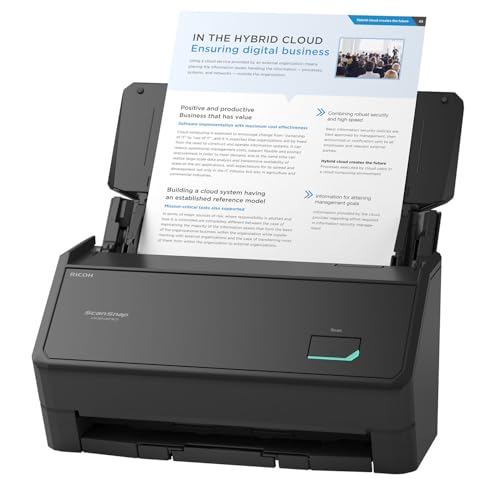


The Fujitsu ScanSnap iX1600 has earned its reputation as the go-to scanner for households and small teams where multiple people need access to a single device. It features a 4.3-inch touchscreen display that lets you create personalized scan profiles for each user — one tap and the document routes to the correct folder, cloud service, or application. At 40 pages per minute in duplex mode with 600 dpi optical resolution, it handles everything from business cards to legal-sized documents without breaking a sweat.
What sets the iX1600 apart is its wireless versatility. It connects via Wi-Fi to PCs, Macs, smartphones, and tablets simultaneously, which means your partner can scan receipts to a tax folder while you digitize client contracts to Dropbox. The 50-sheet ADF is generous enough for small batch jobs, and the ScanSnap Home software automatically detects document types and applies appropriate settings. Fujitsu's intelligent image correction straightens skewed pages, removes blank sheets, and enhances text readability without manual intervention.
Build quality is solid for a consumer-grade scanner. The white chassis is compact enough for a bookshelf, and the feed mechanism handles mixed-size batches reliably. The touchscreen interface, while not the fastest to respond, eliminates the need to configure scans from your computer entirely. For a household or small team scanning under 500 pages daily, the iX1600 delivers the best balance of usability and performance in 2026.
Pros:
Cons:
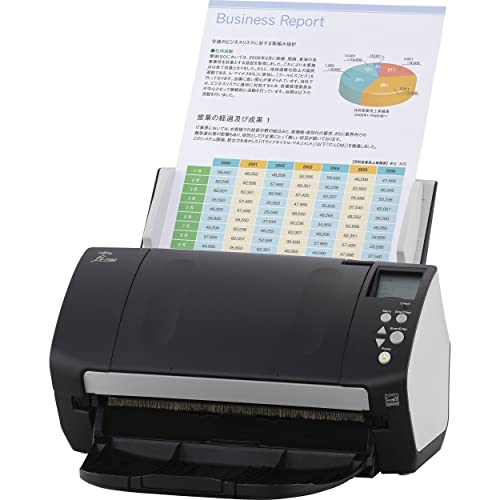
The Fujitsu fi-7160 occupies the sweet spot between consumer convenience and enterprise reliability. Rated at 60 pages per minute in duplex mode, it outpaces most scanners in its price bracket by a significant margin. The 80-sheet automatic document feeder means you can load a substantial stack and walk away, which is exactly the workflow that small accounting firms, law offices, and medical practices need during peak processing periods.
Fujitsu engineered the fi-7160 for durability. The paper path uses ultrasonic multi-feed detection to catch double-feeds before they become a problem — a critical feature when you are digitizing legal documents where every page matters. The PaperStream IP driver produces remarkably clean images even from crumpled or stained originals, applying intelligent cleanup that rivals manual Photoshop work. USB 3.0 connectivity ensures transfers keep pace with the scan engine, eliminating the bottleneck that plagued earlier USB 2.0 models.
Where the fi-7160 truly excels is in its recommended daily duty cycle of 4,000 sheets. This is not a scanner that you nurse through light use — it is built to process entire filing cabinets. The compact footprint fits on a standard desk, yet the internal mechanics are borrowed from Fujitsu's enterprise fi-series line. If your office scans more than 100 pages daily and reliability is non-negotiable, the fi-7160 earns its premium price.
Pros:
Cons:
The Fujitsu fi-8150 represents the next generation of the fi-series workgroup scanner, and its headline feature is dual connectivity via USB 3.2 and wired LAN. That network port transforms this from a single-user peripheral into a shared departmental resource. Any workstation on the network can initiate scans, which eliminates the productivity drain of employees queuing at a single USB-connected machine. At 50 pages per minute (100 images per minute in duplex), the fi-8150 keeps pace with demanding batch workflows.
The 100-sheet ADF is the largest in this roundup, accommodating everything from standard letter-size documents to business cards, passports, and booklets through its manual feed mode. Fujitsu's advanced paper feeding system uses a combination of sensors and intelligent separation to handle mixed-media batches — a scenario that trips up lesser scanners. The operator panel on the front of the unit lets users initiate common scan jobs without touching a computer, streamlining workflows in reception areas and mailrooms.
Image quality at the fi-8150's maximum 600 dpi optical resolution is excellent. Color accuracy is strong enough for archiving marketing materials and photographs, while the built-in image processing handles deskewing, blank page removal, and automatic color detection. For departments that need a scanner accessible to 5-15 users across a network, the fi-8150's combination of LAN connectivity, 100-sheet capacity, and Fujitsu's proven reliability makes it the clear departmental choice in 2026.
Pros:
Cons:
The ScanSnap iX2400 is the newest scanner on this list, arriving as the direct successor to the popular iX1400. Its core philosophy is dead simple: press one button and everything happens automatically. Documents are scanned at up to 45 pages per minute, automatically cropped, deskewed, and routed to the destination you configured. The Quick Menu feature lets you drag and drop scanned files directly into your favorite applications, cutting out the file-browser middleman entirely.
With a 100-sheet ADF — double the capacity of its predecessor — the iX2400 handles substantial batch jobs that would have required multiple loads on the iX1400. It processes business cards, receipts, photos, and even envelopes without requiring you to swap settings or adjust guides. The USB connection provides rock-solid reliability, which Fujitsu deliberately chose over wireless to eliminate the connectivity hiccups that sometimes plague Wi-Fi scanners during long batch jobs.
The iX2400 is purpose-built for individual users who want maximum simplicity. There are no network features, no touchscreen, and no multi-user profiles — and that is the point. You get a scanner that does one thing exceptionally well: turning paper into organized digital files as fast as possible. The next-generation paper feed mechanism handles mixed-size documents more reliably than the iX1400, and the overall build quality suggests this unit will last through years of daily use. If you work alone and value speed over connectivity options, the iX2400 is your scanner.
Pros:
Cons:
Epson's DS-530 II delivers one-pass duplex scanning at 35 ppm (70 images per minute), which puts it firmly in workgroup territory at a decidedly personal-scanner price point. That speed-to-cost ratio makes it one of the strongest value propositions in the 2026 duplex scanner market. The 50-sheet ADF handles standard office documents with a robust feed mechanism that Epson has refined over several product generations.
The DS-530 II introduces several reliability enhancements over its predecessor. Slow Speed Mode lets you feed delicate or thin documents at reduced speed to prevent jams and misfeeds — a thoughtful feature for offices that handle a mix of standard paper, carbonless forms, and lightweight receipts. Programmable scan jobs let you save up to 30 commonly used configurations, so switching between scan-to-email, scan-to-folder, and scan-to-cloud takes a single button press. Epson rates the peak daily duty cycle at 4,000 sheets, matching the Fujitsu fi-7160.
Image quality benefits from Epson's expertise in imaging technology. Color scans are vibrant and accurate, black-and-white document scans are crisp, and the bundled TWAIN and ISIS drivers ensure compatibility with virtually every document management system on the market. If you are building a receipt scanning workflow for QuickBooks or similar accounting software, the DS-530 II integrates seamlessly. For buyers who need workgroup-class duplex scanning without the workgroup-class price tag, this is the scanner to buy.
Pros:
Cons:
When raw speed is the priority, the Epson Workforce DS-970 dominates this roundup. At 85 pages per minute in monochrome and 45 ppm in color, it processes documents faster than any other scanner on this list. The 100-sheet ADF and 9,000-sheet recommended daily duty cycle place it squarely in the production-scanning category — this is the machine you deploy when filing cabinets full of paper need to become searchable PDFs by end of week.
The DS-970 pairs its speed with enterprise-grade reliability features. Active separation rollers adapt pressure based on document thickness, preventing the double-feeds and jams that plague high-speed scanning. The paper path accommodates documents from business card size up to 44 inches in length (in long-document mode), which makes it versatile enough for architectural drawings and medical charts alongside standard letter pages. Epson's 30-bit color depth captures subtle tonal variations that cheaper scanners flatten into uniform blocks.
Software support is comprehensive. The DS-970 ships with Epson Document Capture Pro, which handles batch scanning, automatic file naming, and routing to network folders, email, or cloud storage. TWAIN, ISIS, and WIA driver support ensures compatibility with every major document management platform. The scanner connects via USB 3.0, and while the lack of network connectivity is notable at this price point, the target buyer is typically connecting it to a dedicated scanning workstation anyway. For law firms processing discovery documents, healthcare providers digitizing patient records, or any organization with a serious backlog, the DS-970 is the fastest path from paper to digital.
Pros:
Cons:
The Epson Workforce ES-580W is the most connectivity-forward scanner in this comparison. It combines Wi-Fi, USB, and a 4.3-inch touchscreen into a package that can scan directly to smartphones, tablets, computers, USB drives, email, and cloud services — all without a computer acting as intermediary. That PC-free scanning capability is a genuine workflow revolution for small offices where the scanner sits in a shared space away from any dedicated workstation.
Scan speed sits at a respectable 35 ppm / 70 ipm in duplex mode, identical to the DS-530 II. The 100-sheet ADF gives it a significant edge over the DS-530 II for batch processing, and Epson's paper handling system is engineered for ultra-high reliability. The touchscreen interface displays scan destinations clearly and lets you configure jobs directly on the device — no driver menus, no software panels, just tap and scan. Direct integration with Dropbox, Google Drive, OneDrive, and Evernote means your documents land in the cloud seconds after scanning.
Where the ES-580W particularly shines is in mixed-use environments. A real estate office, for example, can scan property documents to a shared Google Drive folder, email signed contracts directly from the scanner, and save backup copies to a USB drive — all from the touchscreen without opening a laptop. If your team relies heavily on video conferencing setups and cloud-first workflows, the ES-580W fits naturally into that ecosystem. The wireless freedom and direct cloud integration make it the best duplex scanner for modern, untethered offices in 2026.
Pros:
Cons:
The two numbers that matter most are pages per minute (ppm) and daily duty cycle. A scanner rated at 35 ppm handles roughly 2,100 pages per hour in simplex mode, which is more than enough for personal and small-office use. Production environments processing thousands of pages daily need 85+ ppm machines like the DS-970. The daily duty cycle tells you the manufacturer's recommended maximum throughput — exceeding it consistently will accelerate wear on the feed rollers and separation pads. Match the duty cycle to your actual volume with 20-30% headroom, and you will avoid premature maintenance costs.
Your connectivity needs depend entirely on how many people share the scanner. A USB connection is the most reliable option and introduces zero latency — ideal when the scanner sits next to a single workstation. Wi-Fi scanners like the ES-580W liberate you from cables and enable scanning from phones and tablets, but wireless throughput can bottleneck during large color batch jobs. Wired LAN (ethernet), available on the fi-8150, provides network sharing without the reliability concerns of Wi-Fi. According to IEEE standards for document imaging, wired connections consistently deliver more predictable throughput for sustained scanning operations.
The automatic document feeder capacity determines how many sheets you can load before babysitting the machine. A 50-sheet ADF is fine for personal use, but workgroups should target 80-100 sheets to minimize reloading during batch jobs. Pay attention to paper handling features beyond raw capacity. Ultrasonic multi-feed detection (standard on Fujitsu fi-series models) catches double-feeds that could result in missing pages. Mixed-batch capability lets you load different paper sizes together — critical for offices processing invoices, receipts, and contracts in a single workflow. If you handle delicate documents, look for adjustable feed pressure or slow-speed modes.
The software bundled with your scanner can make or break your productivity. Look for automatic document classification (the ScanSnap Home software excels here), searchable PDF creation via OCR, and direct cloud integration. Programmable scan profiles save minutes per day when you switch frequently between destinations. TWAIN and ISIS driver support is essential if you use specialized document management software like PaperPort, Laserfiche, or SharePoint. Scanners with touchscreens and built-in cloud connectors (like the ES-580W) add convenience for shared environments, while USB-only models rely entirely on desktop software to handle routing and processing.
Duplex scanning captures both sides of a document in a single pass through the scanner. This doubles your effective scanning speed compared to simplex (one-sided) scanning and eliminates the need to manually flip and re-feed pages. Every scanner in this guide supports automatic duplex scanning, meaning the hardware captures front and back simultaneously without any user intervention. For double-sided documents like contracts, insurance forms, and bank statements, duplex scanning cuts your processing time in half.
Most duplex scanners have two primary consumable parts: the pick roller (which grabs pages from the ADF) and the separation pad (which prevents double-feeds). Fujitsu fi-series scanners typically recommend replacement every 200,000-600,000 scans depending on the model. Epson scanners generally need roller replacement around 100,000-200,000 scans. The scanner software tracks page counts and alerts you when maintenance is approaching. Budget roughly $30-80 per replacement kit, and you can perform the swap yourself in under five minutes.
Yes, but only with specific models. The Epson Workforce ES-580W and the Fujitsu ScanSnap iX1600 both support PC-free scanning to cloud services including Google Drive, Dropbox, OneDrive, and Evernote. The ES-580W handles cloud routing entirely through its 4.3-inch touchscreen, while the iX1600 can be configured through its touchscreen after initial profile setup. USB-only models like the fi-7160, fi-8150, DS-530 II, and DS-970 require a connected computer to manage scan destinations.
For standard text documents, 200-300 dpi provides clear, readable results with small file sizes. For documents that need OCR processing, 300 dpi is the recommended minimum for reliable text recognition. Photo scanning and archival work benefit from 600 dpi, which is the maximum optical resolution offered by all scanners in this roundup. Scanning above 600 dpi via interpolation increases file size dramatically without meaningful quality improvement. For most office workflows, 300 dpi in color delivers the best balance of quality and efficiency.
USB 3.0 or higher is strongly recommended for duplex scanners operating above 30 ppm. At high scan speeds, USB 2.0's 480 Mbps theoretical maximum becomes a bottleneck — the scanner captures images faster than the interface can transfer them, causing the scanner to pause mid-batch. USB 3.0 (5 Gbps) and USB 3.2 (10 Gbps) eliminate this bottleneck entirely. All scanners in this guide use USB 3.0 or newer, and they include the appropriate cable. Ensure your computer has an available USB 3.0 port (typically marked with a blue interior) for optimal performance.
For home offices with moderate scanning needs, the ScanSnap iX2400 and the Fujitsu ScanSnap iX1600 are your best options. The iX2400 is ideal if you are the sole user and prefer the simplicity of one-touch USB scanning with a large 100-sheet feeder. The iX1600 is better if multiple household members share the scanner, thanks to its Wi-Fi connectivity and personalized touchscreen profiles. Both models handle mixed media including receipts, business cards, and photos, making them versatile enough for tax preparation, record keeping, and general home-office digitization.


About James W.
A contributing writer at DigiLabsPro covering photography gear reviews, buying guides, and camera comparisons. Specializes in evaluating cameras, lenses, and accessories for photographers at the intermediate and enthusiast level looking to upgrade their kit.
You can get FREE Gifts. Or latest Free phones here.
Disable Ad block to reveal all the info. Once done, hit a button below
