Over 80 million webcams shipped worldwide in 2025, and that number keeps climbing as remote work and hybrid meetings become the default for most professionals. Your laptop's built-in camera was never designed to make you look good — it was an afterthought crammed into a thin bezel. The difference between a $30 built-in sensor and a dedicated external webcam is night and day: sharper detail, better color, and lighting correction that actually works in a dim home office.
Whether you're jumping on Zoom calls, streaming on Twitch, or recording content for your YouTube channel, the right external webcam transforms how people see you on screen. We spent weeks testing seven of the most popular models across price points — from the budget-friendly Logitech C270 to the premium Elgato Facecam 4K — to find out which ones actually deliver on their promises in 2026. If you need help picking the right webcam software to pair with your new camera, we've got you covered there too.
Below you'll find detailed reviews, a comparison table, and a buying guide that cuts through the marketing fluff. Every webcam on this list was evaluated for video quality, low-light performance, microphone quality, mounting options, and overall value for the money.

Contents




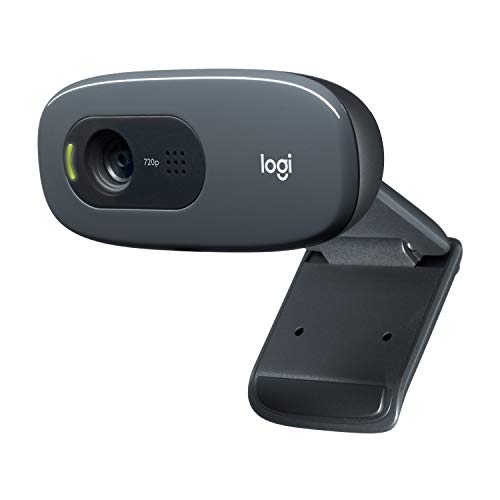


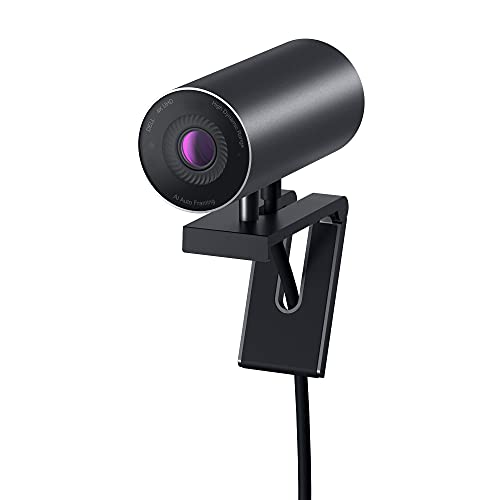

The Logitech C920x has been a top seller for years, and the 2026 version continues to earn that reputation. It records Full HD 1080p video at 30 frames per second, which is more than enough for video calls, basic streaming, and recorded content. The autofocus locks onto your face quickly, and the HD light correction works surprisingly well in rooms with overhead fluorescent lighting or mixed natural light. Straight out of the box, colors look natural without the washed-out look you get from most budget cameras.
Logitech also added compatibility with Nintendo Switch 2's GameChat mode, making this a versatile pick if you game on multiple platforms. The dual stereo microphones capture clear audio up to about 1.5 meters away. They won't replace a dedicated USB mic, but for casual calls they're perfectly fine. The universal clip mount fits securely on laptop screens, monitors, and tripods.
Where this webcam shines brightest is the balance between performance and price. You're getting reliable 1080p quality, solid software support through Logi Tune, and broad compatibility with Teams, Zoom, Google Meet, and every other major platform. For most people doing video calls and the occasional recording, the C920x is all you need.
Pros:
Cons:
If you spend hours each day in video meetings, the Logitech Brio 4K is built specifically for you. It supports up to 4K resolution at 30 fps, though most video conferencing apps will downscale to 1080p — the extra resolution gives the camera more data to work with, producing a noticeably sharper and more detailed image even at lower output sizes. The RightLight 3 technology is Logitech's best light-correction system, and it handles backlighting from windows and harsh overhead glare better than anything else we tested. If you want a deeper look at webcam options purpose-built for meetings, check our guide to the best webcam for video conferencing.
One standout feature is the adjustable field of view. You can switch between 65°, 78°, and 90° presets depending on whether you want a tight headshot or a wider frame that includes your background or a whiteboard. The 5x digital zoom is smooth and useful for product demos or showing documents on camera. The noise-cancelling microphone handles busy home environments well, filtering out keyboard clatter and background noise.
Build quality is excellent — the Brio feels like a premium device with a sturdy clip and a reassuring weight. It works flawlessly with Windows Hello for facial recognition login, which is a nice convenience for your daily workflow. The only downside is the price — it's a significant step up from the C920x — but for professionals who want the best conferencing experience possible, the investment pays for itself quickly.
Pros:
Cons:
Not everyone needs 4K. If you just want a reliable webcam that's leagues better than your laptop's built-in camera without spending much, the Logitech C270 is the answer. It shoots 720p HD video at 30 fps with a 55° diagonal field of view — tight enough to keep the focus on you without revealing your cluttered desk. The auto light correction does a respectable job considering the price point, and it works right out of the box with no drivers or software needed on most systems.
The built-in noise-reducing microphone picks up your voice clearly within about 1.5 meters, which is plenty for sitting at a desk. It's compatible with Nintendo Switch 2's GameChat mode, making it a surprisingly versatile budget option for gamers too. The fixed-focus lens means you don't get the precision autofocus of pricier models, but at typical desk distance (about 2-3 feet), everything stays sharp enough for calls.
Where the C270 falls short is in low-light performance and overall image crispness. If your home office relies on a single desk lamp, you'll notice more grain compared to the C920x or Brio. But for students, occasional remote workers, or anyone who needs a plug-and-play webcam that just works, this is the smartest way to spend your money.
Pros:
Cons:
Streamers and content creators have different needs than office workers, and the Razer Kiyo Pro was designed with that audience in mind. The headline feature is uncompressed Full HD 1080p at 60 fps — that's double the frame rate of most webcams, and it makes a visible difference during fast movement, gaming reactions, and dynamic content. Your stream looks smoother, more professional, and closer to what viewers expect on Twitch and YouTube in 2026.
The adaptive light sensor is Razer's answer to the low-light problem that plagues most webcams. Instead of relying on software processing alone, the Kiyo Pro uses a hardware-level sensor that adjusts to changing light conditions in real time. In our testing, it outperformed even some 4K webcams in dim rooms — you get less grain, better detail retention, and more natural skin tones without needing a ring light. The HDR mode adds another layer of dynamic range, though it does cap the frame rate at 30 fps when enabled.
The adjustable field of view (103°, 90°, or 80°) gives you flexibility to frame your shot exactly how you want it. At 103°, you can show off your entire gaming setup. At 80°, you get a tight portrait-style framing. It integrates cleanly with OBS, XSplit, and Streamlabs through Razer Synapse. If you're learning how to set up a live webcam for the first time, this camera makes the process straightforward.
Pros:
Cons:
The Elgato Facecam 4K is the closest thing to a DSLR camera in webcam form. It captures stunning 4K video at 60 fps — the only webcam on this list that hits both milestones simultaneously. The Sony STARVIS 2 CMOS sensor paired with Elgato's Prime Lens technology produces an image quality that genuinely rivals entry-level mirrorless cameras. Colors are rich, details are razor-sharp, and the depth of field has a natural, cinematic quality that sets your stream or video apart.
What makes the Facecam 4K special for creators is the level of control you get through Elgato's Camera Hub software. You can adjust exposure, white balance, contrast, saturation, sharpness, and even apply cinematic effects — all saved directly to the camera's onboard memory. This means your settings follow you between computers. The 49mm lens filter thread is another creator-focused detail that lets you attach ND filters, diffusion filters, or polarizers for professional visual effects.
The uncompressed video output means you're getting the full quality signal without any in-camera compression artifacts. For recording YouTube videos, creating courses, or running a professional stream, this matters. The trade-off is that the Facecam 4K has no built-in microphone — Elgato's philosophy is that serious creators use dedicated audio equipment, and they'd rather give you better video than a mediocre mic. If you agree with that philosophy, this is the best webcam money can buy in 2026.
Pros:
Cons:
Dell built the UltraSharp WB7022 for the corporate world, and it shows in every design decision. The 4K Sony STARVIS CMOS sensor captures more light than standard sensors, producing vivid, true-to-life video that makes you look polished and professional in every meeting. The HDR processing handles the trickiest office lighting scenarios — fluorescent overheads, bright windows behind you, dark corners — without washing out your face or blowing out highlights.
The AI Auto Framing feature is genuinely useful in a professional setting. If you lean forward to look at notes, stand up to grab something from a shelf, or shift in your chair, the camera digitally adjusts the frame to keep you centered. It works smoothly without the jarring mechanical movement of PTZ (pan-tilt-zoom) cameras. The image signal processing runs entirely on the webcam itself, so it doesn't tax your computer's CPU — a real advantage if you're running resource-heavy applications during meetings.
You get three FOV presets (65°, 78°, 90°) plus manual controls for brightness, sharpness, contrast, and saturation through Dell's Peripheral Manager software. The magnetic mount system is elegant and secure, designed to sit perfectly on Dell monitors but compatible with any flat-edge display. For IT departments standardizing webcam equipment across an organization, the WB7022 is the easy choice. It integrates seamlessly with Dell's ecosystem, and the build quality suggests it'll last through years of daily use.
Pros:
Cons:
The Insta360 Link 2 is the most technologically advanced webcam on this list. It's a PTZ camera — meaning it physically pans, tilts, and zooms to follow you around the room using AI tracking. The 1/2-inch sensor is the largest in any webcam at this price, capturing significantly more light than smaller sensors. The result is 4K video with HDR that looks exceptional in any lighting condition, from a bright studio to a dimly lit bedroom.
The AI tracking is the star feature. You can walk around a whiteboard, move to different parts of your room, or demonstrate products on a desk, and the Link 2 follows you smoothly and accurately. Gesture control lets you trigger tracking modes, zoom, or pause with simple hand signals — no need to touch your computer. Phase Detection Auto Focus (PDAF) locks onto your face instantly, so there's zero hunting or blurring when you move. It's the same autofocus technology used in smartphone cameras.
The AI noise-cancelling microphone is among the best built-in mics we tested. It filters out keyboard noise, background conversations, and even construction sounds with impressive accuracy. Insta360's companion software gives you granular control over image settings, tracking behavior, and audio processing. For teachers, presenters, fitness instructors, or anyone who moves during their calls, the Link 2 solves the biggest webcam problem: staying in frame. The gimbal mechanism is whisper-quiet, and the tracking algorithm has gotten noticeably smarter with recent firmware updates.
Pros:
Cons:
Resolution determines how sharp your video looks. Here's the quick breakdown:
Frame rate matters too. Most webcams shoot at 30 fps, which looks perfectly smooth for talking-head video. If you stream gameplay or create fast-paced content, look for 60 fps — it eliminates the subtle jitter and motion blur you see at 30 fps. The Razer Kiyo Pro and Elgato Facecam 4K both hit 60 fps, making them the top choices for creators. Check the Wikipedia article on webcams for a deeper dive into how these sensors work.
This is where cheap webcams fall apart. If your home office doesn't have perfect lighting — and most don't — your webcam's low-light performance determines whether you look professional or like a grainy mess. Larger sensors capture more light. The Insta360 Link 2's 1/2-inch sensor and the Sony STARVIS sensors in the Elgato and Dell models handle dim rooms dramatically better than smaller sensors.
Software-based light correction (like Logitech's RightLight) can help, but it has limits. No amount of software processing can invent light that isn't there. If you refuse to buy a desk lamp or ring light, invest in a webcam with a physically larger sensor. You'll thank yourself every time you join an evening call.
Five of the seven webcams on this list have built-in microphones. The Elgato Facecam 4K and Dell UltraSharp WB7022 intentionally skip the mic, betting that their target users already own better audio equipment. For everyone else, the built-in mic quality varies significantly:
If you're doing anything beyond casual video calls — streaming, recording, podcasting — a dedicated USB microphone will always sound better than any built-in webcam mic. But for daily meetings, several of these built-in options are genuinely good enough. For more advice on pairing your webcam with the right peripherals, browse our buying guide section.
Every webcam on this list clips onto a laptop screen or monitor. Most also have a standard 1/4-inch tripod thread on the bottom, giving you more placement options. The Dell UltraSharp's magnetic mount is the most elegant solution if you're using a Dell monitor, but it's less versatile on other displays.
Compatibility is rarely an issue in 2026. All seven webcams work with Windows and macOS out of the box. Linux support is solid for the Logitech models and the Razer Kiyo Pro — if you're on Linux, check our guide to the best webcams for Linux for specific compatibility notes. For companion software features (custom FOV, image tuning, AI effects), you'll generally need Windows or macOS. Make sure your computer has USB 3.0 if you plan to use 4K resolution — USB 2.0 can't handle the bandwidth.
Yes, and it's not even close. Laptop cameras use tiny sensors crammed into thin bezels, typically shooting 720p with poor low-light performance. Even a budget external webcam like the Logitech C270 delivers noticeably better image quality, and stepping up to a 1080p or 4K external webcam is a dramatic improvement in sharpness, color accuracy, and lighting correction. If you're on video calls regularly, an external webcam is one of the best upgrades you can make.
No. Most video conferencing platforms cap output at 1080p or even 720p to save bandwidth. However, a 4K webcam still produces a better-looking 1080p image because it has more sensor data to downsample from. If video calls are your only use case, a good 1080p webcam like the Logitech C920x or Razer Kiyo Pro will serve you perfectly. Save 4K for content creation, recording, or if you want to future-proof your setup.
For streaming, frame rate matters more than raw resolution. The Razer Kiyo Pro (1080p/60fps) and Elgato Facecam 4K (4K/60fps) are the two best options. The Razer is the better value with its superior low-light sensor, while the Elgato offers the absolute best image quality if you have the budget and a powerful PC. Both integrate seamlessly with OBS and Streamlabs.
It depends on your use case. For casual video calls, the built-in microphones on the Logitech models and Insta360 Link 2 are perfectly adequate. For streaming, recording, or any situation where audio quality matters, a dedicated USB microphone is a worthwhile investment. The Elgato Facecam 4K and Dell UltraSharp don't include microphones at all, so you'll definitely need one with those models.
Lighting makes the biggest difference. Position a light source in front of you — even a desk lamp aimed at a white wall works. Avoid sitting with a bright window behind you, as it turns you into a silhouette. Raise your webcam to eye level using a stack of books or a small tripod. Use your webcam's companion software to fine-tune white balance and exposure. Finally, close unnecessary browser tabs and apps to free up CPU resources for video processing.
The jump from a $20 webcam to a $50-70 model (like the C270 to C920x) delivers the biggest noticeable improvement. Going from $70 to $150+ gets you 4K resolution, better low-light sensors, and advanced features like AI tracking or adjustable FOV — meaningful upgrades if you're on camera daily. Beyond $200, you're paying for professional-grade features like uncompressed output, lens filter threads, and DSLR-like controls that matter mainly to content creators. For most people, the $50-150 range hits the sweet spot.
Spend your money on lighting first and lens second — the best external webcam is the one matched to your room, not the one with the highest spec sheet.


About James W.
A contributing writer at DigiLabsPro covering photography gear reviews, buying guides, and camera comparisons. Specializes in evaluating cameras, lenses, and accessories for photographers at the intermediate and enthusiast level looking to upgrade their kit.
You can get FREE Gifts. Or latest Free phones here.
Disable Ad block to reveal all the info. Once done, hit a button below
