Photography Articles

What Should Photographers Wear At Weddings?

Ever shown up to a wedding unsure whether your outfit says "professional photographer" or "lost wedding guest"? What should photographers wear at weddings is one of the most overlooked decisions in the industry — and getting it wrong costs you credibility before you fire a single frame. The short answer: dress like a polished service professional who can move freely for eight straight hours. Browse more guides in our photography articles collection to sharpen every part of your craft.

What Should Photographers Wear At Weddings?

Your clothes speak before your camera does. Couples trust you with their most important day. Showing up in the wrong attire signals you didn't prepare — and preparation is your core product. If you're still building your client roster, read our guide on how to find your ideal clients as a wedding photographer to understand what couples prioritize when hiring.

This guide covers everything: the foundational rules, gender-specific recommendations, seasonal adjustments, gear-friendly clothing features, and a step-by-step process for planning every outfit. Whether you're shooting your first wedding or refining a wardrobe built over years, these principles apply directly to your next booking.

Why Your Attire Sets the Tone Before You Shoot

First Impressions at Weddings

Weddings are high-stakes social events. You meet dozens of family members, vendors, and guests who have never seen your work. Research on social perception shows people form lasting impressions within seconds — and clothing drives a large part of that judgment. Your outfit is your first portfolio piece on every job.

  • Families size you up before the ceremony begins.
  • Other vendors — planners, caterers, florists — assess your professionalism immediately.
  • The couple's trust either grows or erodes the moment you walk through the door.
  • Guests who spot you in odd attire become distracted subjects in your own frames.

Professional attire signals respect for the event. Casual or sloppy clothing signals the opposite, no matter how technically skilled you are behind the lens.

The Unwritten Dress Code

Every wedding has a formality level. Dress codes range from black tie to barefoot beach. As the photographer, your baseline is always one step below the guests' formality — polished enough to blend in, practical enough to work freely.

  • Black tie wedding: Dark dress trousers, button-up shirt, and formal shoes at minimum.
  • Smart casual wedding: Dark chinos or trousers with a blazer or structured blouse.
  • Outdoor or rustic wedding: Clean dark jeans with a collared shirt or fitted blouse are acceptable.
  • Beach or destination wedding: Breathable neutral fabrics, no dress shoes on sand.

Never match or exceed the wedding party's formality. You are there to document the story, not become part of it visually.

Building a Wedding Photography Wardrobe That Lasts

Core Pieces Worth Investing In

A strong wardrobe for wedding photography doesn't require a massive closet. It requires a handful of well-chosen, versatile pieces you can mix, layer, and rely on across dozens of bookings. Think of this as a long-term investment in your business identity — the same mindset professionals apply when building any serious career, as explored in our piece on the journey from neuroscience to professional photographer: deliberate foundations make everything else easier.

  • 2–3 pairs of dark, stretch-fabric dress trousers or chinos
  • 3–4 solid-colored dress shirts or blouses in dark neutral tones
  • 1 lightweight, packable blazer or structured jacket
  • 1 pair of comfortable, polished dark shoes with real arch support
  • 1 backup outfit — full change of clothes — kept in your vehicle

Buying fewer, better pieces beats owning a large, inconsistent collection. Quality fabrics hold up across hundreds of washes and retain their shape through long shooting days.

The Right Color Palette

Stick to dark, neutral tones throughout your entire wardrobe. Black, charcoal, navy, and dark grey are your safest and most versatile choices. Here's why they work consistently:

  • They don't compete visually with the wedding party's colors.
  • They conceal sweat, dust, and minor spills across a full shooting day.
  • They photograph well if you accidentally appear in a guest shot or mirror reflection.
  • They communicate professionalism across every formality level without adjustment.

Avoid white, ivory, and cream — those belong exclusively to the wedding party. Avoid loud patterns, bright colors, or anything that draws the eye toward you rather than toward your subjects.
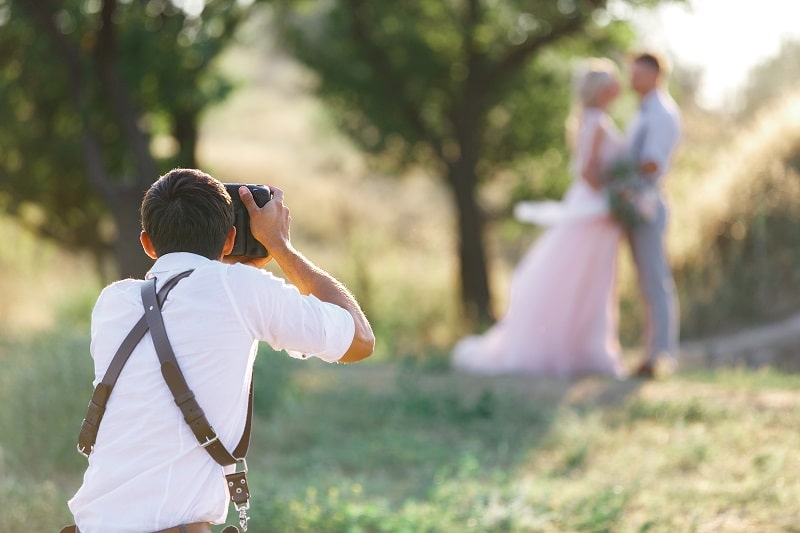
What Should Photographers Wear at Weddings — The Core Rules

Wedding Photographer Attire Male

Attire for Male Photographers

Male photographers have straightforward options that balance polish with full functionality. Build your outfit from these categories:
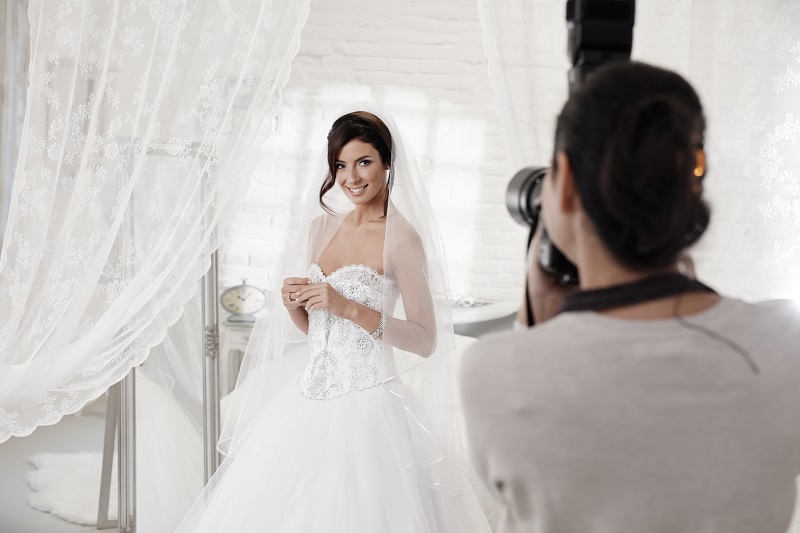
  • Shirt: Dark button-up in Oxford cloth or moisture-wicking performance fabric. Long or short sleeve depending on season.
  • Trousers: Dark chinos or dress pants with at least 2% stretch. Non-stretch dress pants lock up your knees when you crouch for low-angle shots.
  • Outerwear: A fitted blazer for formal venues. Remove it during active ceremony or reception coverage if needed.
  • Belt: Dark leather with a simple, low-profile buckle. Skip flashy hardware.
  • Tie: Optional at most weddings. Wear one for black tie or highly formal religious ceremonies.

Attire for Female Photographers

Female Photographer
Female Photographer

Female photographers have more styling options but also more potential pitfalls. The key principle: prioritize mobility and modesty above all else.

  • Top: Dark blouse, structured top, or fitted shirt. Avoid low necklines — you bend forward constantly during shooting.
  • Bottoms: Dark trousers or a midi-length skirt with fitted shorts underneath for full mobility.
  • Dress: A fitted knee-to-midi length dark dress with room to kneel works across most venue types.
  • Jacket: A tailored blazer adds formality for upscale events and provides extra interior pockets.
  • Jewelry: Keep it minimal. No dangling earrings or bracelets — both clank against camera bodies and distract during quiet ceremony moments.

Use this quick-reference table when planning your outfit for any wedding type:

Wedding Formality Male Photographer Female Photographer Always Avoid
Black Tie / Formal Dark dress trousers, button-up, optional tie or blazer Dark tailored trousers or midi dress, structured blazer Jeans, casual shoes, bright or light colors
Smart Casual / Semi-formal Dark chinos, collared shirt, blazer optional Dark trousers or skirt, blouse, structured jacket T-shirts, shorts, bold patterns
Outdoor / Rustic Dark clean jeans (no rips), collared shirt Dark fitted trousers or neat casual dress White, ivory, cream, or light pastels
Beach / Destination Linen-blend trousers in neutral tones, polo or dress shirt Breathable dark or neutral blouse with tailored trousers Heavy fabrics, dress shoes on sand, heels

Adapting Your Look for Any Venue or Season

Indoor vs. Outdoor Weddings

The venue changes the practical demands of your outfit entirely. Indoor and outdoor weddings require very different decisions beyond just aesthetics.

Indoor venues (ballrooms, churches, restaurants, hotels):

  • Temperature-controlled spaces make heavy layering unnecessary.
  • Polished shoes stay clean; formal footwear works without compromise.
  • Dark formal or smart casual attire fits every indoor formality level comfortably.
  • Watch for low-light conditions — dark clothing can disappear into backgrounds during receptions, reducing your visibility to guests who need you.

Outdoor venues (gardens, beaches, vineyards, barns, fields):

  • Long sleeves in breathable fabric protect better than sunscreen alone on exposed skin.
  • Heels sink into grass and gravel — flat, stable shoes are non-negotiable outdoors.
  • Wind affects lighter fabrics. Choose structured, close-fitting clothing that won't billow into your shots.
  • Bring an extra shirt. Outdoor summer shoots generate real sweat over eight-plus hours.

Seasonal Adjustments

Pro tip: Always pack a compact, packable layer in your camera bag regardless of the forecast — venue temperatures fluctuate unpredictably, and physical comfort directly affects how long you can perform at your best.

Your core wardrobe stays consistent across seasons. Adjust the layers around it:
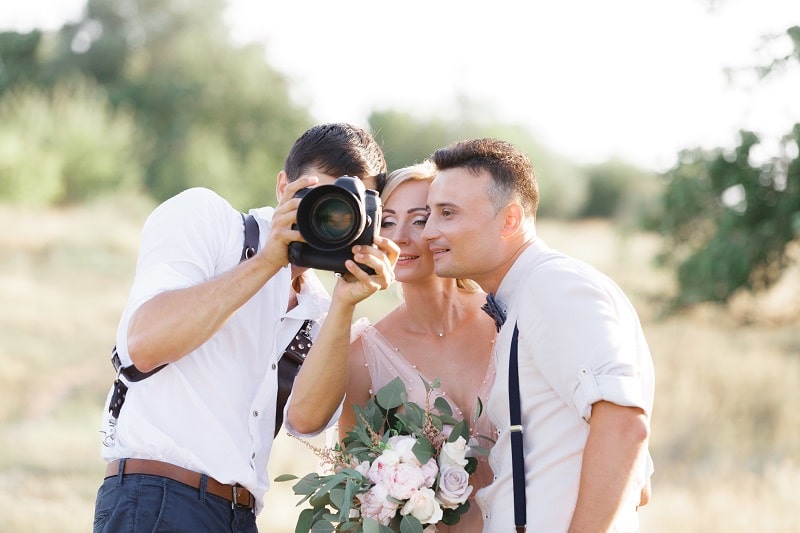
  • Spring/Summer: Lightweight fabrics — linen-cotton blend or performance knit. Prioritize breathability. Pack a backup shirt as standard.
  • Fall: Add a fitted vest or thin turtleneck under your blazer. Dark earth tones blend naturally into fall foliage settings.
  • Winter: Layer a fitted thermal base under your dress shirt. Bring waterproof, formal-looking outerwear for outdoor ceremonies and driveway portraits.

Gear-Friendly Clothing Features You Need

Wedding Photographer Clothes

Pockets, Layering, and Freedom of Movement

Wedding photography is physically demanding. You crouch, sprint, kneel, reach overhead, and carry multiple kilograms of gear for eight-plus hours straight. Your clothing must accommodate every one of those movements without restriction.

Key features to prioritize when buying photographer attire:

  • Stretch fabric: At least 2–5% elastane (spandex) in trouser fabric. Non-stretch dress pants lock your knees when you crouch for low-angle shots.
  • Deep front pockets: Hold extra memory cards, lens cloths, and a pen. Interior jacket pockets add capacity without requiring an additional bag.
  • Articulated knee cut: Photographer-specific trousers are cut with a forward pitch at the knee — worth seeking out if you shoot multiple weddings per month.
  • Moisture-wicking fabric: Performance dress shirts keep you dry during high-activity moments like the ceremony processional and reception first dance scramble.
  • Non-reflective surfaces: Avoid shiny buttons, large belt buckles, or metallic accessories that catch strobe light and appear in reflection shots.

A well-organized outfit system works the same way as a well-organized file system. If you're building disciplined workflows, check out our guide on how to name photography files — systematic thinking carries across every part of your business.

Footwear for Long Shooting Days

Shoes are the single most important piece of your entire outfit. Eight hours on hard ballroom floors or uneven garden terrain ends your performance early if you choose wrong.

  • Best indoor choice: Dark leather or synthetic dress shoes with a cushioned insole. Clarks, Ecco, and Rockport offer formal-looking options with genuine long-day support.
  • Best outdoor choice: Dark Chelsea boots or clean dark leather sneakers for garden and vineyard settings where traditional dress shoes sink or slide.
  • Break them in first: Walk 5–10 miles in any new shoes before wearing them to a wedding. Blisters at hour three destroy your focus and your performance.
  • Always avoid: High heels, stiff formal shoes with zero cushioning, open-toe sandals, or any footwear that prevents you from sprinting, kneeling, or climbing stairs quickly.

How to Plan Your Wedding Day Outfit

The Pre-Wedding Outfit Checklist

Don't leave outfit decisions to the morning of the event. Plan at least one week in advance using this step-by-step checklist:

  1. Confirm the venue type and formality level from the couple's invitation, wedding website, or your intake questionnaire.
  2. Check the weather forecast for the date and location. Build a contingency plan for rain, wind, or extreme temperatures before the morning arrives.
  3. Lay out your complete outfit — shirt, trousers, shoes, belt, socks, and any layers — and photograph it together. Seeing the full look catches mismatches you miss when reviewing pieces separately.
  4. Run a mobility test. Kneel down, crouch fully, reach overhead, and hold a simulated camera pose for ten minutes. If anything restricts movement, replace it before the day.
  5. Inspect every piece for damage. Loose buttons, fraying hems, and visible stains disqualify an otherwise solid outfit. Fix or replace any item that doesn't pass a clean visual check.
  6. Pack a backup shirt in your camera bag alongside your gear. Spills, sweat, and weather surprises make this standard protocol, not optional.

Day-Of Preparation

On the morning of the wedding, your outfit prep should take fewer than 15 minutes if you've planned correctly the week before.

  1. Dress fully before loading gear into your vehicle. Getting dressed in a parking lot signals disorganization.
  2. Confirm your backup shirt and weather layers are packed alongside your camera bags.
  3. Do a final mirror check: no visible tags, all buttons closed, shoes clean and polished.
  4. Arrive 20 minutes early. Use the time to assess the venue layout, meet the coordinator, and make any last-minute wardrobe adjustments before guests arrive.

Solid preparation distinguishes working professionals from hobbyists. The same discipline that leads pros to invest in professional album and book delivery tools should drive how you build and maintain a reliable, professional wardrobe.

Frequently Asked Questions

Can a wedding photographer wear all black?

Yes — all black is one of the best choices available. It's universally professional, blends into the background at virtually every venue and lighting condition, hides sweat and wear over a long shooting day, and never competes visually with the wedding party's colors. All-black is the default wardrobe choice for many full-time wedding photographers.

Is it acceptable for a wedding photographer to wear jeans?

Clean, dark, well-fitted jeans are acceptable at outdoor, rustic, and casual wedding venues. They are not appropriate for formal, black tie, or religious ceremonies. When in doubt, opt for dark chinos or dress trousers — they offer the same comfort and mobility as quality jeans while reading as more polished across all formality levels.

What should a second shooter wear at a wedding?

Second shooters should match the lead photographer's attire as closely as possible. Coordinate ahead of time on color scheme — dark neutrals are the safe baseline for both. Looking like a cohesive team signals professionalism to the couple and helps you both move through the event as a recognizable unit rather than two individuals with different dress codes.

Can female photographers wear a dress to a wedding?

Yes, with specific conditions. The dress must fall at knee length or longer, allow full crouching and kneeling without restriction, and stay in place during active movement. Dark or neutral tones are required. Avoid anything backless, low-cut, or structured so tightly that it limits your range of motion during ceremony or reception coverage.

Should you ask the couple what to wear before the wedding?

You don't need to ask directly, but you should gather enough information to make an informed decision. Review the invitation for dress code language, check the venue type on their wedding website, and note the ceremony location in your contract. If the dress code is ambiguous or the venue is unusual, a brief professional question to the coordinator is entirely appropriate.

Next Steps

  1. Audit your current wardrobe today. Pull out everything you've worn to past shoots and evaluate each piece against the rules in this guide — stretch fabric, dark color, mobility, and formality level. Retire anything that fails two or more criteria.
  2. Identify one gap piece and purchase it this week. Whether it's a quality pair of stretch dress trousers, a reliable pair of dark dress shoes, or a packable blazer, closing one wardrobe gap now prevents a scramble before your next booking.
  3. Confirm the formality level of your next wedding. Pull the invitation, check the venue website, and compare it to the attire table in this guide. Decide your exact outfit before the week of the event.
  4. Do a full mobility test in your chosen outfit. Crouch, kneel, and simulate active shooting for ten minutes at home. If anything restricts movement, replace it before the wedding day.
  5. Pack a complete backup outfit in your vehicle. This single habit eliminates the risk of a stain, spill, or wardrobe failure derailing your performance on someone's most important day.
Editorial Team

About Editorial Team

The DigiLabsPro editorial team covers cameras, lenses, photography gear, and creative technology with a focus on helping photographers make informed buying decisions. Our reviews and guides draw on hands-on testing and research across a wide range of equipment, from entry-level beginner kits to professional-grade systems.

You can get FREE Gifts. Or latest Free phones here.

Disable Ad block to reveal all the info. Once done, hit a button below