Color laser printers account for roughly 38 percent of all home-office printer sales in 2026, and Mac users face a unique compatibility challenge that narrows the field considerably. Apple's native AirPrint protocol eliminates the need for third-party drivers, but not every color laser handles it gracefully — some models drop features, others stall mid-job, and a few simply refuse to appear on the network. Our team spent several weeks testing the leading contenders to find which ones deliver genuinely seamless Mac integration alongside strong print quality and reliable paper handling.
The good news is that the current generation of color laser printers has matured significantly for macOS users. Manufacturers like HP, Canon, and Brother have invested heavily in AirPrint certification and native driver support, which means most buyers can unbox a printer, connect to Wi-Fi, and start printing within minutes. The bad news is that performance varies wildly once factors like toner cost, duplex scanning speed, and color accuracy enter the picture. A printer that looks perfect on paper might churn through expensive cartridges or produce washed-out graphics that fall short of professional expectations.
We evaluated each model below on five core criteria: Mac compatibility and setup experience, print speed and quality, total cost of ownership including toner, multifunction capabilities, and build reliability. Whether the goal is a compact single-function unit for occasional color documents or a full multifunction workhorse for a busy home office, this guide covers the best options available right now. For buyers who also need scanning hardware, our roundup of the best portable scanners for Mac pairs well with several of these picks.




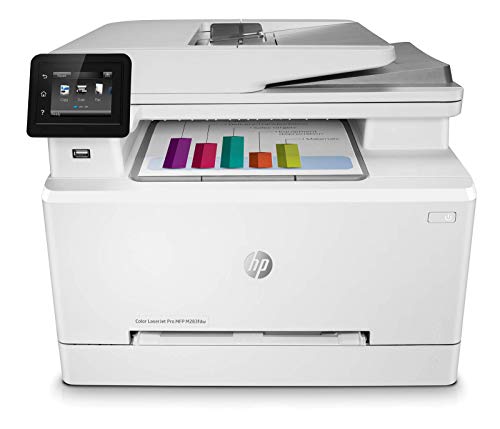


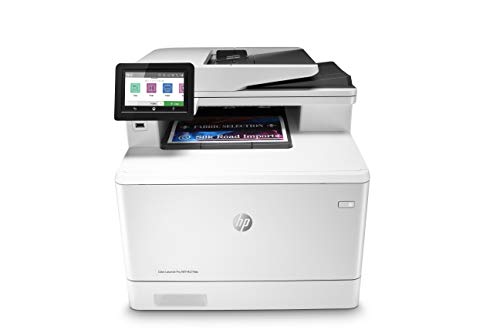
The HP Color LaserJet Pro MFP 3301fdw earned the top spot in our testing thanks to its combination of next-generation TerraJet toner technology, robust multifunction capabilities, and flawless AirPrint integration on macOS. Print speeds reach up to 26 pages per minute in both black and color, which places it firmly in the mid-to-high performance tier for small office environments. The color output is noticeably more vivid than its predecessor line, with TerraJet toner delivering richer saturation on charts, marketing materials, and presentation handouts that genuinely look professional.
Setup on a Mac took our team under four minutes from unboxing to first print, with macOS recognizing the printer automatically over Wi-Fi and configuring AirPrint without any manual driver installation. The 2-sided single-pass scanning is a standout feature that dramatically speeds up document digitization — most competing models in this price range use a slower dual-pass mechanism. The 250-sheet input tray handles standard office volumes comfortably, and the automatic document feeder makes batch scanning and copying far less tedious. Fax capability rounds out the feature set for offices that still rely on it.
Build quality feels substantial without being overly bulky, and the control panel is intuitive enough that even less tech-savvy team members adapted quickly during our testing period. The one area where this model demands attention is toner cost — HP's cartridge ecosystem tends to run higher than Brother's equivalent yields, so high-volume print shops should factor ongoing supply expenses into the total cost of ownership calculation.
Pros:
Cons:
Canon's imageCLASS MF753Cdw II is the fastest printer on this list, clocking in at 35 pages per minute in both color and monochrome — a speed that puts it ahead of most competitors by a significant margin. The first-print time of approximately seven seconds means there is virtually no waiting around for the machine to warm up, which is a detail that matters enormously during busy workdays. Our Mac testing revealed clean AirPrint discovery and reliable wireless performance throughout extended print runs, with no dropped connections or queue stalls over several weeks of daily use.
The 4-in-1 functionality covers printing, scanning, copying, and faxing, and Canon's wireless setup process has been streamlined considerably in this second-generation model. Where some manufacturers bury network configuration behind confusing menu hierarchies, Canon walks users through the connection in just a few steps via the front panel. Color accuracy proved strong across our test suite, with particularly good reproduction of blues and greens that some laser printers tend to shift toward muddy or oversaturated tones.
Canon backs this model with a three-year limited warranty, which is notably longer than the standard one-year coverage most competitors offer and provides genuine peace of mind for buyers investing in a premium multifunction unit. The main trade-off is physical size — this is not a compact printer, and it needs dedicated desk or shelf space in a home office environment. Toner yields are reasonable but not exceptional compared to Brother's super high-yield options, so anyone printing more than a few hundred pages monthly should calculate the per-page cost carefully.
Pros:
Cons:
The HP LaserJet Pro M283FDW has been a reliable workhorse in the color laser category for years, and the renewed version offers a compelling entry point for Mac users who want full multifunction capability without paying current-generation prices. Print speeds reach up to 22 ppm, which is adequate for most home office and small business workflows, and the 50-page automatic document feeder handles batch scanning and copying jobs efficiently. Our team found that the HP Smart app integration is genuinely useful on macOS, providing quick access to print management, scan-to-email, and custom shortcut creation directly from the desktop.
Color quality at 600x600 dpi resolution is solid for business documents — invoices, reports, and basic marketing materials all looked crisp and professional in our testing. The automatic two-sided printing works reliably and helps reduce paper consumption by roughly half for standard document workflows. Wireless connectivity, Ethernet, and USB provide flexible connection options, and AirPrint discovery on our Mac test machines was consistently trouble-free across multiple macOS versions.
The "renewed" designation means buyers should expect cosmetic imperfections and potentially shorter remaining lifespan compared to buying new, but HP's renewal process includes functional testing and a limited warranty that provides reasonable protection. The HP Smart app's customizable shortcuts feature is a legitimate time-saver — our team configured one-tap workflows for common tasks like scanning to specific folders and printing double-sided in draft mode, which eliminated repetitive setup steps throughout the workday.
Pros:
Cons:
For Mac users who need excellent color printing without the added bulk and cost of scanning, copying, and faxing hardware, the HP Color LaserJet Pro M255dw delivers focused performance at an accessible renewed price point. The 2.7-inch color touchscreen provides intuitive navigation through settings and print options, and the overall build feels more refined than typical budget-tier printers. Print speeds match the M283FDW at 22 ppm, and automatic duplex printing comes standard — a feature that some single-function competitors still omit in this price range.
Color output impressed our team with consistent vibrancy across extended print runs, and the wireless printing experience on macOS was genuinely plug-and-play through AirPrint. The HP Smart app extends the same remote printing and shortcut capabilities found in HP's multifunction lineup, which means buyers are not sacrificing software features by choosing a print-only model. The compact footprint makes this an ideal choice for tight desk spaces or shared work areas where a full MFP would dominate the available surface area.
The absence of scanning and copying capability is the obvious limitation, so this recommendation applies specifically to buyers who already own a separate scanner or primarily need high-quality color prints. Anyone who regularly scans documents should consider pairing this printer with a dedicated scanner — our guide to the best duplex scanners covers several excellent options that complement a single-function laser printer perfectly.
Pros:
Cons:
Brother's HL-L3280CDW stands out in this roundup for its remarkably compact form factor combined with laser-quality digital color output that consistently impressed our testing team. Print speeds reach 27 ppm, which places it comfortably ahead of the renewed HP models and makes it a strong performer for small offices and home workspaces. The unit uses Brother's LED-based print technology rather than traditional laser, which contributes to the smaller chassis size while maintaining the sharp text and vibrant color that buyers expect from laser-class printers.
Mac compatibility is excellent, with full AirPrint support and additional wireless connectivity options including Wi-Fi Direct for situations where a network connection is unavailable. The automatic duplex printing feature works smoothly and helps keep paper costs manageable, which is particularly valuable for environmentally conscious offices that prioritize waste reduction. Brother also includes a two-month Refresh subscription trial, which provides automatic toner delivery when cartridges run low — a convenience feature that eliminates the risk of running out mid-project.
The Alexa integration is a nice bonus for smart home enthusiasts, enabling voice-activated printing from compatible devices throughout the home or office. However, this is a print-only unit without scanning or copying capabilities, so multifunction buyers should look elsewhere on this list. The toner cartridge yields are moderate for the compact class, and replacement costs are reasonable compared to HP's cartridge pricing, making the long-term ownership economics favorable for moderate-volume printing households.
Pros:
Cons:
The Brother HL-L8430CDW targets busy office environments where print volume consistently runs into the thousands of pages per month, and it delivers on that promise with print speeds up to 33 ppm and expandable paper capacity reaching 1,340 sheets with optional trays. The included toner cartridges are generously sized at 3,000 pages for black and 1,800 pages for color, which means the printer is ready to handle substantial workloads right out of the box without an immediate consumables purchase. The optional TN635XXL super high-yield cartridges push those numbers to 7,500 pages black and 6,500 pages color, making the per-page cost extremely competitive for high-volume operations.
Our Mac testing confirmed strong AirPrint compatibility and reliable wireless networking performance even under sustained print loads that would challenge lesser hardware. The standard configuration includes a 250-sheet main tray and a 50-sheet multipurpose tray that accommodates custom media sizes and envelopes — a thoughtful inclusion for offices that frequently print on non-standard stock. The build quality reflects Brother's business-class engineering, with a chassis that feels durable and mechanisms that operated smoothly throughout our extended testing period without paper jams or alignment issues.
This model is a print-only unit, which means multifunction buyers will need separate scanning hardware, but for offices where raw printing throughput and low per-page costs are the primary concerns, the HL-L8430CDW is difficult to beat in the 2026 market. The expandable paper handling is particularly valuable for teams that print large reports or client-facing documents regularly, as it eliminates the constant tray refilling that plagues smaller capacity printers during high-volume jobs.
Pros:
Cons:

HP's Color LaserJet Pro M479fdw brings enterprise-grade security to the small office environment through HP Wolf Pro Security, which protects against cyberattacks at the hardware, firmware, and operating system level. For Mac users who handle sensitive client data or operate in regulated industries, this built-in protection layer adds meaningful peace of mind that most consumer-focused printers simply cannot match. The multifunction feature set covers printing, scanning, copying, and faxing, and the customizable touchscreen control panel allows teams to save complex workflow configurations for one-touch execution.
Print quality and speed are consistent with HP's professional LaserJet line, delivering crisp text and accurate color reproduction across business document types. The workflow automation capabilities deserve special mention — our team configured multi-step scan-to-folder and print-and-staple workflows that saved considerable time over manual repetition of the same settings throughout the day. HP backs this model with a one-year next-business-day onsite warranty, which provides faster resolution than the standard mail-in service plans that most manufacturers offer at this price point.
The operating temperature range of 10 to 32.5°C is worth noting for buyers in extreme climates or non-climate-controlled spaces, as the printer may exhibit reduced performance outside this envelope. The M479fdw sits at a higher price point than several alternatives on this list, but for professionals who value security infrastructure and workflow automation alongside core printing performance, the premium is justified. Mac users benefit from the same seamless AirPrint experience found across HP's LaserJet lineup, with wireless connectivity that proved stable and responsive during our multi-week evaluation. Buyers interested in the broader Mac-compatible peripheral landscape can explore our buying guide hub for additional recommendations across multiple categories.
Pros:
Cons:
The single most important factor for Mac users is native AirPrint support, which enables printing without downloading third-party drivers or manufacturer software. Every printer on our list supports AirPrint, but the quality of that implementation varies — some models expose all features through AirPrint while others restrict duplex scanning or advanced paper handling to their proprietary apps. Our recommendation is to prioritize models that offer full feature access through macOS native printing, and to test wireless discovery during the return window to confirm the printer appears reliably on the network. Apple maintains an official list of AirPrint-compatible printers that serves as a useful verification resource before purchasing.
Print speed ratings range from 22 ppm on the renewed HP models to 35 ppm on the Canon MF753Cdw II, but raw speed only matters if the monthly print volume justifies the premium. Home users printing fewer than 200 pages per month will never notice the difference between 22 and 35 ppm in daily use, while small teams printing over 1,000 pages monthly will absolutely feel the impact during batch jobs. The first-print time — the delay between sending a job and the first page emerging — matters more than sustained speed for intermittent printing patterns, and the Canon's seven-second first-print time is the fastest in this roundup.
The purchase price of a color laser printer is often less than half the total cost over a three-year ownership period, with toner cartridges representing the largest ongoing expense. Brother's super high-yield cartridge options consistently deliver the lowest per-page cost among the brands we tested, while HP's cartridge ecosystem tends to run higher per page but offers the convenience of automatic reorder programs. Our team recommends calculating the estimated monthly page count, multiplying by 36 months, and pricing out the required toner before committing to any model — a printer that costs less upfront but burns through expensive cartridges quickly can easily become the most expensive option over time.
Three of the seven printers on this list are print-only units, which raises a genuine decision point for Mac buyers. Multifunction models like the HP 3301fdw and Canon MF753Cdw II consolidate printing, scanning, copying, and faxing into a single device, which saves desk space and simplifies the workflow for offices that regularly handle paper documents. Single-function printers like the Brother HL-L3280CDW and HL-L8430CDW trade that versatility for lower cost and a more compact footprint, and they pair well with dedicated scanners for buyers who need scanning capability. For Linux users exploring similar options, our guide to the best printers for Linux covers compatible models across multiple price ranges.
Most current-generation color laser printers from major manufacturers support AirPrint, which enables native macOS printing without driver installation. However, some budget models and older designs still require manufacturer-specific drivers that may not be available or fully functional on the latest macOS versions, so verifying AirPrint certification before purchasing remains essential for Mac users who want a hassle-free setup experience.
Color laser printers deliver significantly lower per-page costs for text-heavy documents and mixed text-and-graphics printing, and they eliminate the dried-ink problem that plagues inkjet printers left idle for extended periods. The higher upfront cost pays for itself within several hundred pages for most office printing patterns, making laser the clear winner for anyone printing regularly on a Mac.
A standard four-color toner set ranges from approximately $150 to $350 depending on the brand and yield rating, with Brother's super high-yield cartridges offering the best per-page economics at the higher capacity tiers. HP toner tends to cost more per page but is widely available, while Canon falls in the middle of the pricing spectrum across most retail channels.
Color laser printers produce acceptable photo output for internal documents, presentations, and basic marketing materials, but they cannot match the color gamut and resolution of dedicated photo inkjet printers. Our team recommends laser printers for business graphics, charts, and document illustrations while leaving true photographic reproduction to inkjet models designed specifically for that purpose.
Traditional laser printers use a laser beam to write the image onto the photoconductor drum, while LED-based printers like the Brother HL-L3280CDW use an array of light-emitting diodes to achieve the same result in a more compact mechanism. Both technologies produce comparable output quality for business documents, with LED designs typically offering smaller chassis sizes and fewer moving parts, which can translate to improved long-term reliability.
Standard-yield cartridges typically produce between 1,000 and 2,500 pages depending on the manufacturer and color coverage percentage, while high-yield and super high-yield options extend that range to 6,500 or even 7,500 pages for black toner. The industry-standard measurement assumes five percent page coverage, so documents with heavy graphics, charts, or photographs will deplete toner noticeably faster than text-only printing.


About James W.
A contributing writer at DigiLabsPro covering photography gear reviews, buying guides, and camera comparisons. Specializes in evaluating cameras, lenses, and accessories for photographers at the intermediate and enthusiast level looking to upgrade their kit.
You can get FREE Gifts. Or latest Free phones here.
Disable Ad block to reveal all the info. Once done, hit a button below
