What separates a photographer who keeps repeating the same compositions from one who returns from a trip with transformative, portfolio-defining work? The answer lies in intentional, structured field experience — and guided photography adventure workshops are among the most direct routes to getting it. Barefoot Contessa Photo Adventures has earned a dedicated following by pairing expert instruction with immersive access to some of North America's most photogenic landscapes, making it a standout resource for photographers exploring photography articles and craft development.
Founded by working photographers who believed the best classroom is the landscape itself, Barefoot Contessa Photo Adventures builds every itinerary around peak light, seasonal conditions, and iconic destinations. Participants don't just observe — they shoot alongside seasoned instructors who provide real-time feedback on composition, exposure, and creative vision at the exact moment it matters most.
Programs attract everyone from advanced amateurs refining their technique to working professionals looking to expand their portfolios with landscape and travel imagery. The structured approach to field learning is what distinguishes these experiences from independent travel, and the results speak consistently in participants' work.
Contents
Equipment failure is one of the most common — and preventable — setbacks photographers face on location. Barefoot Contessa workshops take participants into demanding environments: salt air along coastal Maine, wind-driven dust in canyon country, high humidity in Pacific Northwest forests. Gear that isn't properly prepared doesn't just underperform. It fails at exactly the wrong moment.
Weather-sealed bodies and equivalent lenses provide a meaningful first line of defense, but sealing alone isn't a complete strategy. Rain covers, silica gel packs in camera bags, and UV filters on front elements all contribute to keeping systems functional across shifting conditions. During multi-day workshops, protecting gear between locations matters just as much as protecting it during active shooting. Hard-sided cases or well-padded rolling bags with individual lens sleeves reduce vibration damage on long drives between sites.
Pro tip: A UV filter costs far less than front-element repair. Keep one on every lens during location shoots — it's easy insurance against grit, moisture, and accidental contact.
At the end of each shooting day, a consistent cleaning routine pays real dividends. Sensor dust becomes visible at narrow apertures — exactly the apertures most landscape photographers favor for depth of field. A blower brush and sensor swabs used correctly prevent the frustration of removing dust spots from hundreds of images in post-processing. Battery management deserves equal attention: cold overnight temperatures drain lithium cells significantly, and a dead battery at sunrise means a missed shot. Storing batteries inside a jacket pocket or sleeping bag in cold-weather camps keeps charge through overnight temperature drops.
What does a Barefoot Contessa Photo Adventure actually look like? The short answer: demanding, rewarding, and nothing like a standard group tour.

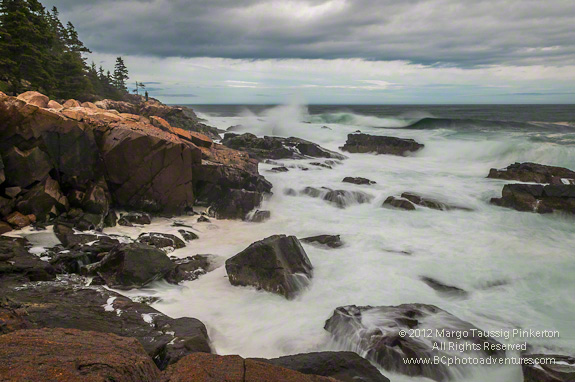
Acadia National Park is one of Barefoot Contessa's signature destinations, and for good reason. The park's combination of rocky coastline, dense forest, and dramatic tidal variation creates multiple distinct shooting environments within a compact geographic area. Workshop days at Acadia typically begin before sunrise for golden-hour coastal work and extend into the afternoon for interior forest and reflective pond compositions. Instructors work with participants individually during these sessions — addressing specific technical challenges like metering in high-contrast coastal scenes, selecting shutter speeds for moving water, and managing white balance under mixed light.
As landscape photography has grown into one of the most competitive genres in the field, access to expert instruction at iconic locations provides a genuine differentiator for photographers building serious portfolios.
Warning: Arriving at a coastal shoot without a polarizing filter is a common and costly mistake. Glare on tidal pools and wet rocks destroys contrast and color saturation in ways post-processing cannot fully recover.
A standard multi-day Barefoot Contessa workshop balances active field shooting with structured review sessions. Mornings are dedicated to outdoor work during optimal light. Midday sessions focus on image review, post-processing instruction, and compositional critiques. Evening presentations cover technical topics — dynamic range management, panoramic stitching, focus stacking — relevant to the following day's conditions. This rhythm of shoot-review-refine is what separates a guided workshop from independent travel, and it mirrors how working professionals actually approach location assignments.
Photographers interested in how practitioners build focused careers will find perspective in reading how one professional documented his journey from neuroscience to professional photography — a reminder that intentional, structured learning at each stage of development shapes photographic vision in lasting ways.
Several persistent misconceptions keep photographers from committing to workshop-based learning. Addressing them directly matters, because the gap between assumption and reality is wide.
This is the most common misconception, and it's demonstrably false. Barefoot Contessa workshops accommodate a range of skill levels within the same group. Instructors differentiate naturally — guiding beginners through fundamental exposure decisions while challenging advanced participants with focus stacking, exposure blending, and complex compositional problems. The field environment itself is a great equalizer: even experienced photographers encounter unfamiliar challenges when shooting in new locations under changing conditions. What matters at enrollment is a working knowledge of manual camera controls, not a completed portfolio.
Pro insight: Photographers who arrive with even a single clear creative goal for a workshop — mastering long exposures, building a coastal portfolio — consistently report more satisfying outcomes than those who show up without specific intention.
Iconic destinations help, but they don't guarantee strong images. Acadia in flat midday light produces flat, forgettable photographs just like any other location. What expert instruction provides is contextual knowledge — how to work with available conditions rather than waiting for perfect ones. Understanding how overcast light flattens contrast in ways that benefit certain subjects, how neutral density filters extend shutter speeds in bright conditions, and how to compose within complex natural environments without producing cluttered frames: these are skills that transform location access into portfolio-grade work.
Not every photographer is an ideal candidate for an immersive field workshop. Understanding who gets the most from these programs helps prospective participants make a well-informed decision before committing time and resources.
| Photographer Type | Primary Benefit | Best Workshop Format |
|---|---|---|
| Advanced amateur (landscape focus) | Portfolio-grade images from access locations; expert real-time critique | Multi-day immersive with dedicated location shooting time |
| Working portrait photographer | Natural light mastery; environmental portraiture range | Mixed-format with light and composition emphasis |
| Travel and editorial shooter | Logistical efficiency; established access to prime sites | Destination-specific with editorial review sessions |
| Photography educator or instructor | Curriculum enrichment; exposure to peer teaching methods | Intensive format with critique and presentation components |
Photographers whose primary work involves landscape, nature, and travel imagery benefit most directly. They arrive with relevant technical foundations and leave with expanded location knowledge, refined compositional instincts, and a portfolio of images from destinations that require significant logistics to access independently. The instruction-to-opportunity ratio is high for this group, and the community built during a multi-day workshop often extends well beyond the program itself.
Portrait specialists — including those who study resources on studio lighting, backdrops, and posing techniques — increasingly find value in environmental and location-based work. Guided workshops introduce portrait photographers to the technical demands of natural light at scale, skills that translate directly into environmental portrait sessions, lifestyle brand photography, and editorial assignments. Practitioners who are also building business systems benefit from understanding the financial side of print sales and commercial deliverables, including what photographers need to know about sales tax when monetizing workshop-sourced images.
The decision to invest in a guided workshop deserves honest self-assessment. Not every photographer is ready, and not every program is the right fit at every stage of development.
The ideal Barefoot Contessa candidate has a working understanding of manual exposure, feels comfortable adjusting settings and swapping lenses in field conditions, and arrives with a clear creative goal — whether that's building a landscape portfolio, mastering long-exposure water photography, or gaining confidence in challenging light. Photographers who have already established a functional file naming and organization system will find post-workshop processing significantly more manageable when handling several hundred strong images from a multi-day shoot.
Photographers still building fundamental camera competency will struggle to absorb location-based instruction at workshop pace. Early mornings, shifting conditions, and group dynamics create cognitive load that compounds the difficulty of learning basic exposure control at the same time. A few months of deliberate solo practice before enrolling in an immersive program produces far better outcomes than rushing in before the fundamentals are solid. Physical accessibility also deserves advance consideration — many workshop destinations involve uneven terrain and significant walking, and confirming logistical details with the organizer before booking prevents last-minute surprises.
Photographers who follow the work of standout portfolio builders like DigilabsPro's featured photographer Levi Stolove will recognize the consistent pattern: intentional learning at the right developmental stage accelerates growth in ways that unstructured exploration rarely matches.
Most programs accommodate a range of skill levels, but participants should have a working knowledge of manual camera controls — aperture, shutter speed, and ISO — before enrolling. Instructors differentiate guidance based on individual ability, and fundamental comfort with equipment allows participants to focus on creative and compositional development rather than basic operation.
Photography tours prioritize destination access and group logistics. Guided photography adventure workshops add structured instruction, real-time feedback, image critique sessions, and post-processing guidance. The instructional component is what generates lasting skill development rather than a single set of location images.
Any interchangeable-lens camera system is suitable. Most participants bring a wide-angle lens for landscapes, a mid-range zoom for versatility, and a polarizing filter. A sturdy tripod is essential for long-exposure and low-light work. Instructors typically provide a recommended gear list specific to each destination and season.
Portrait, commercial, and wedding photographers regularly attend landscape-focused workshops to expand their natural light skills and build travel portfolio work. The technical foundations transfer well, and instruction focuses on adapting existing skills to new environments rather than starting from scratch.
Importing images each evening, applying a consistent file naming convention, and maintaining at least two copies — one on the primary laptop and one on an external drive — is standard professional practice. Establishing these habits before a workshop begins prevents the loss of irreplaceable location images from equipment failure or card corruption.


About Editorial Team
The DigiLabsPro editorial team covers cameras, lenses, photography gear, and creative technology with a focus on helping photographers make informed buying decisions. Our reviews and guides draw on hands-on testing and research across a wide range of equipment, from entry-level beginner kits to professional-grade systems.
You can get FREE Gifts. Or latest Free phones here.
Disable Ad block to reveal all the info. Once done, hit a button below
