Over 750,000 Americans hold active amateur radio licenses — and that number keeps climbing as more people discover how reliable handheld ham radios are when cell networks fail during emergencies, camping trips, or backcountry adventures. Whether you're a newly licensed Technician or a seasoned Extra class operator, picking the right handheld transceiver in 2026 comes down to more than just wattage. Digital modes, waterproofing ratings, battery life, and band coverage all play a role, and the market has never been more competitive.
This guide walks you through seven of the most popular mobile ham radios available right now. You'll find everything from budget-friendly Baofeng options to feature-packed Yaesu digital rigs — so no matter your experience level or budget, there's something here worth your attention. If you're also shopping for antenna upgrades, check out our roundup of the best magnetic loop antennas in 2026 to pair with your new radio.
We've also included a full buying guide below to help you think through the key specs before you commit. And if you've ever struggled with programming a scanner or handheld radio, our step-by-step post on how to program a Uniden Bearcat scanner covers a lot of the same principles that apply here. For a broader look at all the gear we've reviewed, head over to our buying guide hub.





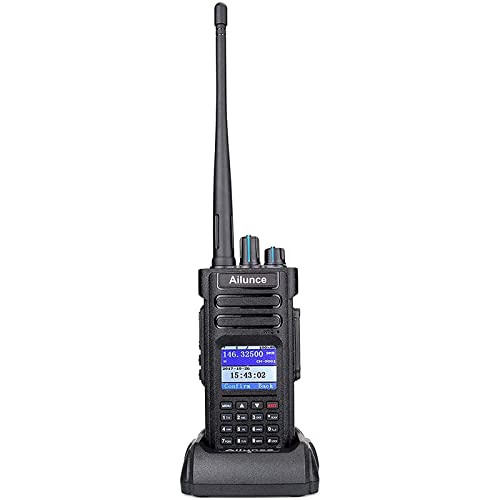
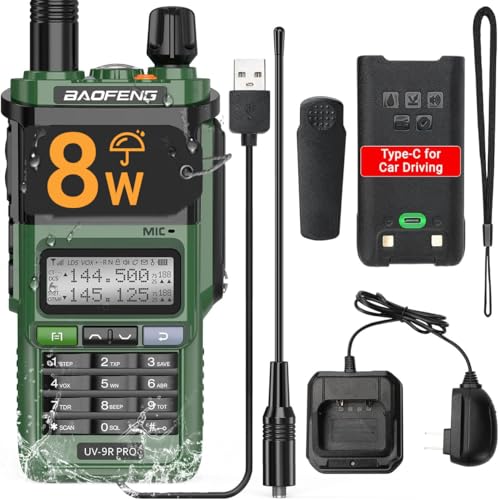
The Yaesu FT-60R has been around for years, and it's still one of the most recommended dual-band handhelds you'll find in any ham radio community forum in 2026. That kind of staying power says a lot. It covers both the 2-meter (144–148 MHz) and 70cm (430–450 MHz) amateur bands at 5 watts output, and its wide receive coverage — spanning 108 to 520 MHz and 700 to 999.99 MHz (excluding cellular) — makes it genuinely useful as a scanner too. The alphanumeric display is easy to read, the lighted keypad is a practical touch for night operations, and the CTCSS/DCS tone support means you can hit virtually any repeater you come across.
Build quality is classic Yaesu — solid, no-nonsense, and heavier than budget alternatives but reassuringly sturdy. The FT-60R's scan modes are a particular strength, letting you sweep through memory channels or VFO ranges without fuss. DTMF support adds flexibility for autopatch and remote control applications. It's not a digital radio, and it doesn't have Bluetooth or GPS, but if you want a reliable analog workhorse that you can hand to a new ham and have them up and running in minutes, this is it. The learning curve is gentle, and the radio has earned a reputation for durability that few budget-tier competitors can match.
One thing to keep in mind: the FT-60R is an older design. You won't get C4FM digital modes, USB programming, or a fancy color display. But for local repeater work, emergency preparedness, and everyday amateur use, it absolutely delivers. If you're a new ham looking for your first HT, this one should be near the top of your shortlist.
Pros:
Cons:
If you're ready to step into digital amateur radio, the Yaesu FT-70DR is one of the most accessible entry points into the C4FM/FDMA ecosystem. It covers 144 and 430 MHz in both digital and analog modes, backed by a 3-year manufacturer warranty that gives you real peace of mind. The IP54 dust and water resistance rating means it can handle light rain and dusty environments without breaking a sweat — a meaningful upgrade over bare analog radios if you spend time outdoors. Wide-band receive coverage from 108 to 579.995 MHz keeps you tuned in to more than just ham bands.
The FT-70DR really shines once you're connected to a Yaesu System Fusion repeater or using Wires-X for internet linking. Digital voice quality is noticeably cleaner than analog at marginal signal levels — instead of static, you get either clear audio or silence. The mini USB port makes programming and firmware updates straightforward, and the external DC jack gives you the option to run it off a vehicle or bench power supply. Scanning capabilities are comprehensive, covering VFO scan, memory scan, and priority channel scan, and the automatic power-off feature helps conserve battery when you forget to shut it down.
The trade-off is that C4FM is a proprietary Yaesu standard, so you're tied into the Fusion ecosystem for digital contacts. If your local repeater network runs DMR instead, this radio won't help you there. Still, for hams who want a smooth upgrade path from analog to digital without abandoning analog compatibility, the FT-70DR makes a compelling case in 2026.
Pros:
Cons:

Icom has a long-standing reputation for quality construction, and the IC-V86 carries that tradition into a compact, 2-meter-only package. If you're exclusively working VHF — local repeaters, APRS with an external TNC, or simplex comms — a dedicated VHF radio often performs better than a dual-bander squeezed into the same chassis. The IC-V86 delivers 7 watts of output power on VHF, which is notably higher than the 5W standard, giving you a meaningful edge on weak-signal contacts. Audio quality on the IC-V86 is frequently praised as some of the best in its class — crisp, loud, and intelligible even in noisy environments.
Icom's build quality is immediately apparent when you hold the IC-V86. The buttons have positive, tactile feedback, the speaker grille feels robust, and the overall ergonomics are comfortable for extended handheld use. Programming is straightforward using Icom's CS-V86 software and a standard cable. The radio supports CTCSS and DTMF, covers standard weather channels, and has a battery saver circuit that extends your operating time between charges. For ARRL Field Day, EmComm deployments, or just daily repeater check-ins, it's a focused tool that does its one job extremely well.
The obvious limitation is that it's VHF-only. You won't be hitting any 70cm repeaters with this radio. If your local ham community is active on both bands, or if you want the flexibility of a dual-bander, you'll want to look elsewhere. But if VHF is where you spend most of your time, the IC-V86 is worth serious consideration over cheaper dual-band alternatives.
Pros:
Cons:
The Yaesu FT-65 punches well above its weight for a radio this small. Measuring just 2.1" wide by 4.1" tall by 1.2" deep, it's one of the most pocket-friendly dual-band handhelds on the market while still meeting IP54 dust and water resistance standards and passing MIL-STD-810-C, D, and E testing for shock, vibration, and temperature extremes. That's an impressive spec sheet for a compact radio. Three selectable transmit power levels — 5W, 2.5W, and 0.5W — give you real flexibility to trade range for battery life depending on the situation.
Yaesu equipped the FT-65 with a 1,950 mAh lithium-ion battery and includes a 3.5-hour rapid charger in the box, which is a genuinely useful feature — not all manufacturers include a quality charger at this price point. The large front-facing speaker delivers strong, clear audio, and four user-programmable keys let you customize quick access to your most-used functions. There's also a built-in white LED flashlight, an alarm function, and a quick home channel key for emergency use. Weather alert scan across NOAA WX channels with a "Severe Weather" alert mode adds another layer of preparedness value.
Scanning options are thorough — you get programmed VFO scan, memory scan, priority channel scan, and weather alert scan all in one package. The main trade-off is that the FT-65 is analog only, with no digital modes. But as an analog dual-bander that you can clip to a belt, toss in a pack, or carry on a hike without worrying too much about bumps and splashes, it's hard to beat in 2026.
Pros:
Cons:
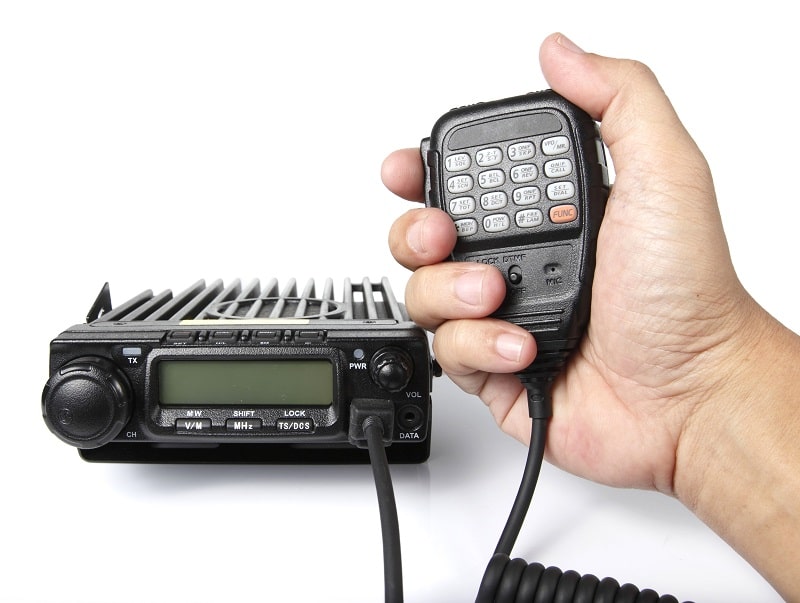
If your primary goal is getting maximum transmit power for the lowest possible price, the Baofeng UV-82 8W is hard to argue with. This high-power variant of the classic UV-82 pushes out 8 watts at its highest setting — significantly more than most budget handhelds — with three power levels (8W/5W/1W) so you can dial back when you don't need the range. For a licensed ham operating on local repeaters or in emergency scenarios where you need every watt you can get, that extra output matters. Talk range of 5–8 km in open terrain is realistic for this power level, though actual results always depend on terrain and antenna height.
The UV-82 supports 50 CTCSS and 104 DCS codes, covering virtually every tone-access repeater you're likely to encounter. Dual-band coverage spans both VHF and UHF, and the dual PTT button design — a signature UV-82 feature — lets you quickly switch between two frequencies or watch two channels simultaneously. Programming via CHIRP is well-documented in the community, and cheap programming cables are widely available. If you're also curious about how wireless range technologies compare, our Bluetooth booster guide covers some interesting parallels in short-range radio signal optimization.
The caveat with any Baofeng is build quality and harmonic suppression. The UV-82 is not a precision instrument. RF filtering is less refined than Yaesu or Icom equivalents, and some units produce harmonics outside their licensed bands. For licensed amateur use on your own repeaters and simplex channels, this is acceptable. But you should be aware of what you're getting — a capable, affordable tool with real limitations in RF cleanliness. As a backup radio, a budget starter, or a spare for a go-bag, it's an excellent value.
Pros:
Cons:
The Ailunce HD1 occupies a unique niche in 2026: it's one of the most affordable radios that combines DMR digital mode, built-in GPS, dual-band operation, and a serious IP67 waterproof rating all in one package. IP67 means full dust protection and submersion in up to 1 meter of water for 30 minutes — a significant step above the IP54 rating of many competitors. If you're doing any kind of outdoor emergency communication work, that waterproofing level is genuinely reassuring. The 3,200 mAh battery and USB-C charging port are modern, practical touches that feel right at home in 2026.
DMR support with two time slots is what sets the HD1 apart from basic digital HTs. You can access Brandmeister and other DMR networks through repeaters or a hotspot, open group calls, and use digital APRS with GPS position reporting — all features you'd normally expect to pay significantly more for. The SOS function adds an emergency call capability that could be genuinely life-saving in backcountry scenarios. Three power levels let you manage battery draw on long deployments, and the rugged construction handles shock and dust in addition to the water resistance.
The HD1 does have a learning curve. DMR programming is more involved than analog, the display is smaller than some competitors, and the menu system isn't the most intuitive for beginners. Retevis (who backs Ailunce) has good community support, and there are plenty of online tutorials to get you started. But plan on spending some time with the codeplug before your first digital QSO. For the feature set at the price, though, it's genuinely impressive.
Pros:
Cons:
The Baofeng UV-9R Pro takes everything that made the original UV-9R popular and refines it for 2026. The big headline upgrade is USB-C direct charging — no more hunting for a proprietary cable or desk cradle. The 2,800 mAh lithium-ion battery supports both Type-C charging and desktop charging, which is a genuine convenience improvement. At 8 watts high power with a tri-power selector (8W/5W/1W), you're getting the same output ceiling as the UV-82 High Power in a more rugged, weather-resistant body. The UV-9R Pro is designed to handle rough outdoor conditions better than standard Baofengs, making it a popular choice for hikers, preppers, and emergency communicators on a tight budget.
Communication range is realistically 4–5 miles in open suburban terrain, 3–4 miles in forest, and 2–3 miles in urban environments according to Baofeng's own specs — consistent with what independent testers have reported for this power level. Dual display and dual standby let you monitor two frequencies simultaneously, and U/V cross-band dual watch adds operational flexibility. The 50 CTCSS and 104 DCS codes cover all standard repeater tones. Programming via CHIRP is well-supported, as you'd expect from a Baofeng product.
As with the UV-82, the caveats around RF harmonic cleanliness apply here too. The UV-9R Pro is better built than entry-level Baofengs, but it's still operating in a different quality tier than Yaesu or Icom. For the price, though, especially if you need a weather-resistant dual-band radio for occasional outdoor use without spending Yaesu money, it's one of the better options in the budget category this year. According to the FCC's amateur radio consumer guide, all transmitters used on amateur frequencies must be operated in accordance with Part 97 rules — worth keeping in mind regardless of which radio you choose.
Pros:
Cons:
Shopping for a handheld ham radio in 2026 involves more decisions than just picking a brand you recognize. Here's what actually matters when you're comparing models.
The biggest fork in the road when choosing a handheld transceiver in 2026 is whether you want digital capability. Analog FM is universally compatible and simple to use — virtually every repeater in the country supports it, and getting on the air is as straightforward as dialing in a frequency and a tone. Digital modes like C4FM (Yaesu's System Fusion) and DMR offer cleaner audio quality at marginal signal strengths, plus features like digital ID, GPS position sharing, and internet linking through platforms like Wires-X or Brandmeister. The catch is that digital modes require digital-capable repeaters or a personal hotspot, and the two major protocols (C4FM and DMR) are incompatible with each other. Research which digital infrastructure is most active in your area before committing to a digital radio. If your local repeater network is entirely analog, a digital HT's premium features sit unused.
Wattage is the number most buyers fixate on, but it's only one piece of the range equation. A 5W radio with a good antenna and line-of-sight to a well-sited repeater will consistently outperform an 8W radio in a concrete canyon. That said, higher transmit power does help in marginal conditions — backcountry terrain, fringe repeater coverage, or simplex contacts where you're relying on direct radio-to-radio communication. Most handheld ham radios top out at 5–8W, which is plenty for local repeater use. For true long-distance HF work, you'll need a different class of radio entirely. Think of wattage as a useful tie-breaker between otherwise similar radios, not the primary selection criterion.
If you're using your radio outdoors — which is a good assumption for most ham operators — waterproofing ratings matter. The IP rating system uses two numbers: the first indicates dust protection (6 = fully dust-tight), the second indicates water resistance (4 = splash-proof, 7 = submersion to 1m). IP54 covers light rain and dusty environments. IP67 means you can drop it in a puddle or creek and it'll be fine. MIL-STD-810 compliance adds shock and temperature resistance on top of that. If you're buying a radio for emergency preparedness or regular outdoor use, prioritize IP67 or MIL-STD-810 rated models. If it's a shack-to-mailbox radio, IP54 is probably fine.
Every radio on this list can be programmed manually from the keypad, but for loading large channel lists — repeater directories, emergency nets, NOAA weather channels — you'll want to use PC programming software. Yaesu radios use proprietary software (often available free from Yaesu's website). Baofeng and Ailunce radios are well-supported by CHIRP, an open-source cross-platform tool that's become the de facto standard for budget handheld programming. Before buying, check whether your operating system (Windows, Mac, Linux) is supported by the radio's programming software, and factor in the cost of a programming cable if one isn't included. For a deeper dive into radio programming concepts, our post on programming the Uniden Bearcat scanner covers many transferable techniques.
Yes. In the United States, transmitting on amateur radio frequencies requires an FCC-issued amateur radio license. The entry-level Technician class license grants access to all VHF and UHF amateur bands, which covers everything these radios are designed for. You can receive without a license, but transmitting without one is illegal and can result in fines. The Technician exam covers basic operating procedures, regulations, and electrical safety — most people pass it with two to four weeks of study using free resources like HamStudy.org.
VHF (Very High Frequency, roughly 136–174 MHz for ham use) and UHF (Ultra High Frequency, 400–470 MHz) have different propagation characteristics. VHF travels farther through open terrain and is slightly better at penetrating some building materials, making it historically preferred for emergency communications. UHF has shorter wavelengths and performs better in urban environments with lots of reflective surfaces. Most ham operators use both — dual-band radios give you access to whichever band has better local repeater coverage. In practice, your local repeater availability matters more than theoretical VHF vs. UHF performance differences.
Yes, a properly licensed amateur radio operator can legally use a Baofeng on any amateur frequency they're authorized for. The performance and RF cleanliness concerns with Baofeng radios are real, but they're primarily a consideration for the operator — not a legal prohibition. Many clubs and emergency communication groups use Baofengs without issue. The main practical concern is that some well-maintained repeaters have RF-sensitive receivers that may pick up spurious emissions from poorly filtered radios, but this rarely causes real-world problems in typical amateur use.
IP ratings — Ingress Protection ratings — describe how well a device resists solid particles and liquids. The first digit (5 or 6) rates dust resistance: 5 means dust-resistant but not fully sealed, 6 means fully dust-tight. The second digit (4 or 7) rates water resistance: 4 means protected against water splashing from any direction, 7 means it can be submerged to 1 meter for up to 30 minutes. IP54 is sufficient for rain and dusty environments. IP67 adds full submersion protection — meaningful if you're kayaking, working in heavy rain, or operating in extreme field conditions.
For emergency preparedness in 2026, prioritize waterproofing, battery capacity, and NOAA weather alert capability. The Ailunce HD1 offers the best waterproofing (IP67) at an accessible price point, along with an SOS function and substantial battery. The Yaesu FT-65 is a compact option with MIL-STD-810 durability and weather alert scanning built in. If budget is your primary constraint, the Baofeng UV-9R Pro's weather-resistant construction and USB-C charging make it a solid choice for a go-bag radio. Whichever radio you choose, make sure you've programmed local repeaters, simplex channels, and NOAA weather frequencies before you actually need it.
Neither is universally better — it depends entirely on your local infrastructure. C4FM (Yaesu System Fusion) integrates smoothly with the Wires-X internet linking network and is popular in regions where Yaesu dealers have established Fusion repeaters. DMR has a larger global infrastructure through networks like Brandmeister and is also used by many commercial and public safety systems, which means more repeater coverage in some areas. If you're using a personal hotspot (like a Pi-Star or MMDVM device), DMR tends to have a larger active user base. Check which digital repeaters are active within range of your home and portable operating locations before choosing a digital protocol.


About Editorial Team
The DigiLabsPro editorial team covers cameras, lenses, photography gear, and creative technology with a focus on helping photographers make informed buying decisions. Our reviews and guides draw on hands-on testing and research across a wide range of equipment, from entry-level beginner kits to professional-grade systems.
You can get FREE Gifts. Or latest Free phones here.
Disable Ad block to reveal all the info. Once done, hit a button below
