Picture this: you just set up your Chromebook for a remote job interview, you open Google Meet, and the built-in camera makes you look like a blurry ghost in a haunted house. Sound familiar? A lot of Chromebook users run into this exact problem — the built-in webcam gets the job done for casual video calls, but the moment you need to look sharp and professional, it falls flat. That's where a dedicated external webcam changes everything.
Chromebooks are lightweight, affordable, and run almost everything through the browser — which makes them a smart pick for students, remote workers, and home office setups. But pairing yours with the right webcam in 2026 means you need to pay attention to a few key details: Chrome OS compatibility, plug-and-play USB support, and video quality that holds up in variable lighting. Not every webcam plays nicely with Chrome OS, and some features that work fine on Windows simply don't function on a Chromebook.
In this guide, we've tested and reviewed seven of the top webcams available right now, covering a range of budgets and use cases — from basic 720p budget options to AI-powered 4K cameras with voice control. Whether you're sitting in on daily video calls, streaming content, or studying from home, there's a solid pick here for you. You can also browse our full webcam buying guide for a broader look at what to consider before you buy. If you're also shopping for a webcam for a different purpose, check out our Best Webcam for Podcasting roundup or our guide to the Best Webcams Under $50 for more options.
Contents






The Logitech C920x has earned its reputation as one of the most reliable webcams you can plug into any device — and Chromebooks are no exception. It delivers crisp Full HD 1080p video at 30 frames per second with dual stereo microphones that capture natural, clear audio without any extra setup. On a Chromebook, it works completely plug-and-play over USB, no drivers, no software install, no fuss. Just plug it in and open Google Meet or Zoom — it's recognized immediately.
The automatic light correction here is genuinely impressive. If you're working near a window or in a dimly lit home office, the camera adjusts exposure and white balance on the fly so your face stays well-lit and sharp. Autofocus locks onto your face within seconds and holds steady even when you shift around in your seat. One bonus feature worth noting for 2026: the C920x is now compatible with Nintendo Switch 2's GameChat mode, which is a nice extra if you do any casual gaming alongside your work calls.
Build quality is solid — the clip-style mount grips both flat-panel monitors and Chromebook screens securely, and the USB cable is long enough to give you some placement flexibility. If you want a reliable, no-drama workhorse that just works every time you open the lid on your Chromebook, this is the one to beat.
Pros:
Cons:
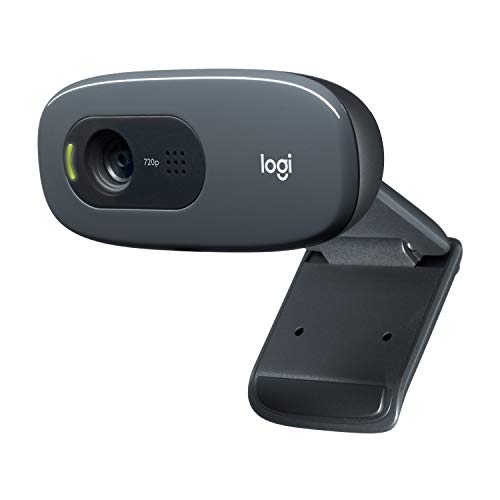
If your budget is tight and you simply need something better than your Chromebook's built-in camera, the Logitech C270 is probably the smartest spend. It captures 720p HD video at 30fps with a 55-degree diagonal field of view — wide enough to frame you well without distorting the background. Logitech's auto light correction keeps your image from going washed out near bright windows, which is a feature you don't always find at this price point.
The single built-in microphone uses noise reduction to cut down on background hum and ambient noise, and it picks up your voice clearly up to about 1.5 meters away. For daily Google Meet or Zoom calls, that's more than enough range. The C270 is also fully plug-and-play on Chrome OS — it shows up instantly without any driver installation. Logitech's own software isn't available on Chromebook, but honestly, you won't miss it for basic video calling.
Where you'll feel the compromise is in low-light situations. The C270 doesn't have the same light sensitivity as more expensive models, so if your room gets dark in the evenings, image quality will drop noticeably. It also lacks autofocus — the lens is fixed-focus, which is fine for sitting at a desk but can look soft if you move closer than about 20 inches. For what it costs, though, the C270 is a genuine value pick in 2026.
Pros:
Cons:
Modern Chromebooks have been moving toward USB-C ports exclusively, and the Logitech Brio 300 was designed with exactly that in mind. It connects via USB-C directly — no adapter needed — making it a clean, modern pairing for newer Chromebooks. Full HD 1080p resolution combined with Logitech's RightLight 2 technology gives you natural-looking video quality across a range of lighting conditions, automatically compensating when the light behind you is too bright or too dim.
The Brio 300 also comes with a built-in privacy shutter — a physical lens cover you can slide shut when you're not on a call. That's a small but genuinely useful feature if you care about privacy or simply want peace of mind when your Chromebook is sitting open on a desk. The noise-reducing microphone is integrated cleanly into the housing and produces clear voice pickup for calls and meetings. Setup on Chrome OS is completely plug-and-play; the camera is recognized the moment you connect it.
It's available in multiple color options including white, graphite, and rose, so you can match it to your setup if that matters to you. The field of view is 70 degrees, which is standard for desk use. You won't get 4K or advanced AI features here, but for a clean, modern 1080p webcam with USB-C and a privacy shutter at a mid-range price, the Brio 300 checks the important boxes without overcomplicating things.
Pros:
Cons:
The Microsoft Modern Webcam might carry a Windows-brand name, but it works just as well on a Chromebook thanks to standard USB-A plug-and-play compatibility. What makes it stand out is its HDR video support — high dynamic range (meaning the camera captures more detail in both bright and dark areas simultaneously) — paired with auto white balance and exposure compensation. The result is a consistently polished look even in tricky mixed-lighting environments like rooms with both overhead lights and window glare.
The integrated privacy shutter comes with a smart usage indicator light, so you always know at a glance whether the lens is covered or exposed — a subtle but thoughtful detail. The built-in noise-cancelling microphone handles background sound well for office and home environments. Attachment to monitor edges and Chromebook screens is stable thanks to a well-designed clip mechanism that grips firmly without scratching the screen bezel.
It's certified for Microsoft Teams and Zoom, but on a Chromebook you'll primarily use it with Google Meet, and it performs cleanly there. Autofocus tracks your movements reliably, and video quality has a neutral, true-to-life color rendering that doesn't over-saturate. If you want a professional-looking setup without going to 4K, this is a strong contender in the mid-tier price range.
Pros:
Cons:
Anker has been making a push into the webcam market with practical, well-priced options, and the PowerConf C200 is a strong argument for stepping up from 1080p without going all the way to 4K pricing. It captures 2K resolution video (2560×1440) with noticeably sharper detail than standard 1080p — especially noticeable if your call participants are on large monitors or if you share your screen a lot. The adjustable field of view lets you switch between 65, 78, and 90 degrees, which is handy for tight desk spaces or if you want to frame more of the room behind you.
The dual stereo microphones use AI-based noise cancellation to filter out keyboard clicks, fan noise, and ambient room sound. It holds up well in moderately noisy home office environments, though like most built-in mics it won't replace a dedicated USB microphone for podcast-style audio quality. The low-light correction is solid — you can work in a dimly lit room and still produce a watchable image. There's also a built-in privacy cover that slides over the lens.
On Chrome OS, the C200 is plug-and-play over USB-A. Anker's companion software isn't available for Chromebook, so the adjustable FOV feature may not be accessible without the app — worth confirming before purchasing if that feature is important to you. Overall, if you want a step up in sharpness over standard 1080p without a dramatic price increase, this delivers good value in 2026.
Pros:
Cons:
The NexiGo N60 earns its spot on this list primarily for one reason: it works on everything. Chrome OS 29.0 and above is explicitly listed on the compatibility sheet, alongside Windows, Mac, Linux, Ubuntu, and Android. If you're ever switching between devices or sharing the webcam between a Chromebook and another computer, you won't run into compatibility headaches. Setup takes under a minute — plug it into a USB 2.0 or 3.0 port and it's ready to use with no driver installation at all.
Video quality is solid 1080p Full HD at 30fps through a 3.6mm glass lens. The fixed focus is optimized for a range of about 20 inches to 13 feet, which covers typical desk-to-screen distances comfortably. The built-in noise-cancelling microphone reduces ambient hum and background chatter well enough for clear video calls and online classes. NexiGo includes software for Windows users, but on Chromebook you're working with the straight hardware feed — and for most call apps, that's perfectly sufficient.
The included privacy cover is a nice touch at this price range. The clip mount is flexible and attaches cleanly to both flat monitors and thinner Chromebook lid edges. It's not the most feature-rich camera here, and the fixed focus won't win any awards for cinematic depth, but if your priority is reliable, fuss-free 1080p video on your Chromebook, the N60 gets it done without asking much of you. Also worth reading: our guide to the Best Webcams for Skype if you rely heavily on that platform.
Pros:
Cons:
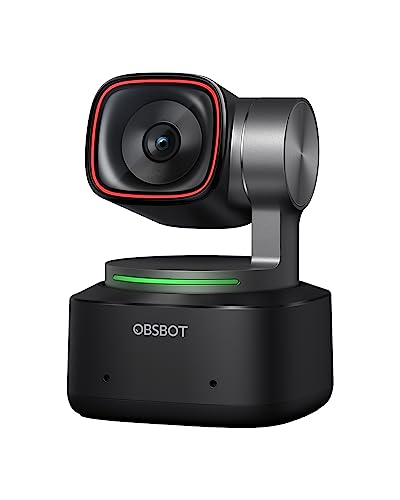
The OBSBOT Tiny 2 is in a different league from every other webcam on this list — and so is the price. But if you're looking for the most technically advanced webcam you can pair with a Chromebook in 2026, this is it. It's built around a 1/1.5-inch CMOS sensor — the largest sensor available in any webcam currently on the market — which translates directly into exceptional low-light sensitivity and a noticeably shallower depth of field (background blur) compared to the tiny sensors in standard webcams. Combine that with 4K resolution at up to 60fps and HDR support, and video quality is genuinely a step above everything else here.
The AI-powered pan-tilt-zoom (PTZ) tracking is the standout feature. The camera physically rotates to follow you as you move, keeping you centered in the frame automatically. There are four tracking modes — upper body, close-up, hand tracking, and zone tracking — that you can switch between for different use cases. Gesture control lets you trigger zoom, tracking, or snapshot with a hand gesture so you don't have to touch your laptop. Voice control is another option: say "Hi TINY" followed by a command to start tracking or adjust the view from across the room.
On a Chromebook, the OBSBOT Tiny 2 connects via USB and functions as a standard UVC (USB Video Class — the standard that lets cameras work without drivers) device, so the core video and audio functions work plug-and-play. However, the full AI feature set — including detailed tracking mode switching and gesture control customization — may require the OBSBOT app, which currently runs on Windows and Mac. Some features work via voice commands or the physical button even without the app. If you're a content creator, a frequent presenter, or just want the absolute best image quality your Chromebook can display, the Tiny 2 is worth considering seriously.
Pros:
Cons:
Buying a webcam for a Chromebook isn't quite the same as buying one for a Windows PC. Chrome OS has its own quirks — fewer supported apps, USB-C becoming the dominant port, and no compatibility with most webcam companion software. Here's what to focus on when you're shopping in 2026.
The most important thing you can check before buying is whether a webcam works with Chrome OS out of the box. UVC (USB Video Class) compliant webcams work without drivers on Chrome OS — most modern webcams from reputable brands fall into this category, but it's worth confirming. If a product listing mentions specific Chrome OS support (like the NexiGo N60's explicit mention of Chrome OS 29.0+), that's a reassuring sign. Avoid webcams that require proprietary driver installation before they'll function — those are built for Windows and will frustrate you on a Chromebook.
Also check whether companion software — which often handles settings like zoom, pan, or exposure adjustment — has a Chrome OS version. Most don't. If adjustable settings matter to you, look for cameras that store settings in firmware or allow some control via voice and gesture, like the OBSBOT Tiny 2.
For everyday video calls, 1080p at 30fps is the sweet spot — it's sharp enough to look professional without straining your Chromebook's processing or your internet connection. 720p is acceptable on a tight budget but the difference is visible, especially on larger screens. 2K gives you a meaningful upgrade in detail over 1080p, and 4K is excellent for content creation but largely overkill for video calls since most conferencing platforms cap video quality well below 4K anyway.
Frame rate matters more for movement. If you're usually seated and still during calls, 30fps is fine. If you move around a lot, gesture during presentations, or want smoother motion for streaming, look for 60fps support. According to Wikipedia's overview of webcam technology, most consumer webcams are optimized for 30fps video calling, with higher frame rates becoming more common in premium models.
Every webcam on this list includes a built-in microphone, and they range from adequate (C270) to genuinely good (OBSBOT Tiny 2 with AI noise cancellation). For casual calls and online classes, a built-in mic is perfectly fine. But if you're doing any kind of podcast recording, streaming, or professional-quality video production from your Chromebook, a dedicated USB microphone will be a worthwhile addition. The built-in mics in webcams are optimized for voice clarity at conversational volumes — not for capturing instrument audio, room ambience, or high-quality narration.
Check what USB ports your Chromebook actually has before you order. Many newer Chromebooks have dropped USB-A entirely in favor of USB-C only. If that's your situation, the Logitech Brio 300's native USB-C connection is worth the premium over buying a USB-A webcam plus an adapter. Adapters add a point of failure and a dangling connector that can stress the port over time.
A physical privacy shutter — a sliding cover over the lens — is a feature worth prioritizing if you care about digital privacy. It's a simple mechanical solution that no software can override. The Brio 300, Microsoft Modern Webcam, and Anker C200 all include one. Mounting stability also matters: a poorly designed clip will slip off a thin Chromebook screen or wobble during calls, which is distracting. Check that the clip is designed to handle thinner panel edges.
Most modern webcams that are UVC (USB Video Class) compliant will work with Chrome OS without requiring driver installation. However, companion software for adjusting settings — like Logitech Capture or OBSBOT's control app — typically isn't available for Chrome OS. Stick to well-known brands like Logitech, Microsoft, Anker, and NexiGo for the most reliable plug-and-play experience on a Chromebook in 2026.
For most video calling on Google Meet, Zoom, or Skype, 1080p at 30fps is the ideal balance of quality and performance. Your Chromebook's processor handles 1080p streams without issues, and most conferencing apps will display the full resolution to participants. 720p is workable on a tight budget. 2K or 4K provides more detail but conferencing platforms often compress the video stream, so the practical difference may be minimal for calls.
Yes. Logitech webcams are among the most Chrome OS-compatible options available. Models like the C920x, C270, and Brio 300 are all plug-and-play on Chrome OS — you just connect them via USB and they're recognized immediately by Google Meet, Zoom, and other browser-based apps. The main limitation is that Logitech Capture software doesn't run on Chrome OS, so some manual settings (like adjusting FOV or fine-tuning color) won't be accessible.
The OBSBOT Tiny 2 functions as a standard UVC device, so the core video and audio features work plug-and-play on Chrome OS. You'll get 4K video and the built-in microphone working immediately. However, advanced features like detailed tracking mode switching, gesture control customization, and AI settings may require the OBSBOT app, which currently runs on Windows and Mac only. Some tracking and voice command features work via the physical button or voice commands even without the app.
The Logitech C270 is the go-to budget pick for Chromebook users in 2026. It delivers reliable 720p video, auto light correction, a noise-reducing microphone, and true plug-and-play Chrome OS compatibility — all at a very accessible price. If you can stretch the budget a little, the NexiGo N60 gives you full 1080p with a glass lens and explicit Chrome OS compatibility for not much more money.
It depends on your specific Chromebook model. Newer and mid-range Chromebooks released in the past two years often have USB-C ports only, while older models typically include USB-A. Check your Chromebook's port layout before purchasing. If you only have USB-C ports, the Logitech Brio 300 connects natively via USB-C with no adapter needed. If you do have USB-A ports, any standard USB-A webcam will work fine.


About Editorial Team
The DigiLabsPro editorial team covers cameras, lenses, photography gear, and creative technology with a focus on helping photographers make informed buying decisions. Our reviews and guides draw on hands-on testing and research across a wide range of equipment, from entry-level beginner kits to professional-grade systems.
You can get FREE Gifts. Or latest Free phones here.
Disable Ad block to reveal all the info. Once done, hit a button below
