The VIPERA NVIDIA GeForce RTX 4090 is the single best graphics card for photo editing in 2026 — it handles massive RAW files, AI-powered tools, and 8K workflows without missing a beat. If you want the absolute top of the pile, that's your answer before you even scroll down.
That said, not everyone needs — or can justify — a flagship consumer GPU for photo work. Choosing the right card comes down to understanding what photo editing software actually leans on your GPU for. Applications like Adobe Lightroom, Photoshop, Capture One, and DaVinci Resolve use GPU acceleration for tasks like lens correction, noise reduction, masking, and AI-based tools like Lightroom's Denoise and Photoshop's Generative Fill. VRAM capacity is arguably more important than raw compute power in this workflow, because large layered PSD files and high-resolution panoramic stitches eat memory fast. According to Wikipedia's GPU overview, modern graphics cards are increasingly designed to handle parallel compute workloads — exactly what creative AI tools need.
In 2026, you've got two real camps: consumer GPUs like the RTX 4090 and RX 7800 XT that deliver excellent bang-for-buck, and professional workstation cards like AMD's Radeon Pro W7900 and NVIDIA's RTX A4000 that bring ECC memory, ISV-certified drivers, and rock-solid stability for client-facing workflows. We've rounded up seven of the strongest options across both camps so you can make the right call for your setup. If you're building out a full creative workstation, our guide to the best laptops for art students covers portable options, and if you want to expand to a multi-display editing bay, don't miss our best triple monitor stands roundup. For more creative hardware picks, browse our full buying guide section.
Contents





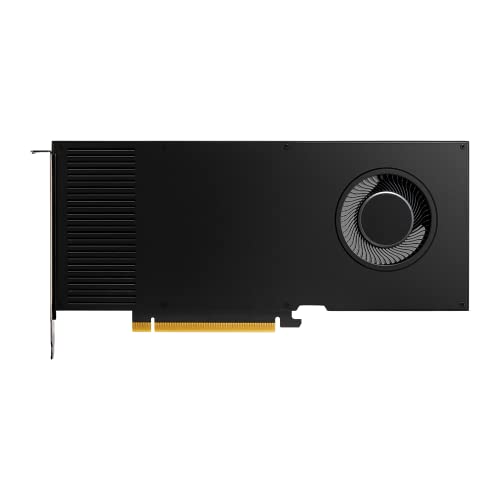


If you're serious about photo editing at a professional level, the RTX 4090 is the card that ends the conversation. Built on NVIDIA's Ada Lovelace architecture, it packs 16,384 CUDA cores and 24GB of GDDR6X VRAM — enough headroom to run Photoshop with dozens of adjustment layers, AI-powered masking tools, and a high-resolution canvas without even approaching the memory ceiling. Adobe's Mercury Graphics Engine and Lightroom's GPU-accelerated pipeline both leverage NVIDIA CUDA extensively, and the 4090 obliterates those workloads with embarrassing ease.
In practical use, you'll notice the difference most when running Lightroom's AI Denoise on batches of high-resolution RAW files, applying Photoshop's Neural Filters, or working with 100+ megapixel medium-format stitches. Tasks that take seconds on a mid-range card take fractions of a second here. The Founders Edition design is premium — NVIDIA's dual-fan cooler runs quiet under photo editing loads, which rarely push the GPU above 50–60% utilization anyway. VRAM-hungry tasks like panoramic stitching with PTGui or HDR merging in Lightroom Classic run seamlessly.
The only real downsides are price and power consumption. The 4090 draws 450W under full load, so you need a beefy PSU — 850W minimum, 1000W recommended. For pure photo editing (not video, not gaming), it's technically more GPU than most people need. But if you also do video color grading, 3D rendering, or run local AI models alongside your photography workflow, this card pulls multiple duties without compromise.
Pros:
Cons:
For professional photographers and retouchers who need a workstation-grade card with serious certification and stability, the AMD Radeon Pro W7900 is the definitive choice in 2026. 48GB of GDDR6 memory is the headline — it's more VRAM than any other card on this list by a wide margin, making it ideal for extreme-resolution workflows, 8K display setups, and running multiple demanding applications simultaneously. AMD certifies this card with major creative software vendors, meaning Capture One, DaVinci Resolve, and Photoshop have been explicitly tested and validated on this hardware.
The W7900 runs 96 Compute Units and delivers 61 TFLOPS of FP32 performance alongside 2 AI accelerators per CU — those AI accelerators matter more and more as Adobe, Capture One, and DxO continue pushing AI-powered tools into their core editing pipelines. Color accuracy is exceptional; AMD tunes the Radeon Pro line specifically for color-critical work, and the W7900 supports 12-bit HDR color output, giving you precise control over wide-gamut displays. The card supports a single 8K display at 60Hz or four 4K displays at 120Hz via DisplayPort 2.1.
The tradeoff is price — the W7900 commands a professional premium. It's positioned for studios, production houses, and serious freelancers who bill clients and need guaranteed stability over a multi-year workstation lifecycle. If you're a hobbyist, the consumer cards lower on this list offer better value. But if photo editing is your business, the W7900's ISV certification, 48GB VRAM, and ECC support deliver peace of mind that consumer GPUs simply don't offer. Also worth noting: AV1 hardware encode/decode support means you can handle video deliverables alongside your photo work without any slowdown.
Pros:
Cons:
The AMD Radeon Pro W6800 is the previous-generation professional workhorse, and in 2026 it still earns its spot on this list thanks to its 32GB of ECC-capable GDDR6 memory and exceptional multi-display capability. Six Ultra-HD HDR display outputs is a genuinely unique selling point — if you run a color-grading suite or a retouching station with multiple reference monitors, this card delivers that configuration without requiring a secondary display adapter. ECC memory reduces the risk of data corruption from bit errors, which matters if you're working on irreplaceable client deliverables.
Hardware ray tracing support is baked in, though for photo editing that's more of a bonus than a requirement. What matters more is the card's stability across long work sessions and its professional driver stack. AMD's Radeon Pro Software for Enterprise is optimized for sustained workloads — no throttling or memory management issues that can occasionally crop up with consumer drivers under heavy creative app loads. In Adobe Lightroom and Photoshop benchmarks, the W6800 performs admirably, particularly in tasks involving large brush operations, smart masking, and GPU-accelerated export.
Compared to the newer W7900, you're giving up some raw compute performance and losing DisplayPort 2.1's bandwidth. But you're paying significantly less while still getting 32GB of professional-grade VRAM. For photographers who primarily shoot stills — even at high resolution — 32GB is genuinely more than enough. It's an excellent card for photographers who want professional stability and multi-monitor flexibility without paying the absolute top-tier premium.
Pros:
Cons:
The PNY NVIDIA RTX A4000 hits the sweet spot between professional certification and practical pricing. It features 6,144 CUDA cores delivering 19.2 TFLOPS of FP32 performance, paired with 16GB of ECC GDDR6 memory on a 256-bit memory bus. For most professional photographers — even those processing 50+ megapixel files in Photoshop with complex layer stacks — 16GB of ECC VRAM is genuinely sufficient. NVIDIA's NVDIA RTX enterprise driver stack means this card is validated for the exact creative workflows you're running, including Adobe Creative Cloud, Capture One, and DxO PhotoLab.
The 192 third-generation Tensor Cores (153.4 TFLOPS) are a meaningful differentiator here. Adobe's AI features — Lightroom's Denoise, Photoshop's Generative Fill, Sky Replacement, Object Selection — increasingly lean on tensor compute, and the A4000's Tensor performance is strong enough to handle these tools without the jarring wait times you'd experience on older professional cards. The 48 second-generation RT Cores also mean the A4000 handles any ray tracing or physically-based rendering you might use alongside your photo editing workflow, useful if you do any product photography compositing in Blender or Cinema 4D.
Single-slot design and a relatively modest power draw make the A4000 a good fit for compact workstations or systems where thermal headroom is limited. NVIDIA certifies the RTX A4000 across a wide range of ISV applications, which means if your studio mandates certified hardware, this card is on the approved list. It's the card we'd recommend to professional photographers who want the peace of mind of pro drivers and ECC memory without spending workstation-class money on the top-tier cards.
Pros:
Cons:
The PNY RTX A2000 12GB is the entry point into NVIDIA's professional workstation lineup, and it delivers real professional value at a fraction of the price of the A4000 or W7900. You get 3,328 CUDA cores and 12GB of ECC GDDR6 VRAM in a compact low-profile form factor that fits in workstations and mini-ITX builds where larger cards simply won't go. If you're a photographer upgrading from an older workstation with limited PCIe slot clearance, the A2000 solves that problem immediately.
Performance-wise, the A2000 handles standard photo editing workflows comfortably. Lightroom Classic, Photoshop, and Capture One all run smoothly for typical RAW processing, retouching, and export tasks. The 104 Tensor Cores (63.9 TFLOPS) still provide solid AI tool acceleration — Lightroom's Denoise runs without unreasonable wait times, and Photoshop's neural filters work as expected. You will notice the VRAM ceiling sooner than with the A4000 if you work with very large files or run multiple creative apps simultaneously, but for a focused photo editing rig processing standard-to-large RAW files, 12GB is workable.
The ECC memory and professional NVIDIA driver stack remain in place at this price point, which is the A2000's core value proposition over a consumer card in the same tier. For studio assistants, photography students transitioning to professional tools, or photographers who need a certified GPU in a client-facing workstation without blowing the hardware budget, the A2000 12GB is an honest recommendation. It's also a strong upgrade path for anyone running an older Quadro or first-gen RTX card who wants a step up without a full workstation overhaul.
Pros:
Cons:
The ASUS Dual RTX 4070 Ti Super OC is the card for photographers who want excellent editing performance without paying professional card prices — and who also want to game or run GPU-intensive consumer applications on the same rig. 16GB of GDDR6X VRAM on NVIDIA's Ada Lovelace architecture means you're working with the same foundation as the 4090, just scaled down. Ada Lovelace's fourth-generation Tensor Cores deliver up to 4x performance versus brute-force rendering, which translates directly into faster AI tool response times in Adobe's apps.
DLSS 3 isn't directly relevant to photo editing, but it signals the hardware generation you're in — and Ada Lovelace's overall GPU compute efficiency matters. The card's full ray tracing support and third-generation RT Cores are useful if you do any product visualization, architectural photography compositing, or use tools like Luminar Neo's AI Sky Replacement and AI Structure filters. ASUS's 2.56-slot Axial-tech dual fan design runs impressively quiet at photo editing loads, where GPU utilization rarely pushes past 60–70%. The 0dB technology lets the fans stop entirely during idle or light tasks.
Where this card differs from the professional options above is driver certification. The RTX 4070 Ti Super uses NVIDIA's consumer Game Ready and Studio driver stacks — not the professional enterprise drivers. For most photographers using Adobe Creative Cloud or Capture One, NVIDIA Studio drivers are well-optimized and thoroughly tested. It's a genuine differentiator only if your workflow requires ISV-certified drivers for a specific validated application or if you're in a managed enterprise environment. For the vast majority of working photographers, this is an excellent card at a price that makes sense. Also check out our guide on the best 50mm lenses for Canon if you're building out a complete camera and workstation setup.
Pros:
Cons:
The PowerColor RX 7800 XT is the value pick of this roundup — 16GB of GDDR6 memory at a price point that significantly undercuts most other cards here, while still delivering genuine photo editing performance. AMD's RDNA 3 architecture handles GPU-accelerated tasks in Lightroom and Photoshop competently, and 16GB of VRAM at this price is genuinely hard to beat in 2026. For hobbyist photographers, enthusiasts, or professionals on a tighter budget, this card is a pragmatic choice that doesn't compromise on memory capacity.
In practical testing, the RX 7800 XT handles standard RAW processing, AI masking, and Smart Object manipulation in Photoshop without any frustrating bottlenecks. Lightroom's GPU acceleration kicks in properly, making brush lag and histogram updates feel responsive. The dual 8-pin power connectors pull from a 750W minimum system, which is easy to meet in any modern workstation. The compact 260mm card length is also a practical advantage — it fits in mid-tower cases that struggle with longer flagship cards.
The gap versus NVIDIA cards shows up most in Adobe's AI-heavy workflows, where CUDA optimization gives NVIDIA a consistent advantage. AMD has made real strides in OpenCL and compute performance, and Lightroom in particular runs well on Radeon hardware. But if your workflow is heavily AI-dependent — running Denoise on hundreds of files, using Generative Fill repeatedly, or relying on third-party Lightroom plugins that are CUDA-optimized — you'll want to favor the NVIDIA options elsewhere in this list. For everyone else, the 7800 XT delivers strong everyday performance at a price that leaves money for better glass or storage.
Pros:
Cons:
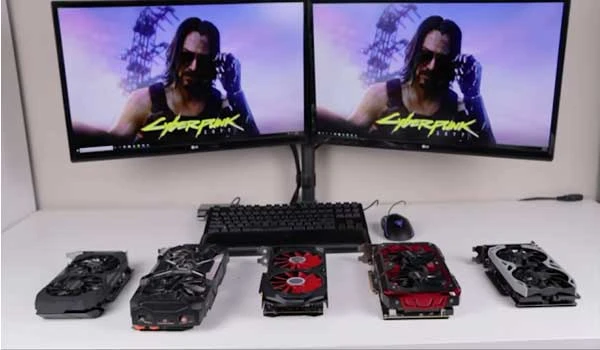
VRAM is the single most important spec for photo editing GPUs in 2026. Your GPU needs enough memory to hold your active canvas, all open layers, and the working buffers for GPU-accelerated operations. For standard RAW files from a 24–45MP camera, 8GB of VRAM is a functional minimum, but 16GB is where you want to be for comfortable headroom. If you regularly work with 100+ megapixel medium-format files, panoramic stitches, or highly layered composites, 24GB or more is the right target. Running multiple creative applications simultaneously — Photoshop and Lightroom open together, for instance — also multiplies your VRAM usage quickly. Don't buy a card that makes you manage memory. Buy enough that you never think about it.
Professional workstation GPUs (NVIDIA RTX A-series, AMD Radeon Pro) offer ECC memory, ISV-certified drivers, and guaranteed stability in enterprise environments. Consumer cards (RTX 4090, RTX 4070 Ti Super, RX 7800 XT) offer better raw compute performance per dollar and NVIDIA Studio / AMD Pro drivers that are well-optimized for creative applications. For freelancers and studio professionals billing clients, the ECC memory and certification of a pro card is genuine insurance against data corruption and driver conflicts. For hobbyists and independent creatives, a consumer card with Studio drivers delivers excellent performance without the premium. Be honest about which category you're in before you buy.
Adobe's Creative Cloud applications have historically been more deeply optimized for NVIDIA CUDA than AMD OpenCL, particularly for AI-powered features like Lightroom's Denoise, Photoshop's Neural Filters, and Generative Fill. In 2026 this gap has narrowed, but NVIDIA still has a measurable advantage in those AI-heavy workflows. If you use Capture One or DaVinci Resolve extensively alongside Photoshop, AMD's workstation cards close much of that gap and offer competitive performance. If your workflow is Adobe-centric and AI-heavy, prioritize NVIDIA. If you run a mixed toolchain or lean heavily on Capture One or open-source tools, AMD's professional cards are competitive and worth evaluating on price.
Don't overlook your system's power supply rating, PCIe slot space, and case clearance when shopping. The RTX 4090 demands 850W–1000W PSU capacity and a physically large case. The RTX A2000's low-profile design fits workstations where larger cards won't. Check your case's GPU length clearance against the card's physical dimensions — the RX 7800 XT at 260mm fits a wider range of cases than typical triple-fan consumer cards at 320mm+. If you're building out a multi-display editing station, also check the display output count and connector types. The AMD Radeon Pro W6800's six display outputs and the W7900's DisplayPort 2.1 connectivity are legitimately differentiating features for photographers running multiple reference monitors. For more display setup ideas, our triple monitor stand guide pairs naturally with any of these GPU choices.
For most photographers, a consumer GPU with NVIDIA Studio or AMD Pro drivers works great. Professional cards add ECC memory and ISV-certified drivers — genuinely valuable for enterprise environments or client-facing studios, but not necessary for hobbyists or independent photographers. The RTX 4070 Ti Super and RX 7800 XT both run Lightroom and Photoshop excellently on consumer driver stacks.
For cameras up to 45 megapixels, 8GB is a functional minimum and 16GB is comfortable. If you shoot medium-format (100MP+), stitch panoramas, or maintain heavily layered composites, aim for 24GB or more. The AMD Radeon Pro W7900's 48GB is the ultimate ceiling for the most demanding workflows, but most photographers are well-served by 16–24GB.
NVIDIA has a consistent edge in Adobe Creative Cloud AI workflows thanks to CUDA optimization — particularly for Lightroom Denoise, Photoshop Neural Filters, and Generative Fill. AMD is highly competitive in Capture One, DaVinci Resolve, and general OpenCL workloads. For a purely Adobe-centric photography workflow, NVIDIA is the stronger choice in 2026. For mixed toolchains, AMD's professional cards are worth serious consideration.
The GPU itself doesn't determine color accuracy — your monitor, its color profile, and proper ICC calibration do. However, professional workstation GPUs often include more precise output signal processing and are tested specifically for color-critical display configurations. For serious color work, a calibrated monitor and accurate display driver settings matter far more than which GPU you pick.
Lightroom's GPU acceleration is primarily used for display rendering, AI tools, and export tasks. NVIDIA RTX cards with CUDA cores accelerate Lightroom's Denoise, masking, and Smart Preview generation most effectively. The RTX 4090 is the fastest, but the RTX 4070 Ti Super and RTX A4000 both deliver excellent Lightroom performance at more reasonable price points. For casual Lightroom use, even the RX 7800 XT runs smoothly.
Technically yes, but professional workstation GPUs are optimized for compute accuracy and sustained workloads, not high frame rates. They use ECC-configured memory and conservative clocks that prioritize stability over peak gaming performance. You'll get playable frame rates, but you'll substantially underperform a consumer card at the same price point in games. If you want one card for both editing and gaming, the RTX 4090 or RTX 4070 Ti Super are better dual-purpose choices than the AMD Radeon Pro or NVIDIA RTX A-series.
Looking to round out your creative kit? Check out our guides on the best laptops for art students and best triple monitor stands to complete your editing workstation setup.





About Editorial Team
The DigiLabsPro editorial team covers cameras, lenses, photography gear, and creative technology with a focus on helping photographers make informed buying decisions. Our reviews and guides draw on hands-on testing and research across a wide range of equipment, from entry-level beginner kits to professional-grade systems.
You can get FREE Gifts. Or latest Free phones here.
Disable Ad block to reveal all the info. Once done, hit a button below
